

Order
Place order
Clear the whole list?
Discover the differences between blockboard, solid wood panels, and plywood. A buyer’s guide comparing specs and tips for choosing the right materials.
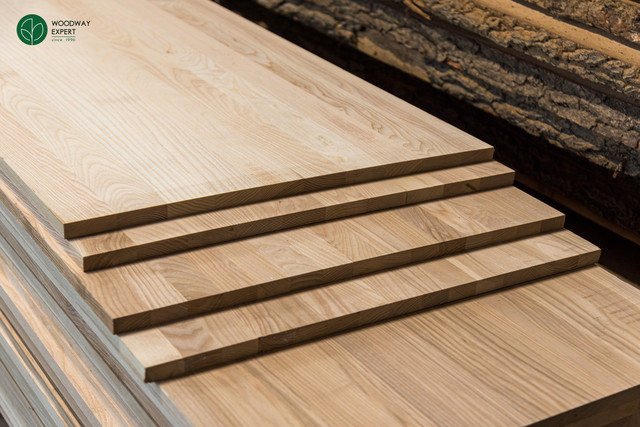
We are pleased to introduce a new addition to our product range: full-stave colored (olive) ash solid wood panels. This material is widely used to manufacture stairs, window sills, countertops, bar counters, cabinet furniture, beds, shelving units, shelves, stools, and various interior decor elements. The key advantages of solid wood panels include stability, aesthetic appeal, […]
Birch plywood, alder, and poplar plywood are essential materials for construction, furniture manufacturing, flooring, wall and ceiling cladding, and the production of household and decorative items. However, the technical performance of these plywood panels is not always sufficient for demanding tasks. When a material resistant to water or fire is required, waterproof or fire-rated okoume […]
Plywood is distinguished by its strength and relatively low weight. Thanks to these characteristics, the material is used in construction, cladding work, furniture manufacturing, and flooring production. The technical specifications of the boards depend on thickness, wood species, and adhesive. Various plywood options are available on the joinery market, but specialists consider Interior and Exterior […]
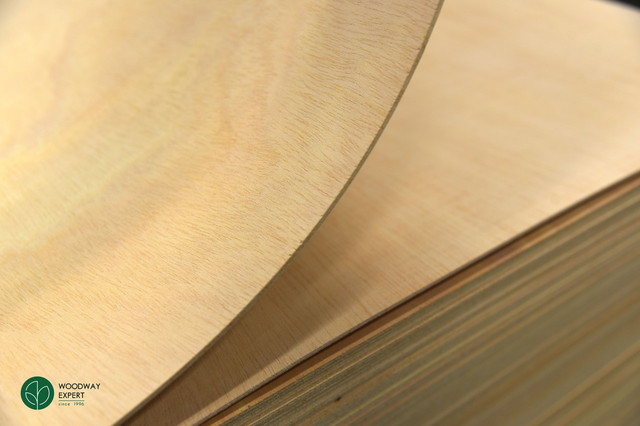
Plywood is a stable, durable, and easy-to-machine material used in construction, furniture manufacturing, and wall, floor, and ceiling cladding. To produce curved or radius components, flexible or bent plywood is used. Let’s look at the differences between these panels and their intended applications. Contents The difference between flexible and bent plywood Flexible Ceiba plywood: characteristics […]
Plywood is a layered material widely used in constructing non-permanent structures, furniture making, cladding walls, ceilings, and floors, and manufacturing decorative and household items. Composed of cross-laminated sheets of rotary-cut veneer, these panels are known for their strength, dimensional stability, and easy machinability. The layers are bonded with adhesive, and its composition determines another crucial […]
Construction, furniture manufacturing, machine and shipbuilding, wall, floor, and ceiling cladding production are fields where plywood is widely used. Each task requires a sheet panel of a specific thickness, size, and with specific physical and mechanical properties. In structural joinery, flexible, aircraft, and marine (water-resistant) plywood are standard choices. Read on to learn how these […]
Layered natural wood materials are used for a wide range of tasks. The technical characteristics of plywood are largely determined by the wood species and type, the adhesive, and the subsequent surface treatment of the panels (sanding). To choose the right structural and finishing material, it is important to select the appropriate panel grade. What […]
Thanks to its strength and excellent workability, plywood is suitable both for furniture manufacturing and non-permanent construction. A layered material composed of an odd number of bonded rotary-cut veneer sheets, it easily withstands everyday wear in residential and commercial spaces. Plywood panels are dimensionally stable, resistant to cracking, and flexible. The material is widely used […]
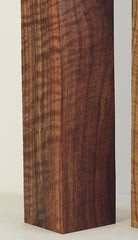
The aesthetics of natural wood are endlessly fascinating. Every trunk offers a unique color palette and grain pattern. When an atypical fiber structure is added to natural coloring and grain, the result is a truly prized material. Interlocked and wavy grain not only forms intricate decorative figures, but also influences the working and performance properties […]