
Order
Place order
Clear the whole list?
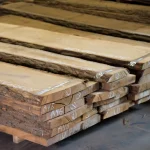
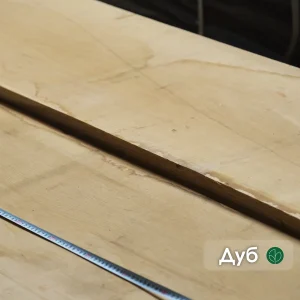
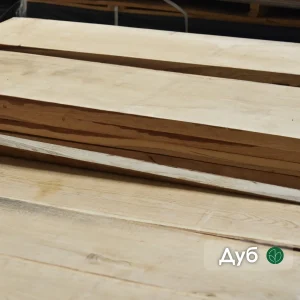
Edged and unedged oak boards are robust and wear-resistant timber materials utilized for both interior and exterior works. Oak timber is actively employed in construction, shipbuilding, machine building, and the furniture sector. At Woodway Expert, you can purchase high-quality kiln-dried timber wholesale and retail.
Edged and unedged oak boards are robust and wear-resistant timber materials utilized for both interior and exterior works. Oak timber is actively employed in construction, shipbuilding, machine building, and the furniture sector.
At Woodway Expert, you can purchase high-quality kiln-dried timber wholesale and retail. We offer oak boards with the following specifications:
Shipment across Ukraine via carrier companies and self-collection from our Kyiv warehouse are available. Our managers can assist in selecting timber products remotely. Simply provide a technical specification, and we will send photos and details of the relevant boards via messenger apps.
Edged and unedged oak boards are dispatched following full payment. Your manager will provide information regarding payment methods and estimated dispatch times.
Edged and unedged boards differ in the method of edge processing and their spheres of application.
Edged board is timber from which the bark has been cut off the side edges. Such timber products are more expensive but do not require additional preparation and are simpler to transport. They are used in the furniture industry, production of floor coverings, finishing materials, and household items.
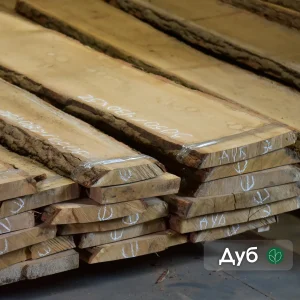
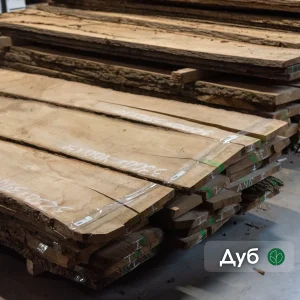
Unedged board features untreated ends. This more affordable material requires preliminary preparation for joinery works. Boards with bark are frequently used in rustic projects. Waney-edged timber is utilised during the manufacture of interior items and in construction works.
Choose edged oak if your goal is to minimise waste and accelerate the process of manufacturing standard products. You pay more per cubic metre, but you do not overpay for “air” and bark.
Choose unedged oak if your goal is to create an exclusive designer item with a “live” edge or if you are prepared to spend time on processing to save budget on procurement.
Solid wood is measured in cubic metres, hence the price in the price list is indicated per 1 cubic metre. How does one find out how many cubic metres are in a board? For calculations, one refers to the standard volume formula: multiply length, width, and thickness (height).
Let us attempt to determine how many cubic metres are in an edged board 35 mm thick, 22 cm wide, and 2.4 m long, and in an unedged board where the thickness is 40 mm, width is 31 cm, and length is 2.7 m.
Substituting into the formula, we obtain:
We frequently receive queries: “How many boards are in 1 cubic metre?”. To find the answer, divide 1 cubic metre by the volume of the board you plan to buy. Let us find out how many boards from our examples will fit into a cubic metre.
How many edged boards with a volume of 0.019 are in one cubic metre? 1 ÷ 0.019 = 52.6. Thus, 52 boards will fit in a cubic metre.
Similarly, we determine the quantity of unedged boards with a volume of 0.034: 1 ÷ 0.034 = 29 (pieces).
In the catalogue, the price of timber products is indicated per m³. How much does 1 board cost? The cost depends on dimensions, type (edged/unedged), and grade (Extra, 1).
To calculate, use the formula: price per m³ × Volume of the board. The volume of boards is determined as in the example above: multiply length, width, and thickness.
Let us consider the example of an edged oak board 30/180/28 and an unedged board 45/210/32 of Grade 1. In the first instance, the price per cubic metre is €1,299, and in the second – €999.
We calculate the volume of the first board: 0.03 × 1.8 × 0.28 = 0.015 (m³). Now we determine the price: 1299 × 0.015 = €19.49.
Using the same principle, we perform calculations for the second example. The volume of the timber is: 0.045 × 2.1 × 0.35 = 0.033 (m³). The cost equals: 999 × 0.033 = €32.97.
The division into grades is based on visual characteristics: number of knots, presence of sapwood (light young wood), uniformity of tone, and texture features.
| Grade | Surface Features | Application | Advantages |
|---|---|---|---|
| Extra | The board has a flawless surface with a uniform straw-brown shade. The texture is calm, fibres are even. Knots, cracks, and sapwood are absent. | This grade is chosen for elite projects where status and perfection are important. Used for facial furniture facades, expensive parquet, wall panels, veneering, and elements of classical interiors. | Maximum useful yield (almost 100% of material goes into work without trimming defects) and ease in finishing (uniform staining). |
| First | Single “live” (intergrown) knots of small diameter are allowed on the surface, which do not affect the board’s integrity. Minor colour variations and minimal sapwood inclusions (usually on the reverse side) are possible, merely highlighting the material’s naturalness. | Serial furniture production, manufacturing massive worktops, doors, staircases, as well as flooring where the customer wishes to see the natural wood texture. | Optimal balance of price and quality. This is a universal option for items where “plastic” uniformity is not required, but live texture is valued. |
| Second | The board has a variegated texture. A wide spectrum of natural features is allowed: contrasting light sapwood, knots of various sizes (including dark ones and those with cracks), and micro-cracks. | Unlike technical use of other species, Grade 2 oak is highly valued by designers. It is an ideal base for furniture in Loft, Country, and Rustic styles, tables with epoxy resin, and for items intended for solid painting or wire brushing (ageing). | Lowest cost price with high decorative value for modern interiors. Allows the creation of unique designer objects with a “live” edge. |
Due to a range of distinctive features, oak timber products are chosen to outfit both residential and public interiors. Wear resistance, environmental friendliness, and aesthetic appeal are cited as the primary parameters of an oak board.
Construction and finishing materials are obtained from various oak species growing in Eurasia, North and South America, and Africa. However, the most popular source of timber is the Common Oak. We offer a vast selection of oak timber materials suitable for creating diverse objects.
Oak is termed the long-liver amongst trees, as it can grow for around a thousand years. Solid wood is used to produce durable items that serve for decades. The heartwood is coloured in light or medium-brown tones.
The practically white or light-brown sapwood is not always sharply separated from the core. The fibres are straight, occasionally interlocked, whilst the texture is coarse and uneven.
Hard, dense, and viscous solid oak is simple to process. The wood fibres are straight, though sometimes interlocked grain occurs, and the wood texture is coarse and uneven.
Amongst the material’s main characteristics, the following should be highlighted:
Hard, dense, and exceptionally tough, solid oak timber is highly machinable and versatile: it can be efficiently sawn, glued, painted, stained, varnished, milled, and sanded.
Oak joinery board is actively applied in interiors differing in style and purpose. Solid wood is most often used to manufacture cabinet furniture, elements of soft furniture, home decor, and household items. The species lends itself excellently to processing, including carving, inlaying, ageing, burning, and colouring.
It is difficult to imagine a classical setting without massive, presentable, and detailed decorated oak furniture. Modern design is built on practicality, lightness, and comfort; therefore, strict and concise tables, armchairs, and chairs logically fit into flats in Loft, Eco, Purism, and Minimalism styles.
Public establishments are outfitted according to specific rules. Durable and practical furniture that withstands increased operational load is a mandatory condition of an office interior. Thanks to wear resistance and reliability, oak cupboards, chairs, tables, cabinets, shelves, and racking are an excellent option for workspaces with high footfall.
Exterior is another sphere where oak boards are used. Solid wood has shown itself excellently as decking on a covered terrace. Wood preliminarily coated with special agents does not fear precipitation, high humidity, or high and low temperatures. With competent processing and proper care, such flooring serves for a long time.
Steps for outdoor stairs are also manufactured from oak boards. Wooden flights leading to a porch or attic withstand significant weight and the whims of nature, and are easily cleaned. For safe movement on oak stairs, it is important to observe recommendations regarding tread depth and step height.
Our team has been cooperating with furniture factories, craft workshops, and interior designers for 30 years. We possess significant experience in material selection and are ready for tasks of any complexity; please contact us.
WoodWay Expert is a trading platform through which you have the opportunity to order quality timber with delivery across Ukraine. To buy oak timber products:
Important information: Timber materials are dispatched exclusively upon full prepayment.
Solid wood is measured in cubic metres, hence the price in the price list is indicated per 1 cubic metre. How does one find out how many cubic metres are in a board? For calculations, one refers to the standard volume formula: multiply length, width, and thickness (height).
Let us attempt to determine how many cubic metres are in an edged board 35 mm thick, 22 cm wide, and 2.4 m long, and in an unedged board where the thickness is 40 mm, width is 31 cm, and length is 2.7 m.
Substituting into the formula, we obtain:
We frequently receive queries: “How many boards are in 1 cubic metre?”. To find the answer, divide 1 cubic metre by the volume of the board you plan to buy. Let us find out how many boards from our examples will fit into a cubic metre.
How many edged boards with a volume of 0.019 are in one cubic metre? 1 ÷ 0.019 = 52.6. Thus, 52 boards will fit in a cubic metre.
Similarly, we determine the quantity of unedged boards with a volume of 0.034: 1 ÷ 0.034 = 29 (pieces).
In the catalogue, the price of timber products is indicated per m³. How much does 1 board cost? The cost depends on dimensions, type (edged/unedged), and grade (Extra, 1).
To calculate, use the formula: price per m³ × Volume of the board. The volume of boards is determined as in the example above: multiply length, width, and thickness.
Let us consider the example of an edged oak board 30/180/28 and an unedged board 45/210/32 of Grade 1. In the first instance, the price per cubic metre is €1,299, and in the second – €999.
We calculate the volume of the first board: 0.03 × 1.8 × 0.28 = 0.015 (m³). Now we determine the price: 1299 × 0.015 = €19.49.
Using the same principle, we perform calculations for the second example. The volume of the timber is: 0.045 × 2.1 × 0.35 = 0.033 (m³). The cost equals: 999 × 0.033 = €32.97.
The division into grades is based on visual characteristics: number of knots, presence of sapwood (light young wood), uniformity of tone, and texture features.
| Grade | Surface Features | Application | Advantages |
|---|---|---|---|
| Extra | The board has a flawless surface with a uniform straw-brown shade. The texture is calm, fibres are even. Knots, cracks, and sapwood are absent. | This grade is chosen for elite projects where status and perfection are important. Used for facial furniture facades, expensive parquet, wall panels, veneering, and elements of classical interiors. | Maximum useful yield (almost 100% of material goes into work without trimming defects) and ease in finishing (uniform staining). |
| First | Single “live” (intergrown) knots of small diameter are allowed on the surface, which do not affect the board’s integrity. Minor colour variations and minimal sapwood inclusions (usually on the reverse side) are possible, merely highlighting the material’s naturalness. | Serial furniture production, manufacturing massive worktops, doors, staircases, as well as flooring where the customer wishes to see the natural wood texture. | Optimal balance of price and quality. This is a universal option for items where “plastic” uniformity is not required, but live texture is valued. |
| Second | The board has a variegated texture. A wide spectrum of natural features is allowed: contrasting light sapwood, knots of various sizes (including dark ones and those with cracks), and micro-cracks. | Unlike technical use of other species, Grade 2 oak is highly valued by designers. It is an ideal base for furniture in Loft, Country, and Rustic styles, tables with epoxy resin, and for items intended for solid painting or wire brushing (ageing). | Lowest cost price with high decorative value for modern interiors. Allows the creation of unique designer objects with a “live” edge. |
Due to a range of distinctive features, oak timber products are chosen to outfit both residential and public interiors. Wear resistance, environmental friendliness, and aesthetic appeal are cited as the primary parameters of an oak board.
Construction and finishing materials are obtained from various oak species growing in Eurasia, North and South America, and Africa. However, the most popular source of timber is the Common Oak. We offer a vast selection of oak timber materials suitable for creating diverse objects.
Oak is termed the long-liver amongst trees, as it can grow for around a thousand years. Solid wood is used to produce durable items that serve for decades. The heartwood is coloured in light or medium-brown tones.
The practically white or light-brown sapwood is not always sharply separated from the core. The fibres are straight, occasionally interlocked, whilst the texture is coarse and uneven.
Hard, dense, and viscous solid oak is simple to process. The wood fibres are straight, though sometimes interlocked grain occurs, and the wood texture is coarse and uneven.
Amongst the material’s main characteristics, the following should be highlighted:
Hard, dense, and exceptionally tough, solid oak timber is highly machinable and versatile: it can be efficiently sawn, glued, painted, stained, varnished, milled, and sanded.
Oak joinery board is actively applied in interiors differing in style and purpose. Solid wood is most often used to manufacture cabinet furniture, elements of soft furniture, home decor, and household items. The species lends itself excellently to processing, including carving, inlaying, ageing, burning, and colouring.
It is difficult to imagine a classical setting without massive, presentable, and detailed decorated oak furniture. Modern design is built on practicality, lightness, and comfort; therefore, strict and concise tables, armchairs, and chairs logically fit into flats in Loft, Eco, Purism, and Minimalism styles.
Public establishments are outfitted according to specific rules. Durable and practical furniture that withstands increased operational load is a mandatory condition of an office interior. Thanks to wear resistance and reliability, oak cupboards, chairs, tables, cabinets, shelves, and racking are an excellent option for workspaces with high footfall.
Exterior is another sphere where oak boards are used. Solid wood has shown itself excellently as decking on a covered terrace. Wood preliminarily coated with special agents does not fear precipitation, high humidity, or high and low temperatures. With competent processing and proper care, such flooring serves for a long time.
Steps for outdoor stairs are also manufactured from oak boards. Wooden flights leading to a porch or attic withstand significant weight and the whims of nature, and are easily cleaned. For safe movement on oak stairs, it is important to observe recommendations regarding tread depth and step height.
Our team has been cooperating with furniture factories, craft workshops, and interior designers for 30 years. We possess significant experience in material selection and are ready for tasks of any complexity; please contact us.
WoodWay Expert is a trading platform through which you have the opportunity to order quality timber with delivery across Ukraine. To buy oak timber products:
Important information: Timber materials are dispatched exclusively upon full prepayment.