
Order
Place order
Clear the whole list?
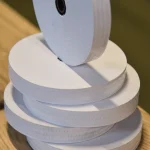
Veneer splicing supplies for the Kuper process: perforated gummed paper tape and glue threads that join veneer leaves into full-width faces before pressing. The consumables furniture factories and veneering shops run on.
Veneer splicing is a multi-stage process that calls for good consumables and dedicated equipment. To lay up a face, craftsmen use either veneer tape or hot-melt splicing thread. Both materials deliver:
Paper tape for veneer is widely used in small workshops, because it is easy to work with and needs no extra equipment. Hot-melt thread for veneer splicing is laid onto the edges of the leaves by a splicer or a hand-held machine.
Veneer tape and splicing thread with a veneer splicer are used to veneer cabinet furniture, doors, wall panels and all manner of household items. The consumables for joining natural veneer and fine-line differ in the following respects:
The Woodway Expert group supplies veneer tape, hot-melt splicing thread and hand-held veneer splicers from the leading makers Kuper and Schumann, trade and retail. Equipment and consumables for joining veneer are in stock at the trade counter and warehouse in Kyiv. Delivery across Ukraine is available, as is collection in person. Our sales managers will confirm current retail and trade prices, payment methods and estimated delivery times.
Veneering MDF, particle board and plywood takes several stages. Before they are pressed, the leaves of natural timber have to be joined into a single sheet with a particular pattern – the lay-up, or face. To build up faces of any degree of complexity, craftsmen use gummed tape or splicing thread. Both ways of joining the material give a sound joint. Veneer tape is more common in small joinery shops, because applying it needs no extra equipment. Joining with hot-melt thread calls for a veneer splicer. That equipment is most often found in industrial plants, while for smaller workshops the makers offer easy-to-run hand-held veneer splicers.
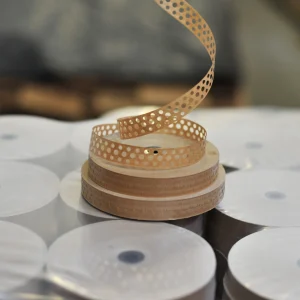
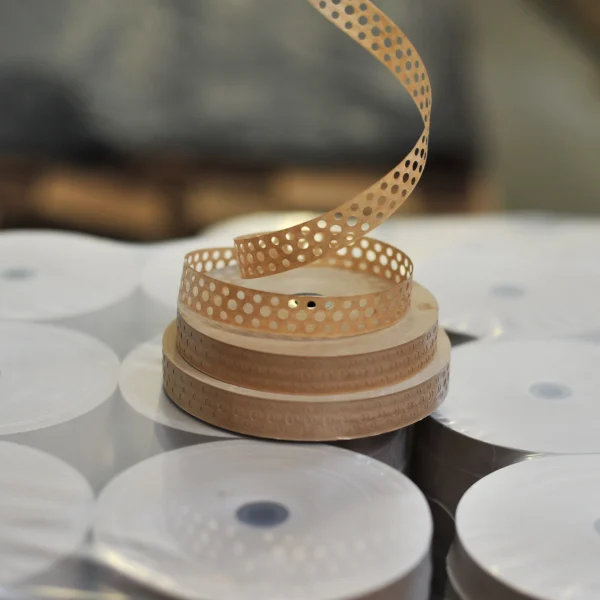
Gummed tape is a thin strip of strong rubberised paper used to join veneer. Craftsmen apply it in two ways. The first: the gummed side of the tape is moistened with a damp sponge and the tape is then laid over the joints between the leaves. The second: the tape is applied to leaves that are still damp. As it dries, the tape shrinks slightly and draws the edges together, which gives a tight and invisible joint. The tape also protects the edges of the veneer from cracking and delamination. The strip comes away without trouble when the veneered surface is sanded.
The main properties of veneer tape are:
Gummed tape for joining veneer varies in colour, perforation and width.
Colour. The material is offered in white or brown. The colour of the tape helps to make the joint all but invisible: brown tape is used on dark timber, white on light.
Perforation. Unperforated tape suits the splicing of even thick veneer. Where thin, delicate leaves have to be joined, perforated tape is the answer. Perforated veneer tape also helps to keep the joint straight: through the holes the craftsman can see the seam and correct the work as he goes.
Sizes. Standard veneer tape is 10 mm, 15 mm or 20 mm wide, and a roll holds around 200 running metres.
One more important property of paper tape for veneering is how easy it is to use. The consumable can be removed from the surface at any moment to put right a flaw or a mistake.
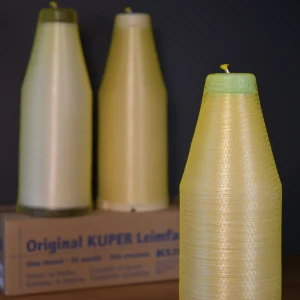
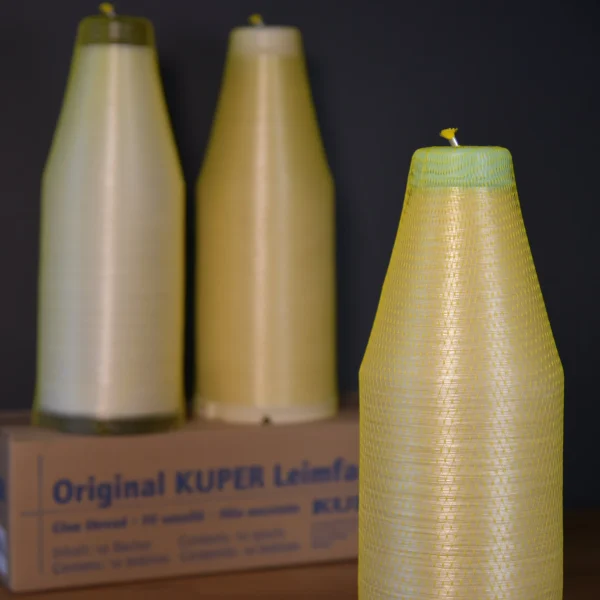
Splicing thread for veneer is a material made of glass fibre and adhesive, used to join leaves of natural veneer or fine-line. Laying up faces with thread calls for a splicer or a hand-held machine. Veneering proceeds as follows: the thread, heated to a set temperature, is laid in a wave or zigzag along the joint between the leaves and, penetrating the structure of the wood, joins the material.
The advantages of splicing thread include:
We supply quality splicing thread from the leading makers. The catalogue holds consumables from the market leaders Kuper and Schumann.
| Kuper splicing thread | Kuper veneer splicing thread is widely used in furniture production. The material gives a strong seam, is easy to work with and meets environmental safety standards. Kuper thread also keeps the cost of joinery work down, since it is used sparingly and does not wear the equipment. |
|---|---|
| Schumann splicing thread | The equivalent of the Kuper product is Schumann hot-melt thread. The German brand produces a material whose quality has been proved in practice. Its low melting point means Sifa thread can be used on veneer splicers and hand-held machines alike. Sifa veneer thread is intended for machines with electric and hot-air heaters. |
Kuper and Sifa by Schumann splicing threads are interchangeable, so the splicer needs no resetting.
As noted above, joining leaves with splicing thread calls for a dedicated machine. It may be an industrial model or a hand-held one. The equipment works on the same principle in either case, and comes down to the following steps:
The Kuper veneer splicer handles a range of jobs in the facing of plywood, particle board and MDF. The Kuper KHL 1 hand-held splicer is the one for joining long leaves, repairing edges and making up frames for fronts. The Kuper KHL 2 takes two spools and is used for laying up complex faces and for splicing distorted or thick veneer. The Kuper HFZ 4 hand-held machine produces a zigzag seam, which joins small batches of natural veneer properly.
The Woodway Expert group supplies equipment and consumables for veneer splicing on favourable terms. Splicing thread, Kuper hand-held splicers and white and brown veneer tape are in stock at the warehouse. Collection in person is available, as is delivery across Ukraine. Our managers will confirm trade and retail prices, payment methods and delivery times when the order is placed.