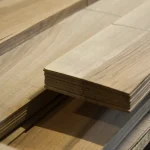
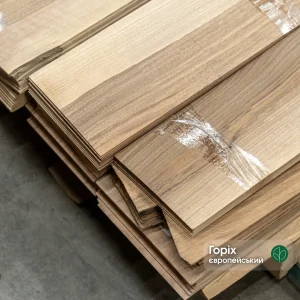
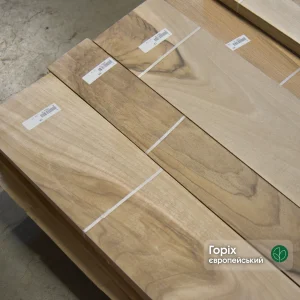
Sawn European Walnut Veneer

Sawn veneer (timber lamella) from European walnut is a premium sawn timber product. It is produced by sawing solid wood into thin sheets. The main difference between sawn and sliced veneer is the thickness. Standard lamella thickness is 2.5 mm and 4.5 mm. We can manufacture sheets up to 10 mm upon request.

Sawn European walnut veneer 2.5 mm, 0.5–3 m

  • Wood species: European Walnut
  • Thickness: 2.5 mm
  • Type: Sawn
1 029  / m²

Sawn European walnut veneer 4.5 mm, 0.5–3 m

  • Wood species: European Walnut
  • Thickness: 4.5 mm
  • Type: Sawn
1 853  / m²

Sawn European Walnut Veneer: Advantages, Grades, Dimensions, and Applications

Sawn veneer (timber lamella) from European walnut is a premium sawn timber product. It is produced by sawing solid wood into thin sheets. The main difference between sawn and sliced veneer is the thickness.

Standard lamella thickness is 2.5 mm and 4.5 mm. We can manufacture sheets up to 10 mm upon request. This thickness makes the material a stable and rational alternative to solid floorboards. Minimum order is 1 pack; wholesale is available. Orders can be collected in person from our warehouse. We deliver across Ukraine via carrier companies.

European walnut is a highly valuable hardwood species. It is a strong and dense solid wood with a distinct grain and a rich colour palette. The key features of European walnut sawn veneer include several notable characteristics:

  • Grain and colour. Walnut timber features a broad palette, ranging from light grey and honey hues to rich dark brown. Contrasting dark streaks form a striking pattern on radial or tangential cuts.
  • Durability. Solid walnut is noted for its hardness and toughness. Sawn lamellas are highly resistant to mechanical stress, wear, and deformation.
  • Ease of machining. European walnut is highly workable. The lamella is easy to cut, rout, sand, bend, and glue. The material takes finishes, such as staining and varnishing, exceptionally well.
  • Dimensional stability. Kiln drying to a standard moisture content of about 8% relieves internal stresses within the timber. This minimises the risk of cracking or warping in the finished product during temperature and humidity fluctuations.
  • Eco-friendliness. This is a completely natural and safe product. It is fully approved for use in both public and residential spaces.

Due to its thickness and durability, sawn walnut veneer is an optimal choice. It is widely used for manufacturing parquet, wooden stairs, wall panels, worktops, and cabinet frontals.

Sawn European Walnut Lamella: Stock Items and Bespoke Manufacturing

We maintain a constant stock of finished products. Additionally, we manufacture bespoke timber products to specific parameters. The following bundle specifications are always available for immediate dispatch from our warehouse:

  • Thickness: 2.5 mm or 4.5 mm.
  • Width: from 12 cm.
  • Length: from 0.5 to 3 m.

Standard-sized timber does not suit every woodworking project. Therefore, you can order bespoke sawn veneer with the following parameters:

  • Thickness can range from 2 to 10 mm.
  • Width can be specified between 12 and 21 cm.
  • Length is limited to 0.5–3 m.

Manufacturing takes up to 10 working days. The minimum order volume is 10 m².

Grades of Sawn European Walnut Veneer

Timber grading is an accurate assessment of surface quality. It is based on visual characteristics such as knots, sapwood, medullary rays, and colour uniformity.

European walnut is renowned for its high contrast and distinct texture. Choosing the right grade allows you to realise your design vision whilst properly optimising the project budget.

Classification of Sawn Walnut Lamella by Grade

Characteristic Grade 1 Grade 2 Grade 3
Features Highest quality material selected for exclusive products. Features uniform grain and harmonious colour transitions without sharp contrasts. Showcases the natural beauty of walnut with moderate accents. Pronounced grain with natural hue variations. Material with maximum pronounced timber features. High contrast and a rich, striking pattern.
Tolerances Sapwood (light edges) is virtually absent or minimal (no more than 5–10% of the area). The surface is clean, without knots, cracks, or other defects. Small, healthy ‘live’ knots (usually up to 10–15 mm) that are firmly held in the wood are permitted. Sapwood is allowed (up to 20–30%), adding an authentic look. Large knots (including black and partially fallen out ones), hairline cracks, significant sapwood, and mottling are permitted.
Applications Manufacturing premium furniture frontals, worktops, musical instruments, and decorative panels. Production of engineered flooring, stairs, door leaves, and modern furniture where natural materials are valued. Grade 3 lamella is used as a stabilising bottom layer. It is also a standalone design solution for creating authentic ‘antique’ items.

The choice of timber depends entirely on the technical and aesthetic requirements of the product. Grade does not affect the physical and mechanical properties of the wood, such as strength or moisture content.

What is Made from Sawn European Walnut Veneer?

Sawn walnut veneer sheets are used wherever a strong and wear-resistant surface is required. Here are the main products where this material is most viable and economically justified:

  1. Flooring. Producing parquet and engineered flooring is the main application for sawn veneer. Lamellas 3–4.5 mm thick serve perfectly as the top wear layer. This timber cladding provides the authentic appearance of a solid walnut floor whilst remaining highly stable.
  2. Worktops and surfaces. Walnut sawn veneer is frequently used to clad bases like MDF or plywood for dining tables or desks. Such a worktop is stable and visually indistinguishable from solid wood. It is also highly popular for kitchen islands, breakfast bars, and hotel reception desks.
  3. Stairs. Walnut lamella is a very reliable solution for cladding treads, risers, and handrails. The high density of European walnut guarantees excellent abrasion resistance. The veneer thickness effortlessly withstands intense daily footfall.
  4. Furniture frontals. In modern furniture design, walnut lamella is used to decorate the frontals of chests, cabinets, and wardrobes. Walnut furniture is frequently chosen for retro, classic, neoclassical, and art deco interiors.
  5. Interior doors. Veneering door leaves with thick lamella creates the impressive effect of a solid construction made from noble timber.
  6. Wall panels. European walnut instantly adds status and warmth to any interior. Sawn veneer is used to craft decorative accents in studies, bedrooms, or hotel lobbies. Timber-clad wall panels serve as a highly effective visual anchor.
  7. Partitions and screens. Wooden planks are ideal for creating slatted partitions or acoustic baffles. Lamellas clad interior walls to quickly and stylishly alter a room’s layout. They are also used to decorate screens, highlighting functional zones in various rooms.

Sawn walnut veneer is also widely used for crafting bespoke interior items. These easily include jewellery boxes, organisers, picture frames, and other fine decor.

Production Stages of European Walnut Sawn Veneer (Lamella)

Manufacturing wooden lamellas requires strict adherence to production technology. It also relies heavily on the use of modern machinery. Below is a detailed overview of the main stages of timber product creation:

  1. Raw material selection. Specialists carefully select the timber during the initial stage. Grade 1 and Extra grade walnut boards are suitable for sawn veneer. High-quality raw materials form the solid foundation for premium lamellas.
  2. Kiln drying. The selected boards undergo rigorous kiln drying. This technology achieves a stable joinery moisture content of 8–10%. It neutralises internal stress and guarantees complete protection against warping.
  3. Calibration. The next crucial step is the mechanical adjustment of each board. They are perfectly fitted to the precise parameters of the saw cassette.
  4. Sawing. After jointing, the blanks are ready to be ripped into lamellas. The timber is sawn on a Wintersteiger machine. This modern equipment guarantees uniform sheet thickness across the entire surface area.
  5. Grading. The sawn veneer sheets are checked for size and grade compliance. The timber products are then stacked neatly into bundles. Labelled bundles are placed on pallets for secure storage and transport.

This multi-stage production cycle guarantees consistent excellence. Every square metre of lamella thoroughly meets strict quality standards.

European Walnut Timber: Key Parameters

European walnut (Juglans regia) is a popular broadleaved species. Its natural range extensively covers Southern and Central Europe, as well as Asia. The tree is actively cultivated across all regions of Ukraine, making raw materials highly accessible.

European walnut is widely classified as a medium-density hardwood. The wood is particularly noted for its high toughness and impressive impact resistance. Solid wood density generally ranges from 640–680 kg/m³, with a Brinell hardness rating of 3.4.

The core colour palette consists of light brown and dark chocolate hues with smoky or olive flecks. Contrasting dark streaks are frequently and beautifully present. The sapwood contrasts sharply, being notably narrow and light grey or yellowish.

The grain is usually straight, although wavy and curly sections are common. Pores are medium to large and are clearly visible on longitudinal cuts. The material cuts and routs perfectly without any splintering.

Thanks to its exceptionally dense structure, walnut achieves a mirror-like shine after fine sanding. The timber demonstrates excellent adhesion with most joinery glues, including PVA and PU. Walnut readily absorbs protective oils, waxes, and varnishes.

7 Reasons to Order Sawn European Walnut Veneer from WoodWay Expert

Our primary priority is providing exceptionally quick access to high-quality timber materials. Since 1996, we have successfully collaborated with architectural bureaus, furniture factories, and bespoke joinery workshops. Here is exactly why businesses and craftsmen consistently choose us:

  1. Constant warehouse stock. The most popular timber products (2.5 mm and 4.5 mm thick) are always ready for immediate dispatch. You can visit our warehouse personally on weekdays from 08:00 to 17:00.
  2. Bespoke project manufacturing. We professionally produce sawn veneer ranging from 2 to 10 mm in thickness. The minimum order is 10 m², and lead times usually do not exceed 10 working days.
  3. Extensive catalogue. Our impressive range currently covers over 15 distinct wood species. We are completely happy to discuss bespoke production if your project requires a lamella not in our standard stock programme.
  4. Ukraine-wide dispatch and collection. You can conveniently collect products from our warehouse or use transport companies for nationwide delivery. We take great care with secure packaging to ensure materials arrive in flawless condition.
  5. Remote selection. Send us your technical brief, and our timber specialists will select bundles matching your texture and shade requirements. You will receive detailed photos and specifications for final approval.
  6. Payment options. We gladly support various payment methods for your absolute convenience. This includes cash at the warehouse or standard BACS transfers for registered businesses.
  7. Bundle and wholesale purchasing. Sales conveniently start from just 1 single bundle. The bundle price strictly depends on the quantity and dimensions of the sheets. We are also fully equipped to handle large wholesale deliveries.

A tailored system of personalised discounts is readily available for our wholesale clients. The precise discount rate is determined by the total purchase volume and the specific type of product selected.

Three Ways to Buy Sawn European Walnut Veneer

Over years of successful collaboration with factories and bespoke workshops, we have developed convenient selection schemes.

  • Warehouse visit. Visit our wholesale and retail base to select your veneer personally. Our managers will proudly demonstrate options, assist with selection, and quickly calculate costs. Find us easily at: 7d Zdolbunivska St, Kyiv.

Remote consultation. If you simply cannot travel, contact our specialists directly on +380 (67) 180-38-13. You can message us on Telegram or Viber to receive

FAQ: Frequently Asked Questions about European Walnut Sawn Veneer

What thickness of walnut sawn veneer (lamella) is best for flooring?

For the top layer of engineered wood flooring, sawn veneer with a thickness of 3.5–4.5 mm (approx. 1/8" to 3/16") is optimal. This thickness provides a substantial wear layer, which can be sanded and refinished 3 to 5 times over its lifespan.

What is the difference between European and American Walnut?

European Walnut features a more high-contrast grain pattern, a wide range of shades (from honey to dark brown), and distinct dark veining. American Black Walnut is typically darker (featuring rich chocolate brown tones) and has a more uniform and consistent grain pattern.

What is the moisture content of European Walnut sawn veneer?

The lumber used to produce the lamellas is kiln-dried to a moisture content (MC) of 8–10%. This is the optimal industry standard for interior millwork and applications, effectively minimizing the risk of the material warping or cupping post-installation.

How do I choose the right grade of sawn veneer for cabinet fronts?

If you are planning a traditional or classic design, choose Grade 1 (Select), which features a uniform texture and is clear of knots. For modern, Industrial/Loft, Rustic, Farmhouse, or Eco-style interiors, Grades 2 and 3 (Character/Rustic) are highly suitable. Material with natural characteristics like knots and color variation adds authentic charm to the finished product.

Can walnut sawn veneer be used for staircase fabrication?

Yes, it is one of the best solutions available. Walnut sawn veneer with a thickness of 4.5 mm (3/16") offers exceptional wear resistance. These thick veneer sheets are widely used for veneering interior stair treads and risers.

What glue is best for bonding walnut veneer to a core material (MDF, plywood)?

We recommend using water-resistant wood adhesives such as D3 or D4-rated PVA (polyvinyl acetate) or polyurethane (PU) glues. Ensuring even pressure across the entire surface (using a cold press or hot press) is essential for achieving reliable, long-lasting adhesion.

How do I calculate the amount of material if sawn veneer is sold in bundles (flitches)?

The total area of one bundle is calculated using the formula: length (m) × width (m) × number of sheets. You should factor in an additional 10–15% to the total square footage/meterage to account for waste, trimming, and pattern matching. Since sawn veneer is a natural material, sheets within bundles come in random widths and lengths. We sell the material by the full flitch (bundle) without splitting them to maintain the integrity of the natural grain sequence and color match.

Is it possible to manufacture walnut sawn veneer in custom sizes?

Yes, we accept custom orders for sawn veneer with thicknesses ranging from 2 to 10 mm (approx. 5/64" to 3/8"). The minimum order quantity (MOQ) for a custom run is 10 m² (approx. 108 sq. ft.), with a production lead time of up to 10 business days. Contact number: +380 (67) 180-38-13 (Telegram or Viber).
View list
Compare