Sawn Pine Veneer

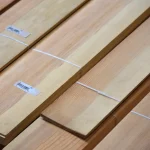
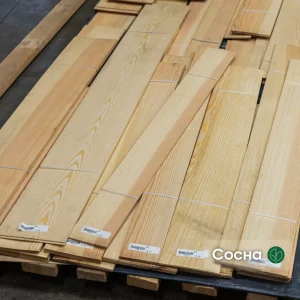
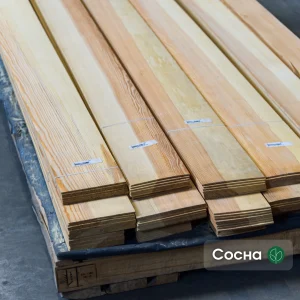
Sawn veneer, or lamella, made from pine is a premium timber material frequently utilised for surface veneering. Thanks to its production technology, this timber product maintains a stable shape, alongside the natural structure and colour of solid wood.

Running low

Sawn pine veneer 2.5 mm, 0.5–3 m

  • Wood species: Pine
  • Thickness: 2.5 mm
  • Type: Sawn
617  / m²
Made to order

Sawn pine veneer 4.5 mm, 0.5–3 m

  • Wood species: Pine
  • Thickness: 4.5 mm
  • Type: Sawn
875  / m²

Sawn Pine Veneer: Characteristics, Grades, Applications, and Where to Buy

Sawn veneer, or lamella, made from pine is a premium timber material frequently utilised for surface veneering. Thanks to its production technology, this timber product maintains a stable shape, alongside the natural structure and colour of solid wood. You can buy pine sawn lamellas wholesale or from 1 pack. We provide remote product selection. Orders can be collected directly from our warehouse in Kyiv. Delivery across Ukraine is available.

Unlike sliced or rotary-cut alternatives, a lamella is crafted through precision sawing of timber into thin boards, ranging from 2 to 10 mm in thickness.

Because of this substantial thickness, sawn pine veneer is often referred to as “thin solid wood”.

Characteristic Sawn Lamella (2–10 mm) Sliced Veneer (0.5–0.6 mm)
Durability High (withstands loads) Low (purely decorative role)
Restoration Multiple sandings possible Single calibrating (finishing) sanding possible
Texture Completely identical to solid wood Slightly altered due to the slicing process
Applications Parquet flooring, fascias, staircases Veneering of panels and furniture

The key characteristics and advantages of this material are as follows:

  • Textural clarity. The material boasts a distinct graphic pattern of annual rings and a warm, light colouring, ranging from pale straw to amber.
  • High stability. Thanks to kiln drying to an 8–10% moisture content, sawn pine veneer resists deformation and cracking.
  • Mechanical processing. Pine lamella is easily sanded, brushed (artificially aged), varnished, and painted.
  • Economic efficiency. Utilising lamellas allows for the creation of items that are visually indistinguishable from solid wood. They are significantly more affordable and highly resistant to fluctuations in humidity.

To order timber products, contact our manager or submit a request on the website.

Sawn Pine Veneer Dimensions: Stock Availability and Custom Production

The company operates a standard warehouse programme whilst also accepting bespoke orders for timber products with non-standard specifications. The permanent inventory features timber products with the following dimensions:

  • thickness: 2.5 mm and 4.5 mm;
  • width: from 12 cm;
  • length: from 0.5 to 3 m.

In addition to ready-made stock, bespoke manufacturing of pine sawn veneer to custom dimensions is available. This option is ideal for furniture manufacturers, joinery workshops, and bespoke design projects. The available parameter ranges are:

  • thickness: from 2 to 10 mm;
  • width: 12–21 cm;
  • length: 0.5–3 m.

Bespoke lamella production typically requires up to 10 working days. The minimum order quantity is 10 m² of material from a single wood species.

Sawn Pine Veneer: Grade Specifications

Grade is an essential quality indicator determined by the visual characteristics of the material’s face side. Sorting is carefully based on the presence of natural timber features: knots, sapwood, colour variations, and medullary rays.

Selecting the correct grade optimises your project budget efficiently. Premium timber grades are chosen for highly visible fascia elements, whereas lower grades are perfectly suitable for sub-bases intended for painting or concealed structures.

Characteristic Grade 1 (A) Grade 2 (B) Grade 3 (C)
Features The highest quality level, showcasing the flawless natural aesthetics of pine. Homogeneous texture, uniform colour, and the absolute absence of visible defects. The golden mean between price and a stunning natural appearance. This grade strongly highlights the material’s natural origins. Presence of natural wood patterns that do not compromise the overall look. A maximally natural appearance with highly pronounced timber characteristics. The material possesses a strongly defined “rustic” character.
Tolerances Only a minimal quantity of “live” light knots (up to 2–5 mm in diameter) and a slight deviation in grain direction are permitted. Sapwood and black knots are entirely absent. “Live” healthy knots of a larger diameter, a small number of dark non-falling knots, slight colour variations, and a minor proportion of light sapwood (up to 10-15% of the area) are permitted. Dark knots, falling knots (suitable for filling), sapwood, hairline cracks, and medullary rays are fully permitted.
Applications Manufacturing of luxury furniture fascias, premium panelling, and high-end worktops. Production of doors, Scandinavian-style wall panels, and veneering the reverse sides of furniture components. Items for loft or country-style interiors, and the robust creation of sub-bases for subsequent coating with opaque enamels.

Applications of Sawn Pine Veneer

Thanks to its substantial thickness (typically 2.5 to 4.5 mm for standard items), pine lamella acts as a highly reliable substitute for solid wood. This timber product allows for the creation of structures visually indistinguishable from solid timber, yet they are structurally more stable and reasonably priced.

Let us examine the primary applications of these versatile timber products in modern interiors and manufacturing.

  1. Work surfaces and countertops. Pine lamella is an eminently sensible choice for veneering surfaces subjected to significant mechanical stress. Sheets of sawn veneer are securely bonded to a substrate of moisture-resistant plywood, chipboard, or MDF. The veneered base is lighter and more stable than solid wood, whilst remaining visually identical to solid timber.
  2. Doors. Utilising lamellas enables the creation of elegant door leaves with precisely matched grain patterns, a feat notoriously difficult to achieve with solid wood. Pine doors are frequently chosen for flats, townhouses, country cottages, and chalets.
  3. Furniture fascias. Wardrobe, chest of drawers, or cabinet doors beautifully finished with sawn veneer can last for decades with proper care. Intricate routing can be executed on thicker sheets. Pine-veneered surfaces are exceptionally easy to tint, oil, wax, or varnish.
  4. Interior panelling. Pine slats are wonderfully suitable for creating slatted acoustic panels, widely known as baffles. Furthermore, softwood sheets are traditionally used to elegantly finish wall panels. The textured solid wood seamlessly complements various interior styles: from neo-classical and Scandi to loft and country. Wooden wall panels are a popular choice for drawing rooms, bedrooms, studies, conference rooms, and offices.
  5. Partitions. Pine slats are routinely used to construct tall, stationary, or convenient sliding partitions. Additionally, lamellas are used to stylishly face internal partition walls made of MDF or chipboard. Such non-structural installations greatly assist in altering floorplans and intelligently zoning spaces.

Craftsmen also enthusiastically produce an array of charming decorative items from sawn pine veneer. Handcrafted caskets, smartphone and tablet stands, desk organisers, key holders, napkin rings, and picture frames are in consistently high demand.

Stages of Sawn Pine Veneer Production

Sawn pine veneer is produced from solid softwood timber using a longitudinal sawing technique. The quality of the finished lamella relies heavily on proper raw material selection, strict adherence to drying protocols, and precise mechanical processing.

  1. Timber selection. The initial stage involves selecting pine boards of the appropriate quality. First or premium-grade timber, free from critical defects, is used to manufacture the lamellas. This approach yields a veneering material with a uniform texture and incredibly stable dimensions.
  2. Kiln drying of timber. Following selection, the boards undergo a rigorous drying process within kiln chambers. A controlled drying regime reduces the moisture content of the solid pine to joinery standards—approximately 8–10%. Kiln drying minimises internal stresses and significantly lowers the risk of timber splitting.
  3. Blank calibration. The blanks are jointed and calibrated to guarantee a perfectly flat surface and a consistent thickness along their entire length. The boards are meticulously sized to fit the saw blade cassette.
  4. Sawing into lamellas. The prepared pine boards are fed into a modern Wintersteiger machine, where they are sliced into sheets of a specified thickness. This machinery enables the production of lamellas with minimal timber wastage and stable geometry. Owing to the high precision of the cut, the sheet surfaces elegantly retain the natural pine texture and a distinct annual ring pattern.
  5. Sorting and bundling. Post-sawing, the lamellas undergo rigorous quality control. The material is inspected for strict compliance with stated dimensions, surface flatness, and the presence of natural characteristics. Depending on their visual appearance and technical specifications, the lamellas are sorted by grade and stacked into secure bundles for subsequent storage or dispatch.

Strict adherence to this manufacturing sequence ensures the production of sawn pine veneer with a stable form and entirely predictable operational properties. This top-tier veneering material is widely utilised in furniture manufacturing, bespoke door production, decorative panelling, and various other joinery applications.

Pine Timber: Principal Characteristics

Pine (Pinus) is amongst the most perennially popular species in European woodworking. Commercial timber predominantly originates from the vast forests of Northern and Central Europe. Pine harvested from northern regions predictably possesses a higher density due to its incredibly narrow annual growth rings.

At standard moisture content (12%), the solid wood’s density typically ranges from 500–520 kg/m³. The Brinell hardness rating stands at a solid 2.5. These specific metrics indicate that the species can easily endure moderate loads but strongly requires a protective varnish coating. Pine notably exhibits moderate toughness.

The natural colour palette is quite extensive, seamlessly ranging from pale yellow sapwood to a deep reddish-brown heartwood. Over time, prolonged exposure to UV rays further deepens and beautifully darkens the colour. The texture is wonderfully pronounced, with a strikingly clear demarcation between earlywood and latewood. The annual rings consistently produce a distinctive and appealing striped pattern.

The timber grain is predominantly straight and predictable. The wood naturally contains numerous large resin canals, proudly imparting a highly characteristic softwood fragrance. Due to the notably high oleoresin (resin) content, premium-quality cutting tools must be employed. The solid wood reliably demonstrates excellent adhesion when paired with PVA, polyurethane, and EPI adhesives.

Given its distinct and attractive texture, the material is highly suitable for brushing (removing softer fibres with a stiff wire brush) and tinting. Due to the naturally varying densities of earlywood and latewood, pine may occasionally absorb stains unevenly. To achieve a perfectly uniform colour, we highly recommend applying specialist wood conditioners or primers well prior to the main pigment.

Why Order Sawn Pine Lamella from WoodWay Expert?

Our dedicated team’s efforts are sharply focused on ensuring that furniture manufacturers, joiners, and craftsmen can swiftly acquire top-tier timber materials. For well over three decades, we have successfully collaborated with bustling furniture factories, large building contractors, architectural studios, and small artisan workshops. Below are the key compelling reasons clients consistently choose to partner with WoodWay Expert.

  1. Stock availability of sawn veneer. Our modern warehouse consistently stocks highly sought-after timber products in standard thicknesses of 2.5 mm and 4.5 mm. You are welcome to visit the depot, personally select lamella bundles with the desired grain and hue, and collect your order immediately following payment. The busy warehouse operates Monday to Friday from 08:00 to 17:00.
  2. Bespoke lamella manufacturing. For more complex or entirely non-standard projects, we proudly offer the production of sawn veneer to highly tailored specifications. Discerning clients may order custom lamellas with thicknesses ranging flexibly from 2 to 10 mm. The minimum batch volume sits at 10 m² of a single chosen wood species. Average bespoke order fulfilment takes up to 10 working days. An experienced manager will swiftly provide the current cost per square metre for sawn veneer after processing your detailed enquiry.
  3. An extensive selection of wood species. Our robust stock programme impressively encompasses timber materials from over 15 distinct and beautiful species. Clients can effortlessly source materials boasting wildly varied textures, colours, and densities. Beyond the standard inventory, we can adeptly manufacture lamellas from unusual species not featured in the permanent stock programme, subject to technical production capabilities.
  4. Collection and nationwide delivery. Finished orders can be conveniently collected directly from our main warehouse. For valued clients situated in other cities, we efficiently arrange rapid product dispatch via trusted logistics companies across the entirety of Ukraine. This streamlined structure facilitates brilliant collaboration with both local workshops and distant regional manufacturers.
  5. Remote material selection. Should a personal visit to the warehouse be utterly impractical, our skilled managers will happily assist you in selecting exquisite lamellas remotely. Simply submit a thorough enquiry detailing your project’s parameters: required area, texture type, hue, and desired wood species. Once efficiently processed, you will receive clear photographs and exact specifications of the available bundles. Following item confirmation, a precise invoice is generated, and dispatch occurs immediately post full payment.
  6. Convenient payment options. Straightforward settlements for products can be made directly at the warehouse in cash (a till receipt is promptly provided). BACS transfers are also widely accepted for sole traders and larger limited companies (including VAT-registered entities).
  7. Bundle sales and wholesale supply. Sawn veneer is traditionally sold in practical bundles. The bundle price is contingent upon the exact thickness, precise lamella dimensions, and the total number of sheets. The final cost is calculated using a simple formula: price per m² × (length × width × number of sheets). The company also expertly fulfills large bulk orders for commercial enterprises.

For loyal clients who routinely purchase products in bulk, we gladly offer bespoke terms of trade. Personalised commercial proposals are intelligently structured around your exact purchase volumes and the specific type of timber materials required. Generous discount levels are clearly determined following detailed discussions with a dedicated manager.

Where and How to Buy Sawn Pine Veneer in Ukraine?

Ordering sawn veneer for furniture manufacturing, bespoke joinery, or high-end interior finishing can be seamlessly accomplished through several convenient methods. Select the particular engagement format that best suits your precise operational requirements.

  • Personal warehouse visit. You are invited to attend our wholesale and retail warehouse to hand-pick lamella bundles featuring your absolutely preferred texture and shade. This traditional approach allows you to closely inspect the material directly before purchase and find the perfect match for your project’s exacting demands. Our helpful managers are on hand to assist with available options and expertly calculate the final order value. Warehouse address: Kyiv, 7d Zdolbunivska St. (entrance via 17e Dniprovska Embankment).
  • Remote consultation and selection. If a site visit is regrettably not feasible, please contact a knowledgeable manager via telephone on +380 (67) 180-38-13 (Viber or Telegram). Upon receiving your request, our timber specialist will carefully curate highly suitable material options, expertly factoring in the required area, texture, and colour. For utmost client convenience, we rapidly dispatch photos, videos, and technical specifications of the currently available timber stock, allowing you to thoroughly assess the lamella’s superb quality.
  • Online ordering. Your timber purchases can also be swiftly finalised online. To proceed, simply select the desired wood species and precise lamella thickness, then add the item to your basket or alternatively submit a request via the intuitive website form. Upon prompt receipt of your application, a friendly manager will contact you to confirm the exact material volume in square metres, agree on a preferred payment method, and happily answer any supplementary questions. If strictly necessary, we can easily provide additional photographs of the actual lamella bundles being meticulously prepared for dispatch.

We proudly collaborate with both wonderfully small artisanal workshops and vast large-scale manufacturing lines, successfully fulfilling complex orders of wildly varying magnitudes. Regardless of unique project complexity, our dedicated team is fully prepared to source the optimal material and carefully coordinate its seamless delivery.

FAQ: Frequently Asked Questions Regarding Sawn Pine Veneer

Why is sawn pine lamella superior to sliced veneer?

A robust lamella measuring 2–10 mm thick is produced by precision sawing, which perfectly preserves the structural strength, intricate texture, and deep colour of solid wood. Sawn veneer can be aggressively sanded and carefully restored on multiple separate occasions. Conversely, a very thin sliced veneer (0.6 mm) is merely a decorative facing material that safely permits only a single, incredibly light final sanding.

Which adhesive is best for bonding sawn pine veneer to MDF or plywood?

For standard interior applications, high-quality D3 class (water-resistant) PVA adhesives are generally appropriate. However, if the finished item is intended for heavy use in high-humidity environments (such as kitchens or family bathrooms), we strongly advise employing advanced two-part polyurethane systems to guarantee absolute maximum bond strength.

What is the optimal moisture content for pine lamella prior to installation?

The delivered material's crucial moisture content securely rests at 8–10%. This is an absolutely critically important metric: if the ambient moisture level is higher, the delicate lamella may dangerously shrink post-bonding, sadly leading to the rapid development of unsightly cracks on the beautiful fascia surface.

How do I accurately calculate the requisite quantity of sawn pine veneer?

All our strict material calculations are professionally conducted in square metres. We heavily suggest intelligently incorporating a sensible 15-20% contingency to safely accommodate tricky trimming, perfect texture matching, and any potential technological waste generated during the complex fitting of structural components.

Can pine lamella be tinted?

Yes, solid pine is highly receptive to beautiful tinting. Solid wood featuring incredibly prominent annual rings is occasionally employed by clever craftsmen to accurately replicate the luxurious look of premium, highly expensive timber species. However, owing to the variable natural density of its complex fibres, pine may unfortunately absorb pigment slightly unevenly; therefore, we strongly recommend the careful preliminary application of a quality wood conditioner.

Which standard sizes of pine lamella are permanently in stock?

Our large central depot in Kyiv efficiently maintains a constant, reliable inventory of popular lamellas at 2.5 mm and 4.5 mm thick, 12-21 cm wide, and 0.5-3 m long. Custom sawn veneer flexibly ranging from 2-10 mm thick is manufactured directly to order within a standard 10 working day lead time.
View list
Compare