Thanks to its strength and excellent workability, plywood is suitable both for furniture manufacturing and non-permanent construction. A layered material composed of an odd number of bonded rotary-cut veneer sheets, it easily withstands everyday wear in residential and commercial spaces. Plywood panels are dimensionally stable, resistant to cracking, and flexible. The material is widely used for wall and ceiling cladding, outbuilding construction, concrete formwork, packaging production, and roofing. Let’s take a closer look at the features of two popular types of plywood: laminated and veneered.
Table of Contents
- What is laminated plywood?
- What is veneered plywood?
- Which plywood is better: laminated or veneered?
- Which plywood is safer for home and apartment interiors?
What is laminated plywood?
Raw plywood sheets with unfinished surfaces are rarely used for furniture and interior joinery. Laminated plywood is produced by overlaying moisture-resistant Exterior Birch Plywood of a specific thickness with a PVC film. The panel edges are usually painted to seal them against dirt and moisture absorption.
The film overlay can be smooth or textured (wiremesh). Wiremesh-laminated plywood provides a non-slip surface and is used for anti-slip flooring and vehicle seating. Thanks to its distinctive texture, wiremesh plywood is also used in interior design. Smooth laminated panels are used for formwork in construction, partition walls in vehicle manufacturing, and exterior cladding.
Key performance characteristics of PVC-laminated plywood include:
- relatively low weight;
- wear resistance;
- high strength;
- easy transportation and storage;
- moisture resistance;
- resistance to abrasion and chemicals;
- resistance to temperature fluctuations.
Joiners and builders also value laminated plywood for its wide range of sizes and thicknesses, making it adaptable to projects of any complexity. Another advantage is the selection of PVC film colours and textures: from solid light or dark shades to imitations of wood grain, stone, fabric, or tile.
What is veneered plywood?
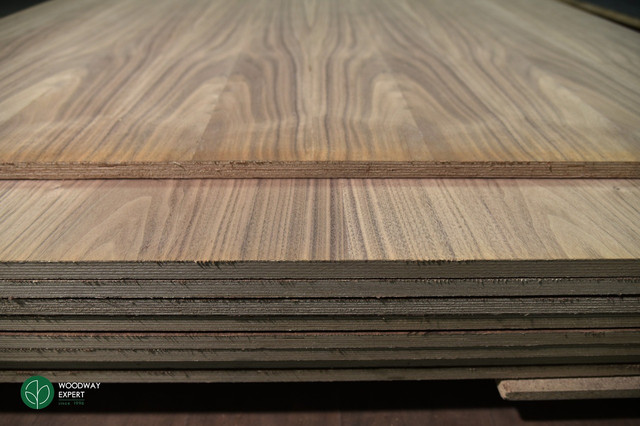
Veneered plywood is primarily used in furniture manufacturing and interior fit-outs. The surface of the Exterior Birch Plywood core is faced with natural veneer—a thin slice of genuine timber. The edges are finished with wood veneer edge banding to give the material a clean, finished look and protect the edges from dirt. Veneered plywood is coated with waxes, oils, or lacquers to protect the surface against minor scratches, scuffs, and chips.

Veneering is preceded by assembling veneer layons. Wood sheets are matched and joined into a continuous layon to create a specific pattern. The most common veneer matching methods are book match, slip match, reverse match, mix match, and random match. Different veneer combinations produce unique wood grain patterns.
WoodWay Expert supplies stock plywood panels veneered with:
We also offer custom veneering services. Customers can choose from a broad variety of wood species: along with those listed above, 13 additional species and 8 types of exotic wood veneer are available.
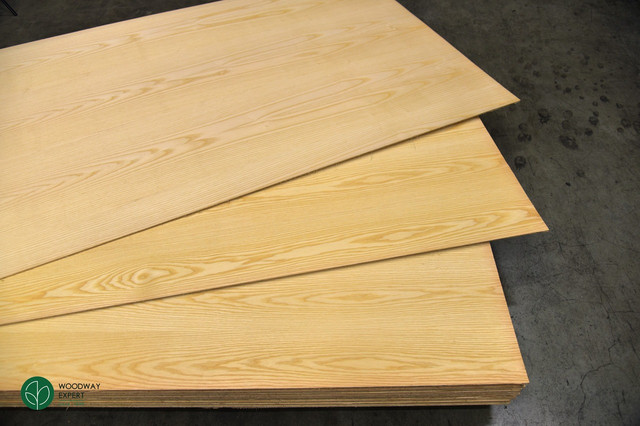
Our warehouse in Kyiv stocks moisture-resistant veneered plywood with the following specifications:
|
Plywood panel thickness
|
Dimensions |
|
5 mm 7 mm 10 mm 16 mm 19 mm 22 mm |
2.5 x 1.25 m
|
Exterior Birch Plywood faced with natural wood veneer is stable, durable, wear-resistant, and easy to cut. Key advantages of the material include:
- Eco-friendliness. Thin slices of natural wood seal in any residual adhesive emissions, making veneered plywood products safe for homes, apartments, offices, retail spaces, cafes, and restaurants.
- Aesthetic appeal. The natural wood surface is visually almost indistinguishable from solid timber. The organic grain pattern and subtle shade variations create an exceptional decorative finish. To make the grain sharper, richer, and more contrasting, natural veneer is finished with oils, waxes, or lacquers. Veneered panels can also be stained to replicate specific species. This finishing technique is often used with Alder veneer, as its soft wood absorbs pigment evenly and easily imitates precious wood species.
Which plywood is better: laminated or veneered?
Laminated and veneered plywood panels are used to create partitions, wall and ceiling panels, and cabinet furniture. To choose the right material, it is important to consider the application environment and the expected mechanical loads.
PVC lamination increases resistance to moisture and temperature fluctuations. Laminated plywood furniture is suitable for kitchens and high-traffic areas such as offices, shopping centres, and libraries.
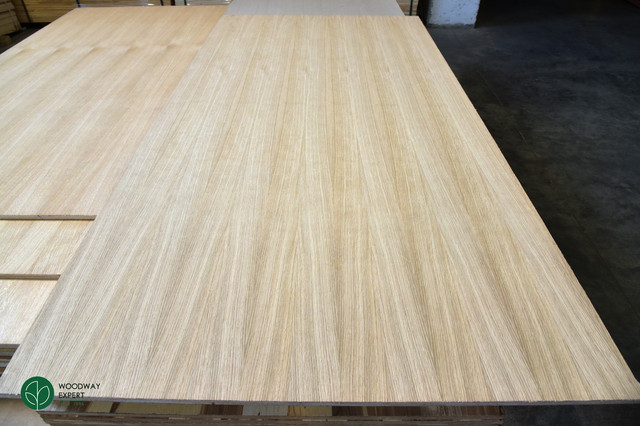
Natural wood veneered plywood is a material intended for premium interior projects. Furniture made from these panels maintains dimensional stability but is not designed for harsh operating conditions. Veneered plywood dressers, wardrobes, cabinets, and tabletops are used to furnish living rooms, bedrooms, workspaces, and boutique showrooms. The veneer surface is easily stained to match any interior design project.
Which plywood is safer for home and apartment interiors?
Both laminated and veneered plywood use E1-grade Exterior Birch Plywood as a core base. The plies in this plywood are bonded with phenol-formaldehyde adhesive, providing moisture resistance while complying with international environmental safety standards. The E1 emission class indicates low formaldehyde content, meaning these plywood panels are certified for indoor use.
In terms of surface safety, PVC film falls behind natural wood. High-grade PVC coatings do not release toxic compounds when heated, but budget-grade laminated plywood may sometimes feature lower-grade films.
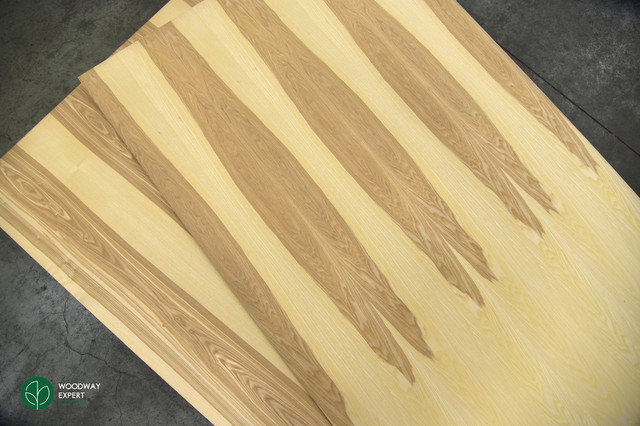
Non-toxic adhesives are used for veneering. The natural wood layer seals in residual emissions from the core adhesive and improves the environmental rating of Exterior Birch Plywood. Because of this, interior designers typically choose veneered plywood for fit-outs, interior cladding, and furniture in residential apartments and homes.