
What is timber moisture content?
Timber moisture content is the ratio of the mass of moisture to the mass of dry wood. Excessive moisture in sawn timber can cause warping and cracking in the finished product. To reduce the amount of moisture in timber, it is either air-dried or kiln-dried. We will explain these technologies in more detail below.
For timber to be used in furniture production, its moisture content must be 6–10%. Sawn timber intended for facade cladding typically has a moisture content of 16–18%. Timber for flooring or wall panels has a moisture content of 8–15%. Sawn timber with a moisture content of 15% (±2%) is selected for stairs, windows, and doors.
Air drying of wood
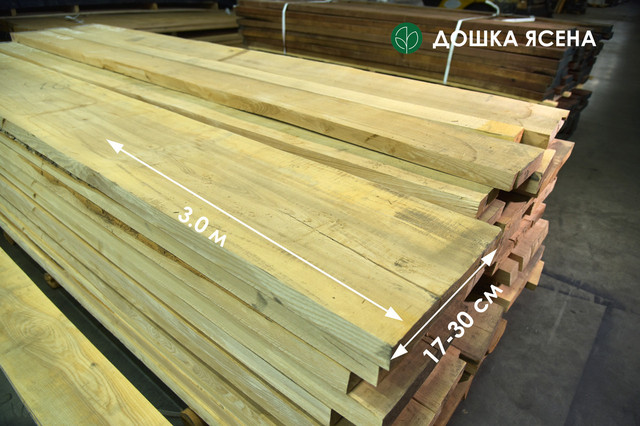
Atmospheric or natural air drying is a simple but fairly long process. Timber boards are stacked in a specific sequence so that gaps remain between them for free air circulation. The stacks are left in a warehouse or under an open shelter until the timber dries. Drying wood this way can take months or even years. For instance, dense hardwoods can take up to 7 years to dry. Natural air drying produces sawn timber with a moisture content of approximately 18–22%.
The commercial sector relies on kiln drying — a faster moisture evaporation process under controlled heat inside specialised chambers. Equipment is classified by:
· heating type (electric, gas, water, steam);
· design type (belt, roller, drum, pneumatic);
· loading method for edged timber (tunnel, front-loading).
Another important characteristic of a drying kiln is its forced ventilation system. Technical wood drying methods include:
1. Convective-thermal. Drying timber with air, steam, or in a vacuum is carried out in vacuum, gas-steam, or rotary kilns. Moisture is removed from the timber by heated air. Vapour is discharged through an exhaust ventilation system.
2. Conductive. Moisture evaporates from the sawn timber due to direct heat transfer from contact with heated surfaces.
3. Radiation (infrared). The distinctive feature of infrared drying is that heat is absorbed by the moisture within the wood rather than the timber itself. This method achieves a moisture content of 8–10%.
4. Dielectric. Drying takes place under the influence of an EM field. Wood placed between capacitors heats up due to dielectric losses.
Kiln drying stages for timber
Kiln drying requires strict adherence to technical schedules. The drying time and temperature are specific to each wood species. The drying process can be divided into the following stages:
· heating the kiln up to 40°C;
· heating the timber with humidification and air circulation;
· gradually raising the temperature and reducing humidity, using moisture meters and sensors for continuous monitoring;
· equalising moisture treatment of dried timber to relieve internal wood stress;
· conditioning for even moisture distribution along, across, and through the stack (for higher grades of timber);
· cooling the sawn timber down to 40°C.
Advantages of kiln-dried edged timber
1. Quality. High-grade raw material is selected for edged timber. Kiln-dried sawn timber consistently meets its specified grade.
2. Uniform drying. Specialised equipment ensures correct heating and drying across various species. When the schedule is strictly maintained, the resulting timber is evenly dried and ready for machining.
3. Stability. Kiln drying makes sawn timber more stable and resistant to cracking. Products made from dry timber do not warp.