
Edged and unedged timber: what is the difference?
Lumber differs by the presence of wane – the outer edge of a log with bark. Three timber types are available on the joinery market: edged, unedged, and semi-edged.
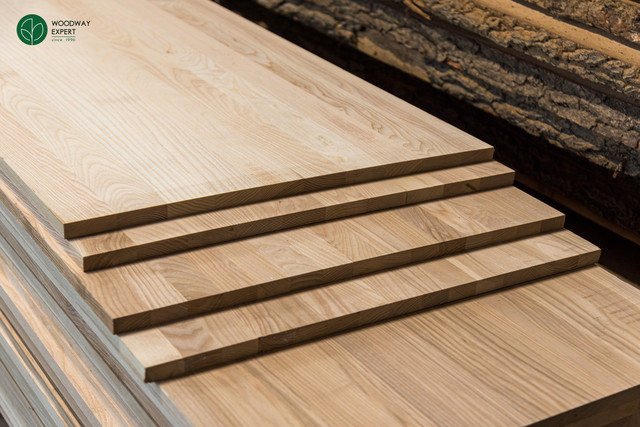
Edged timber is a product with sawn, square edges. Technical standards allow both timber with completely removed bark and boards with minor residual wane along the edges. Edged timber is produced from selected high-grade raw material, making it widely used in furniture making, structural building, and interior finishing.
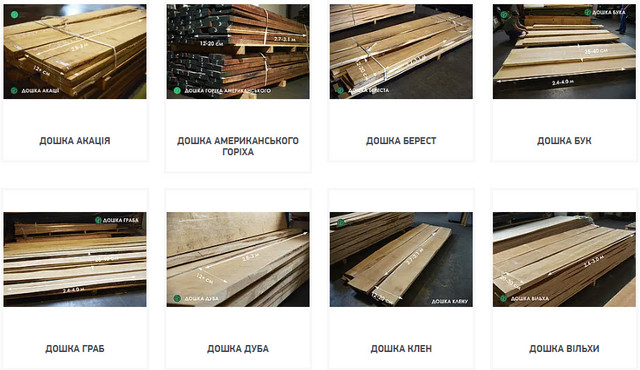
Unedged timber is lumber that does not undergo edge trimming after primary breakdown. This category is broadly divided into joinery-grade and fencing-grade timber. Joinery-grade timber is practically defect-free, featuring a clean, stain-free surface. It is used in furniture manufacturing and millwork. Lower-grade lumber (with wormholes, various knots, pitch pockets, and checks) is used for subflooring, fences, staging, and battens.
Semi-edged timber occupies an intermediate position between the two types above. One edge retains bark and wane, while the other is trimmed square. Semi-edged timber is used for general joinery, roofing work, and auxiliary structures.
How is edged timber produced at a sawmill?
Both hardwood and softwood species are used for manufacturing edged timber. Harvested logs sorted by length are sawn using bandsaws or frame sawmills.
Log breakdown is carried out according to the following primary sawing patterns:
|
Sawing pattern |
Characteristics |
|
Radial |
The cut is made perpendicular to the annual growth rings. Radial sawing yields boards with a uniform grain texture and high resistance to warping. |
|
Tangential |
The saw cuts tangentially to the growth rings. Tangential sawing creates a distinctive cathedral grain pattern. |
|
Cross |
The log is sawn across the grain, giving the timber a striped texture. |
|
Rustic |
The log is sawn at a 40–75° angle to the grain. This lumber is durable under mechanical stress and features a distinct, varied grain pattern. |
The sawn blanks must be dried, as green timber is unsuitable for joinery work. High-moisture boards are prone to warping and checking. Timber is dried using either natural or kiln drying methods. During air drying, stacked lumber is stored in a warehouse or under an open shed. After several months, edged timber reaches a moisture content of around 20%. Kiln drying produces stable, easily machinable boards with 8–12% moisture content. Such lumber is suitable for manufacturing furniture, wall panels, window frames, partitions, and other products.
Applications of dry edged timber
Solid timber boards are widely used in interior fit-outs for:
1. Furniture. Properly finished solid wood fronts for cabinets, shelving units, vanity units, and dressers last for decades. Solid wood countertops for desks, kitchen worktops, bar counters, and reception desks are an ideal choice for both residential and commercial spaces.
2. Flooring. Solid wood floorboards are a traditional flooring choice for urban apartments and country homes. Engineered flooring is also in high demand – a multi-layer material consisting of a solid base, an intermediate core of glued softwood blocks, and a hardwood top layer. Oak, Ash, Acacia, Maple, Walnut, Beech, and Hornbeam are popular choices for the face layer. Timber for facade cladding and decking necessarily undergoes specialized treatment (thermal modification or preservative treatment).
3. Wall cladding. Wood panelling is a classic design technique for finishing walls and ceilings. Solid wood wall panels suit refined classic interiors as well as cosy rustic, country, or ethnic aesthetics.
Before purchasing edged timber, it is also important to determine the required lumber dimensions, wood species, and Grade.