Solid wood has no competitors among synthetic materials when it comes to environmental safety, tactile qualities, and aesthetic appeal. Wood is a renewable resource, but uncontrolled logging and inefficient use of raw materials lead to forest depletion and local ecological issues. To utilize available resources as efficiently as possible and follow sustainability principles, various wood-based materials are produced from solid timber, including veneer. Read on to explore the types of natural veneer and where this material is used.
Contents:
- What is veneer?
- Types of natural veneer.
2.1. Natural Sliced Veneer.
2.2. Sawn Veneer.
2.3. Rotary-cut veneer. - Applications of veneer.
What is veneer?
The term “veneer” comes from the German word span, which means “shaving, chip”. Veneer refers to thin sheets of wood produced by slicing, peeling (rotary cutting), or sawing a log. Depending on thickness, wood sheets are used for manufacturing plywood and other layered materials, as well as for surfacing wood products to improve their decorative and mechanical properties.

The advantages of natural veneer include:
- Environmental safety. Wood sheets are safe for human and animal health. Veneered furniture, partitions, doors, window sills, and Wood Wall Panels are used in residential and public spaces. Natural wood is suitable for living rooms, bedrooms, children’s rooms, hallways, offices, conference halls, cafes, shopping centers, hotels, and libraries.
- Ease of processing. Standard joinery tools are used when working with thin wood slices. Veneer cuts cleanly, glues easily, polishes, stains, and takes oil, wax, or varnish finishes without issues.
- Aesthetics. The sheets accurately convey the natural grain structure of wood. A veneered surface is visually difficult to distinguish from solid wood. Textured veneer with a unique growth ring pattern serves as a decorative surfacing material used for crafting exclusive products. Veneer sheets can be matched into faces (“flitches” or “layons”) with patterns tailored to the project. Stains, primers, varnishes, oils, and waxes help reveal the natural beauty of the grain.
The joinery market also offers fine-line (engineered) veneer—a reconstructed material made from rotary-cut softwoods. Lower-grade wood slices with cut-out and patched knots are used for fine-line production. The sheets are dyed, glued, and pressed into blocks, which are then sliced into leaves of specific thickness and dimensions. Fine-line features a uniform grain pattern and a variety of textures and colors. The key difference between natural veneer and fine-line lies in environmental performance. Natural wood slicing is preferred for high-quality eco-friendly products.
Types of natural veneer
The veneer manufacturing process includes several stages. First, timber is selected in forestry holdings. Trees are felled from late November to early March—during the dormant period when sap does not circulate through the trunk. Logs are sorted by species and soaked in special vats (steaming/cooking basins). The soaking time in hot water varies by species. A “dry vat” steaming method is also used. The conditioned logs are cut into flitches (billets), the length of which depends on the machine bed length. Depending on the processing method, the log yields sliced, sawn, or rotary-cut veneer.
Natural Sliced Veneer
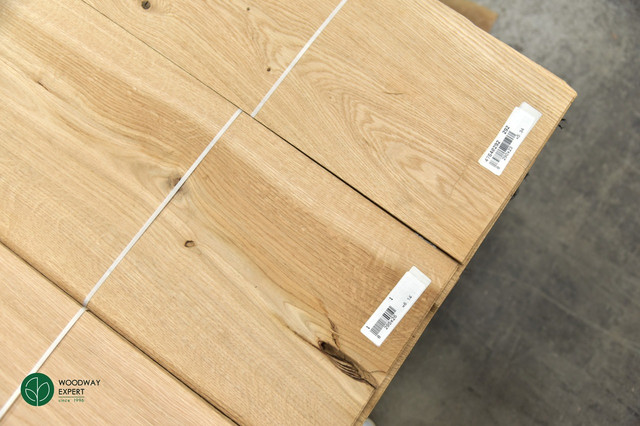
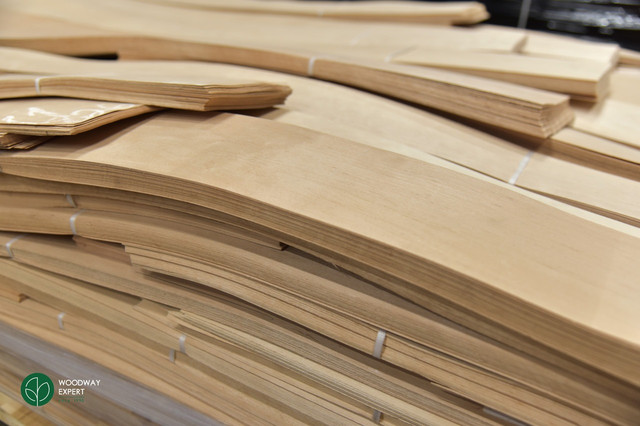
Natural Sliced Veneer is produced using a veneer slicer. Flitches are loaded into the machine and clamped at the ends, after which slicing begins. A specialized knife shears off a wood layer of specified thickness. The veneer sheets are removed from the machine and stacked in bundles (flitches/books) in the exact sequence they were sliced. Next, the bundles are transferred to a drying chamber. The moisture content of veneer suitable for transport is 14%. The moisture content of material ready for joinery work is 8–12%.
Based on the grain pattern, sliced veneer is categorized into:
- quarter cut (radial). The grain on the sheet surface consists of parallel growth ring lines. Medullary rays cover about ¾ of the sheet surface;
- semi-quarter cut (semi-radial). Straight parallel growth rings cover ¾ of the surface, while ¼ features longitudinal or slanted medullary ray bands;
- crown cut / flat cut (tangential). The grain is formed by longitudinal or slanted medullary ray lines, as well as growth rings creating cathedral arches, curved lines, or loops;
- tangential-end cut. The wood pattern consists of curved growth ring lines and medullary rays.
Veneer thickness depends on the wood species and application. WoodWay Expert offers veneer thicknesses of 0.55 mm, 0.6 mm, 1.5 mm, and 2.5 mm. For surface veneering, 0.55 mm or 0.6 mm sheets are most commonly used. This thickness yields a large quantity of material. In addition, the wood sheet prevents glue bleed-through and lends itself well to sanding and decorative finishing (staining, lacquering).
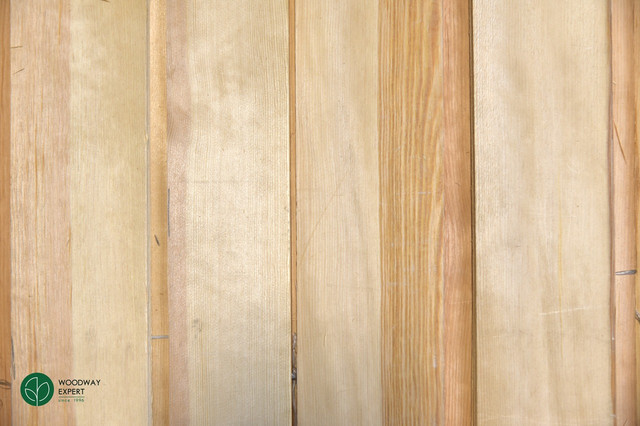
Natural veneer is also graded by quality. Extra grade features uniform coloration and a clean surface. Grade 1 allows minor natural variations: a sound knot up to 2 cm per 1 square meter, slight color variations. Grade 2 sheets feature more knots, color variation, and sapwood, and are typically used for balancing or backing layers.
The trade also distinguishes between “furniture veneer” and “door veneer” lengths. For furniture fronts, sheets up to 2 m in length (“furniture length”) are used, while door manufacturing and large-format panels require sheets 2.1 m and longer (“door length”).
Our stock program includes sliced veneer in the following species:
- Sliced Anegre Veneer;
- Sliced Elm Veneer;
- Sliced Beech Veneer;
- Birch;
- Sliced Oak Veneer;
- Sliced American Cherry Veneer;
- Koto;
- Sliced Sapele Veneer;
- Sliced Pine Veneer;
- Sliced Maple Veneer;
- Sliced Makore Veneer;
- American Walnut Sliced Veneer;
- Sliced Alder Veneer;
- Sliced European Walnut Veneer;
- Sliced Cherry Veneer;
- Sliced White Ash Veneer;
- Sliced Olive Ash Veneer.
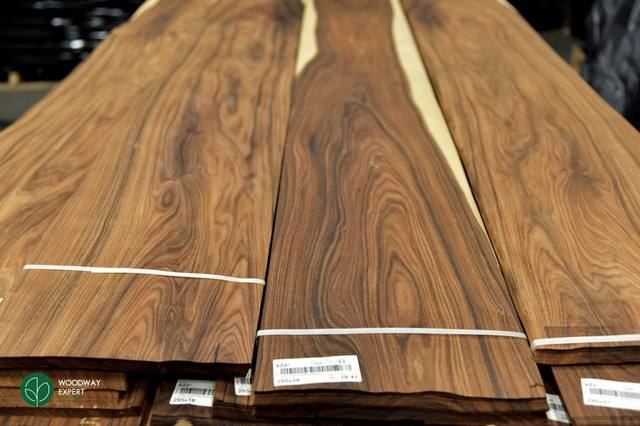
The catalogue also features 8 types of Exotic Wood Veneer. Available species include Bubinga Kevazingo, Knotty Oak, Sycamore Maple, Santos Rosewood, Sapele Pommele, American Pine, Ziricote, and African Blackwood (Grenadilla).
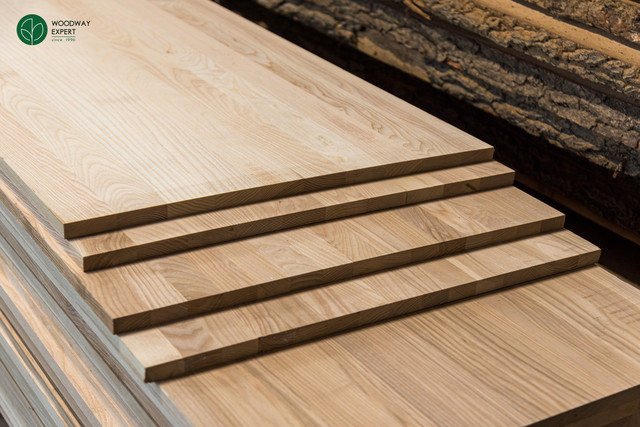
Sawn Veneer (Lamella)
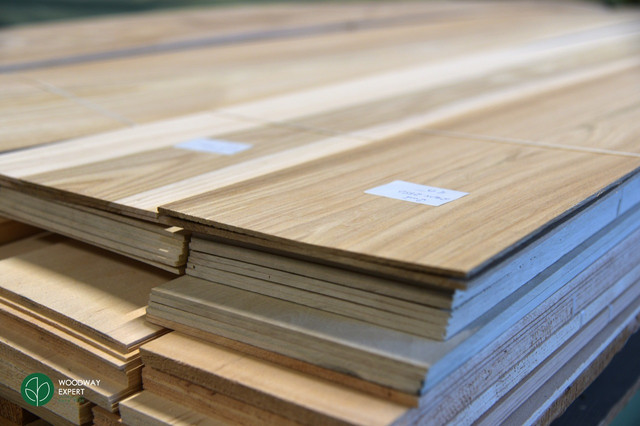
Another veneer type is lamella (sawn veneer). The preparation process is similar to the one described above, but sawn veneer is cut from prepared blocks of specific width, sawn into strips 2–10 mm thick. Sawn lamellas are stacked into piles and sent to a drying kiln. After drying, Sawn Veneer is ready for use. Lamella is a high-grade timber product that preserves the authentic grain and texture of solid wood. Producing sawn veneer is more resource-intensive due to kerf loss and saw waste.
Our warehouse stocks lamellas in 2.5 mm and 4.5 mm thicknesses across species such as:
- Sawn Hornbeam Veneer;
- Sawn Ash Veneer;
- Sawn Acacia Veneer;
- Sawn Pine Veneer;
- Sawn Oak Veneer;
- Sawn American Walnut Veneer;
- Sawn Elm Veneer;
- Sawn Alder Veneer;
- Sawn Cherry Veneer;
- Sawn Maple Veneer.
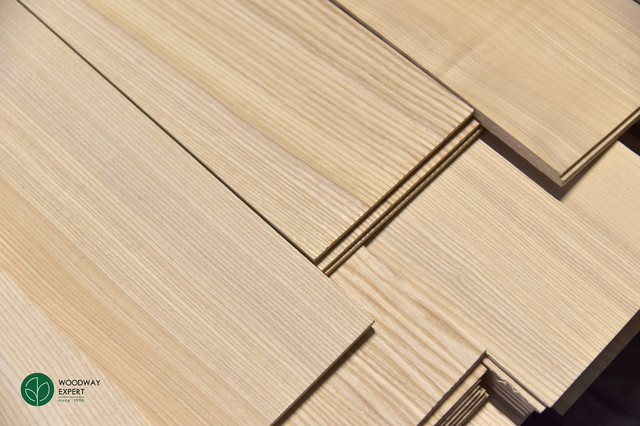
Custom production of sawn veneer in thicknesses from 2 mm to 10 mm is also available. Minimum order is 10 sq. m. Lead time is approximately 10 working days.
Lamellas are available in Grade 1 (A) and Grade 2 (B). Grade 1 sheets feature uniform color and are free from defects. Grade 2 sawn veneer may contain knots and natural color variations.
Rotary-cut veneer
The manufacturing process of rotary-cut veneer differs in that wood is peeled continuously around the log like a ribbon rather than sliced in layers. The log is crosscut into peeler blocks, which are mounted into a rotary lathe. A scoring cutter debarks the rotating block, after which a long peeling blade skims off a continuous ribbon of wood. The peeled ribbon travels down the processing line, where it is clipped into specific sheet sizes and stacked. Rotary-cut veneer is dried and prepared for further processing. It is primarily used for Plywood manufacturing and as a substrate for facing furniture components. Alder, Birch, and Oak are most commonly used for rotary peeling.
Applications of veneer
While rotary-cut veneer is primarily used for producing layered panels, sawn and sliced veneers are widely applied in manufacturing various interior and joinery products. Key application areas are listed in the table below:
|
Furniture |
A surface veneered with natural wood is visually indistinguishable from solid timber. Veneering yields high-quality, aesthetic, and cost-effective furniture. Thin wood slices are used to face wardrobes, dressers, sideboards, floor-standing and wall-hung cabinets, desks, coffee and side tables, bed headboards, shelves, and shelving units. |
|
Wood Wall Panels |
Wood has been used for wall and ceiling paneling for centuries. Veneered wall panels provide a solid alternative to standard finishes like paint or wallpaper. Wood Wall Panels finished in natural veneer are easy to install and blend with numerous interior styles. Wall panels surfaced with knotty veneer or sheets featuring natural heartwood-sapwood color transitions create striking accent walls. Sheets can also be book-matched, slip-matched, reverse-matched, plank-matched, or assembled to imitate parquet flooring or solid boards. Panels faced with thick sawn lamellas are also popular, arranged in herringbone, brick, basket-weave, square, or ship-deck patterns, serving as a primary design focal point. |
|
Doors, window sills, stairs, partitions |
Door slabs, interior staircase elements, and window sills veneered with natural timber fit seamlessly into both urban apartments and country houses. Veneered architectural partitions are widely used for zoning residential and commercial spaces. Mobile screens and room dividers are particularly popular in offices, showrooms, cafes, and beauty salons. |
|
Musical instruments |
Natural veneer is used in the manufacture of musical instruments (drums, guitars, grand pianos) and acoustic equipment (loudspeaker enclosures). |
|
Sports equipment |
Veneer is used to face baseball bats, tennis racket handles, and skateboards. The surface requires specialized protective coatings and proper care. With standard manufacturer care guidelines, veneered sports equipment lasts for years. |
|
Decor |
Veneer is a decorative facing material used in crafting home accessories due to its distinct grain patterns and unique natural color shifts. Thin wood slices are used to make figurines, jewelry boxes, napkin holders, picture and photo frames, organizers, and desk accessories. |