Layered natural wood materials are used for a wide range of tasks. The technical characteristics of plywood are largely determined by the wood species and type, the adhesive, and the subsequent surface treatment of the panels (sanding). To choose the right structural and finishing material, it is important to select the appropriate panel grade. What factors determine plywood grades? Read on to find out.
Table of Contents
- Plywood characteristics
- Types of plywood
- How are plywood sheet grades determined?
- Plywood marking
- Where to buy Interior Birch Plywood and Exterior Birch Plywood in Ukraine?
Plywood Characteristics
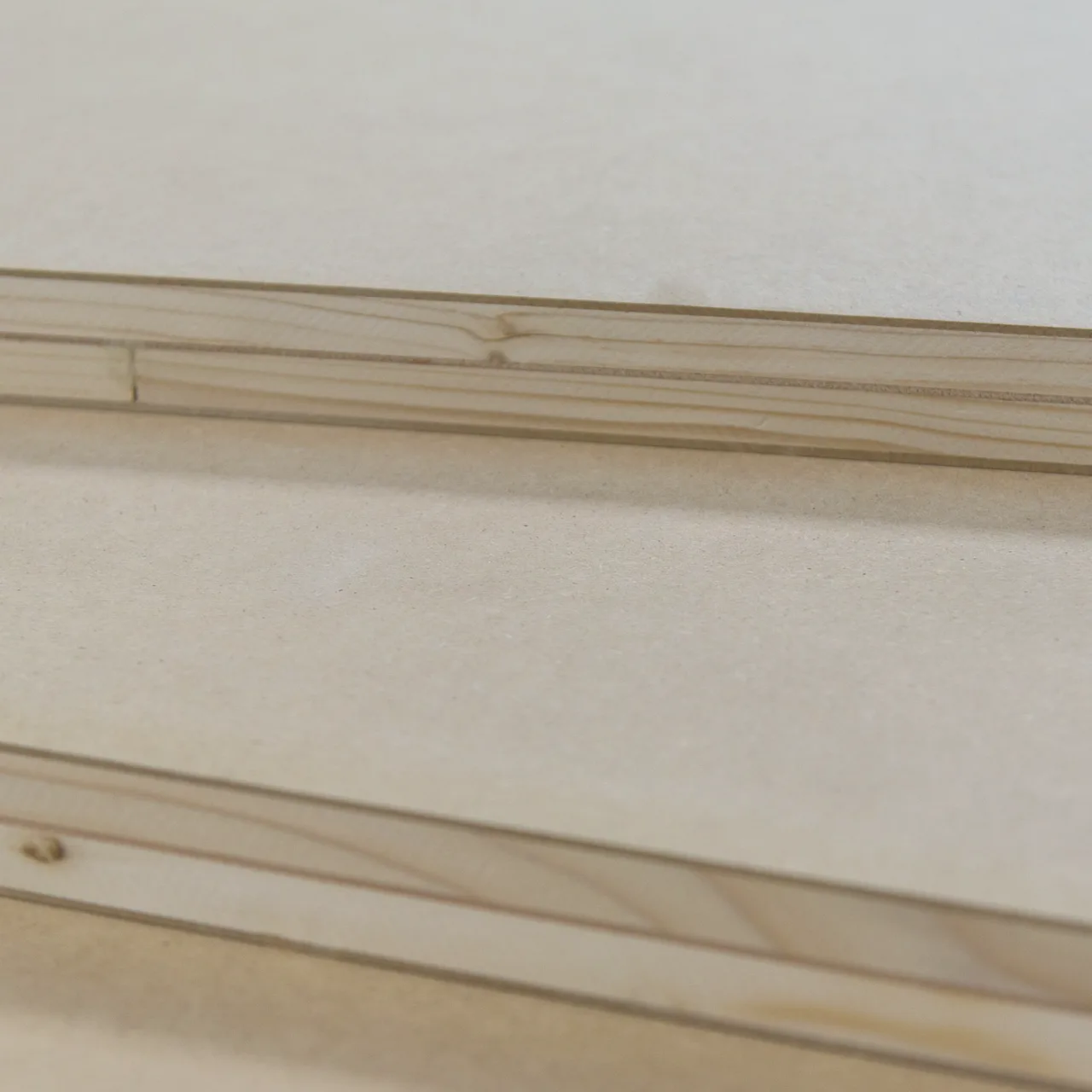
Plywood is a panel composed of an odd number of rotary-cut veneer sheets. The layers are arranged in a specific order: the grain in adjacent wood plies must be mutually perpendicular. Special adhesive is used to bond the veneer sheets together, and its formulation determines the degree of moisture resistance.

The main characteristics of plywood include:
- Strength. This parameter depends on wood density, adhesive, and panel thickness. Thus, the bending strength of Interior and Exterior plywood is lower compared to solid wood, while for FBS it is 2–3 times higher.
- Environmental safety. The environmental safety of the material is determined by the formaldehyde emission class. E1 panels contain an amount of this substance that is safe for humans and animals: up to 10 mg per 100 g of dry board. E2 panels contain 10–30 mg of formaldehyde and are not recommended for indoor use.
- Water resistance. This indicator is determined by the type of adhesive used to bond the rotary-cut veneer plies.
Types of Plywood
Both hardwood and softwood species are used in manufacturing this layered material.
|
Hardwood plywood |
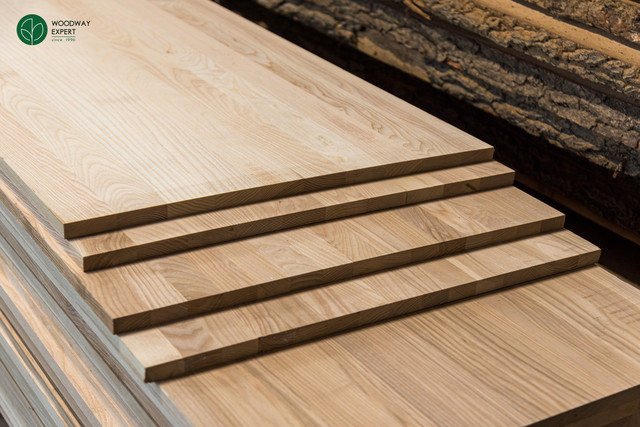
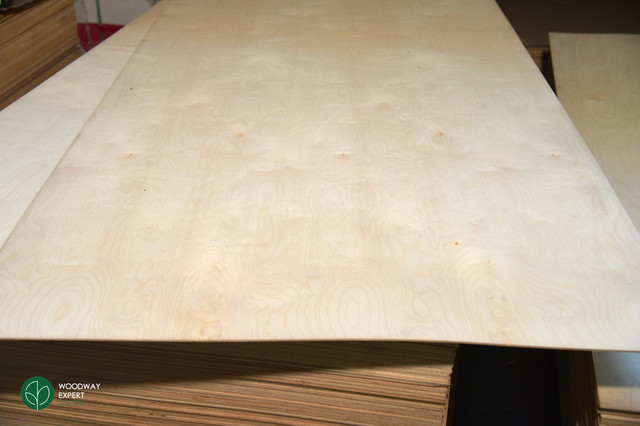
Panels can be manufactured from poplar, alder, Ceiba, okoume, and birch. Birch plywood is considered the most popular, as it features high physical and mechanical properties that ensure product strength and wear resistance. Birch plywood sheets are used in construction, mechanical engineering, shipbuilding, furniture manufacturing, and wall and ceiling cladding. |
|
Softwood plywood |
These panels are based on pine veneer. Pine plywood is inferior in strength to birch plywood. This fact is partially offset by price: pine layered sheets are more affordable than birch counterparts. Softwood Exterior plywood is often used for outdoor cladding, as the wood is resistant to elevated humidity. |
|
Combi plywood |
This variety combines the advantages of the previous categories. Birch and pine veneers are used in production. Typically, birch wood is selected for the face layer, while pine or a combination of pine and birch is used for the core. Such panels are durable, easy to machine, and cost-effective. |
Another important characteristic of the panels is the adhesive. Depending on the type of glue used to bond the veneer plies, plywood is classified into:
- Interior (FK). Wood plies are glued using urea resin. The panels are moisture-resistant and intended for interior use. The sheets are used to create furniture, wall and ceiling cladding, shipping crates, and storage containers;
- Exterior (FSF). Thanks to phenol-formaldehyde resin, these layered panels feature enhanced wear and water resistance, allowing them to be used for exterior work;
- FBS. The plies are bonded with an alcohol-soluble phenol-formaldehyde resin. The resulting panels are 2–4 times stronger than Exterior plywood, and their water resistance exceeds that of the aforementioned counterpart by 70%. The material withstands contact even with saltwater, so it is used in fitting out boats, ships, and yachts;
- FBA. Albumin or casein glue is used to bond the wood. The material is considered the most environmentally safe, but has the lowest moisture resistance ratings.
Another plywood specification is sanding. The “NS” mark indicates un-sanded sheets, “S1” designates panels sanded on one side, and “S2” designates plywood sanded on both sides.
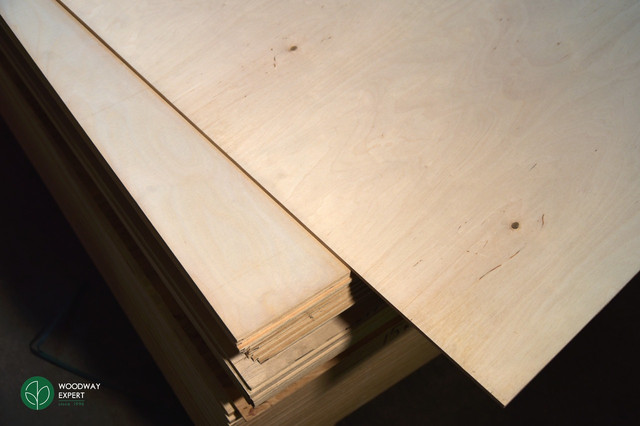
The material also differs by surface finishing method. Film-faced plywood is coated with a PVC film that protects the surface from moisture, household chemicals, abrasions, and other mechanical impacts. Such material is ideal for kitchen products and commercial spaces. For residential interiors, designers recommend choosing furniture, panels, and other furnishings made from plywood faced with natural veneer. Veneered Plywood is finished with wax, oil, or lacquer to protect against service loads.
Read also: Difference Between Film-Faced and Veneered Plywood
How Are Plywood Sheet Grades Determined?
Plywood grading is the classification of layered panels into groups based on a combination of specific characteristics. The standard classification distinguishes 5 grades of plywood sheets:
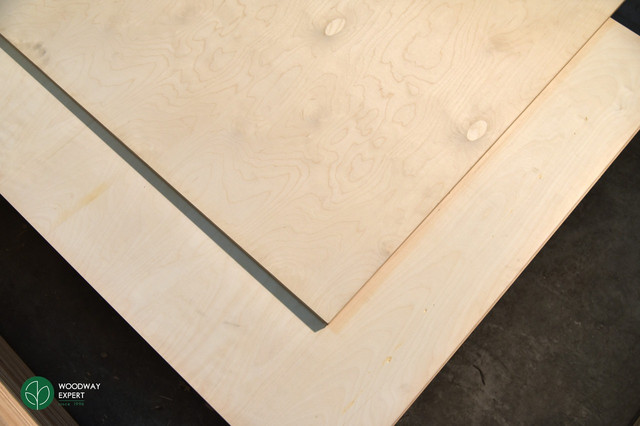
- Extra (elite, premium). This material is designated as E or A. It is available on the market in limited quantities. Extra grade plywood has no defects; only minor natural variations in wood structure are permitted.
- Grade 1. Grade 1 (B) sheets are virtually defect-free. Knots, cracks up to 2 cm long, and wormholes up to 6 mm in diameter are permitted on the plywood surface in quantities of up to 3 per 1 sq. m. The material is used for laminating, construction, and interior finishing tasks.
- Grade 2. In BB or Grade 2 (II) plywood, loose knots and wormholes up to 6 mm in diameter are permitted up to 6 per 1 sq. m. In addition, sound, intergrown knots up to 2.5 cm in diameter are permitted on the surface (no more than 10 per 1 sq. m). Veneer repairs—correcting defects with veneer patches—are allowed. Panels in this category are used for painting or varnishing.
- Grade 3. CP or Grade 3 (III) plywood permits loose knots, as well as holes and wormholes no larger than 6 mm in diameter up to 10 per 1 sq. m. The number of sound intergrown knots on the veneer sheet is unrestricted. The main applications for such plywood are packaging materials and concealed structural assemblies.
- Grade 4. Grade C (4, IV) plywood is a structural material with numerous defects. Pinholes, loose knots, non-intergrown and partially intergrown knots, and wormholes up to 40 mm in diameter are permitted in any quantity. Most often, such panels are used in crate and packaging production.
Plywood Marking
Most plywood parameters are specified in the product code. The panel grade is indicated in a format of two figures separated by a slash: for example, I/II (B/BB) or II/III (BB/CP). These markings mean that one side of the plywood is Grade 1 and the other is Grade 2. In the second example, the sheet has Grade 2 and Grade 3 faces. The higher-quality side is the face, and the lower is the back. In addition to the grade, the product description specifies the plywood type, dimensions, thickness, sanding type, and formaldehyde emission class.
Let’s examine plywood marking using this example: Interior Birch Plywood, B/BB, 3 mm, 1.22 x 2.44 m, S2, E1, birch.
This is a sheet of moisture-resistant Interior plywood, with the face side made of Grade 1 birch veneer and the reverse side made of Grade 2 veneer. The panel thickness is 3 mm, and the size is 1.22 x 2.44 m. The plywood sheet is sanded on both sides and can be used for furniture, Wood Wall Panels, and partition walls, as it contains minimal formaldehyde emissions.
Where to Buy Interior and Exterior Plywood in Ukraine?
WoodWay Expert offers a wide range of moisture-resistant Interior Birch Plywood and high-water-resistance Exterior Birch Plywood.
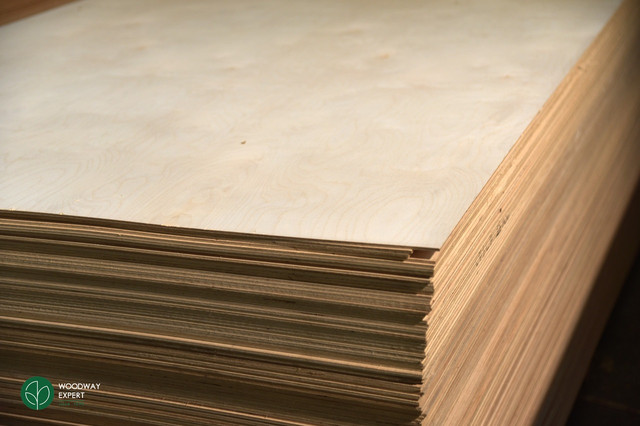
Why do interior designers, furniture factories, joinery workshops, and craft fabricators choose to work with us?
- Warehouse stock availability. We operate an ex-stock program, preparing materials for dispatch immediately after an order is placed.
- Wholesale and retail. We work with both wholesale and retail buyers. You can purchase a single plywood sheet or a bulk batch.
- Self-pickup and delivery across Ukraine. Customers in Kyiv can collect their orders directly from our warehouse. Dispatch via shipping carriers across Ukraine is also available.
- Personal terms for regular clients. Our sales managers offer competitive discounts for repeat trade buyers. The discount depends on order volume and material type.
- Individual material selection for projects of any complexity. You can select the right plywood sheets in person by visiting our warehouse. You can also order panels by contacting our managers by phone or online. Our specialists will select the required thickness and sheet sizes, and provide photos and videos of the material upon request.
We have been helping designers and joiners deliver projects of all scales for over 20 years. Contact us today!