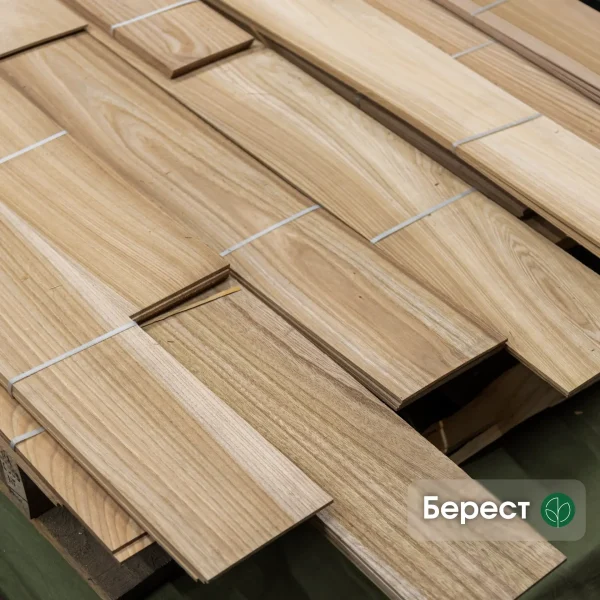
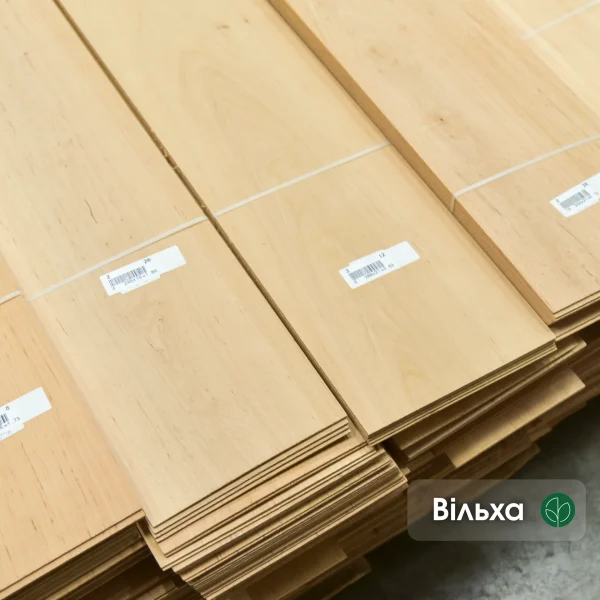


Alder sawn veneer (lamellas) 2.5 mm thick is a lightweight, eco-friendly, and easy-to-process material with a uniform fine-textured pore structure. Alder sawn lamellas 2.5 mm are suitable for furniture facing, wall panelling, and interior décor elements. The material accepts staining, tinting, and lacquering well, allowing it to imitate valuable timber species. We sell sawn veneer from 1 pack. Warehouse pickup is available in Kyiv, alongside dispatch across Ukraine via freight carriers. We will help select the material remotely for your project.
Key Features of Alder Sawn Veneer (Lamella)
- Structural integrity. Due to the sawing technology, the timber maintains a stable structure and fibre integrity, ensuring high surface quality.
- Natural colour palette. The production process for lamellas does not require preliminary steaming. This preserves the natural wood shades without unwanted yellow or red tints, which is critical for design projects.
- Durability and restoration. With thicknesses ranging from 2 mm to 10 mm, lamella products can be sanded and refinished multiple times (similar to solid wood boards). This makes the material ideal for high-traffic flooring, stairs, and furniture.
- Stability. Sawn veneer demonstrates high resistance to fluctuations in humidity and temperature. The risk of deformation in products veneered with these sheets is minimal.
- Workability. The smooth and clean surface after sawing ensures excellent adhesion with all types of adhesives (PVA, PU, resins). Veneer sheets are easy to cut, sand, stain, and varnish.
Custom Alder Sawn Lamella
We stock Acacia sawn veneer in thicknesses of 2.5 mm and 4.5 mm, lengths of 2–3.2 m, and widths of 10–21 cm.
Made-to-order options:
- Thickness: Non-standard sizes from 2 mm to 10 mm.
- Dimensions: Custom widths and lengths available upon request.
- Minimum order quantity (MOQ): From 10 m² per species.
- Lead time: 10 working days.
TIP. Always order sawn lamellas with a 10–15% surface area allowance. Extra material is essential for grain matching and figure alignment, as well as for end trimming and cross-cutting.
Alder Sawn Veneer Grades
For facing materials, the grade indicates aesthetic characteristics rather than technical quality. Since lamella is used as a face layer, its classification is based on visual parameters: the presence of knots, sapwood, medullary rays, and colour uniformity.
All grades in our range undergo the same kiln-drying cycle to a moisture content (MC) of 8–10% and precision thickness sanding. The choice of grade depends solely on the intended style of the finished product.
| Grade | Characteristics |
|---|---|
| A (Select / Prime) |
The highest level of timber selection, prioritising clarity and uniformity.
|
| B (Natural) |
This material showcases the wood’s texture, balancing clarity with authenticity.
|
| C (Rustic / Country) |
Highly expressive texture that emphasises the material’s natural origin.
|
Where is Alder Sawn Veneer Used?
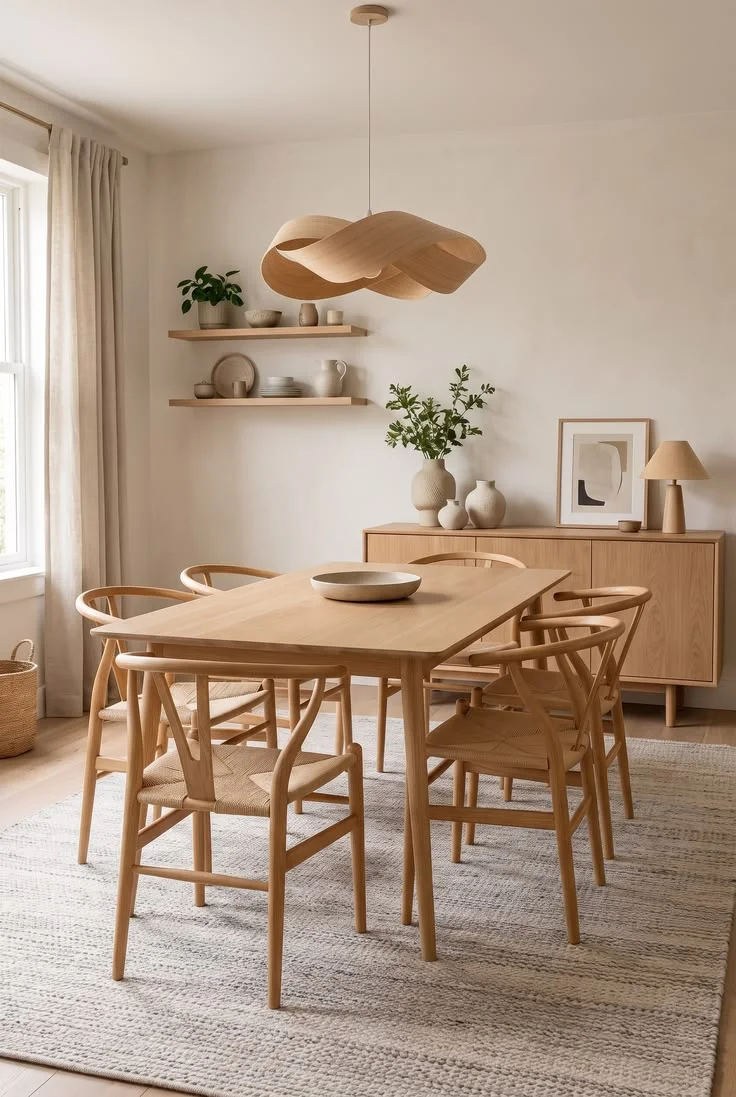
Worktops
Sawn veneer sheets are a durable material used for desks, coffee tables, and side tables, as well as bar counters, shop counters, reception desks, and kitchen islands.
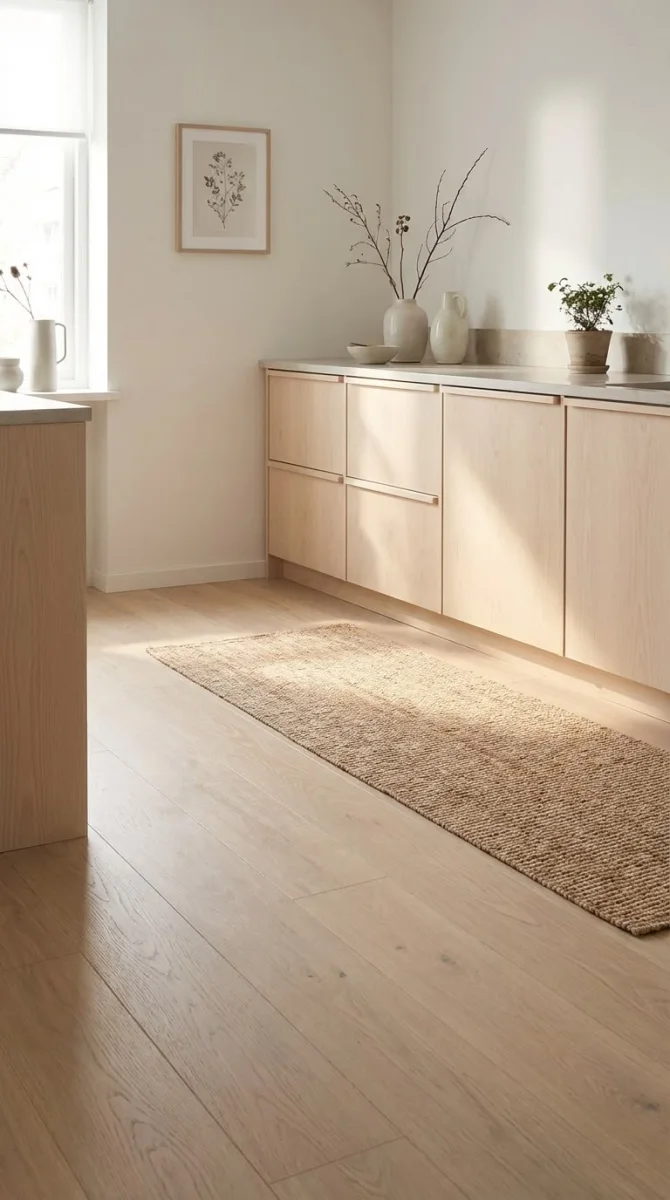
Furniture Fronts
Sawn lamella allows for the creation of unique custom cabinetry. Due to its sufficient thickness, veneered fronts can be milled or wire-brushed. Additionally, lamellas are used to create louvred fronts for wardrobes and other storage areas. Timber-faced doors for cabinets, chests of drawers, and sideboards are essential elements for bespoke design projects.
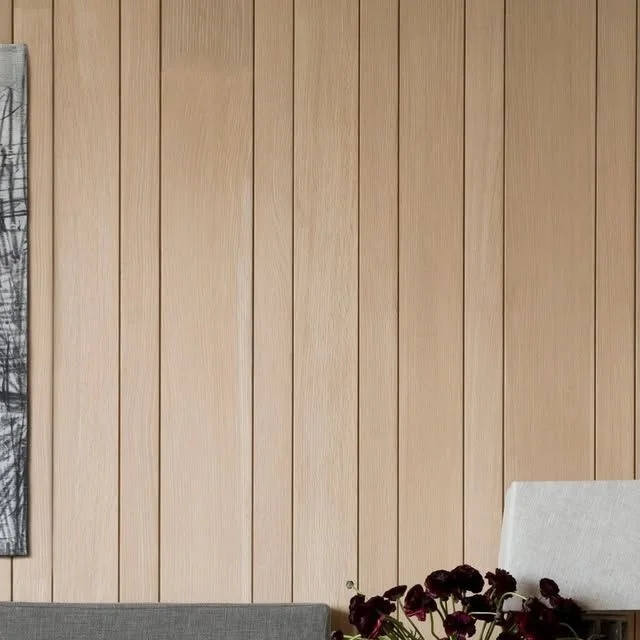
Wall Panels
Interior timber panels are not only wall or ceiling finishes but also an opportunity to enhance local lighting. LED-backlit panels are popular for living rooms and bedrooms. Veneered wall panels are also used for the interior fit-out of cafes, restaurants, retail spaces, and offices.
Interior Decor
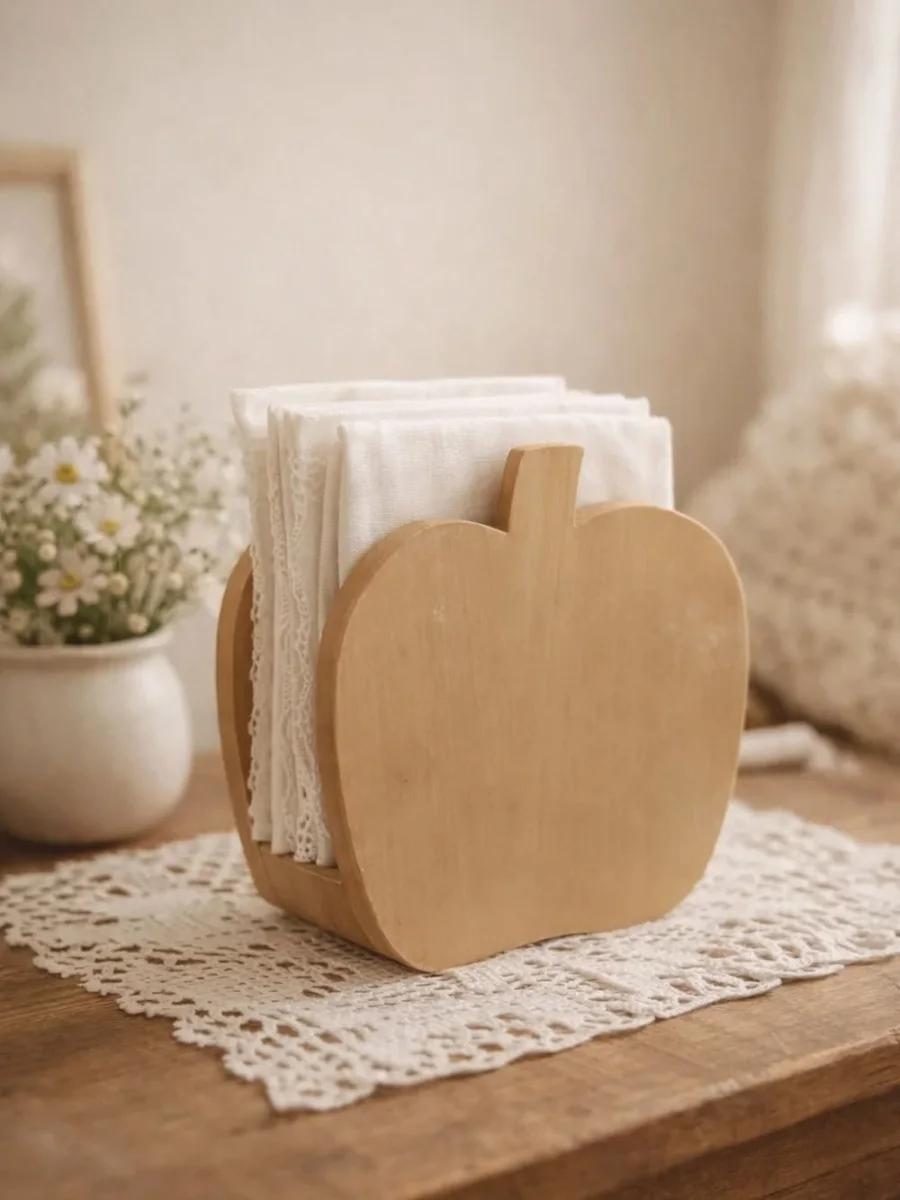
Timber lamellas are used to manufacture various decorative products. The material is easy to cut, glue, paint, varnish, and stain. Sawn lamella is used to create toys, puzzles, coasters, napkin holders, boxes, phone holders, decorative panels, stationery organisers, cosmetic stands, wall clocks, and more.
Alder Sawn Lamella Production Technology
- Raw material selection. The production process begins with the rigorous selection of premium and prime-grade boards. This stage defines the quality of the future product, as timber characteristics directly affect the aesthetics and performance of the lamella.
- Kiln drying. Selected raw materials undergo drying in specialised kilns. This technology allows for the achievement of an optimal joinery moisture content (MC) level (8–10%), which is essential for material stability. Correct drying reduces internal stresses and prevents deformation or cracking.
- Calibration. Before sawing, the boards are calibrated to dimensions that match the parameters of the saw frame. This approach ensures high precision in subsequent processing and optimal material yield.
- Sawing. Prepared blanks are fed into a Wintersteiger machine. After setting the thickness and other parameters, the timber is resawn into sheets. The use of high-precision equipment guarantees consistent saw-cut quality.
- Quality control (QC) and grading. The finished sawn veneer is inspected for compliance with dimensions, thickness, and grade. After grading, the lamellas are grouped into bundles, which are then packed onto pallets for transport.
Alder Timber: Key Technical Features
Alder (Alnus glutinosa) is a low-density hardwood species widely utilized in the furniture industry, veneer production, and sauna interior cladding. Due to its uniform grain structure and exceptional staining capacity, which allows it to imitate premium hardwoods, alder is often referred to as a «chameleon» species. The species is widespread throughout Europe, Western Asia, and North Africa. In Ukraine, major commercial timber stands are concentrated in the Polissya and forest-steppe regions, thriving primarily in riparian zones and wetlands.
The mechanical properties of the timber facilitate precision machining, although its structural application is limited in projects subject to heavy mechanical loads. Its Brinell hardness is approximately 2.7 HB, and the density is roughly 420 kg/m³. The steam-bending capacity is rated as medium.
Freshly sawn timber is nearly white. Upon exposure to air, the wood quickly oxidizes to a bright orange or reddish-yellow hue. Once kiln-dried, alder exhibits a light brown or pale pinkish tint. The texture is fine and uniform. It is a diffuse-porous species with very small, virtually invisible pores. The grain is predominantly straight. Growth rings are faint, providing the surface with a visually consistent and homogeneous appearance.
Due to its low density and hardness, the timber exhibits excellent machining properties, including cutting, turning, and sanding. Alder is highly suitable for manufacturing intricate components and complex profile milling. The wood is resin-free and possesses high absorptivity, allowing the timber to be stained to effectively simulate mahogany, cherry, or walnut. Upon finishing, the surface acquires a characteristic silky luster. Alder is notably resistant to decay when permanently submerged in water (a significant portion of Venice is supported by alder piles). However, under variable outdoor moisture conditions, the timber deteriorates rapidly and requires preservative treatment. Alder does not emit harmful substances when heated, making it a preferred material for sauna and bathhouse cladding.
We will help you select the right sawn lamellas for your project! Request a callback or contact us directly: +380 (67) 180-38-13.