
Order
Place order
Clear the whole list?
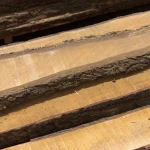
Sawn timber boards are in high demand across the construction and furniture-making industries. Our catalogue features premium edged and unedged boards with standard thicknesses of 32 mm and 52 mm.
Sawn timber boards are in high demand across the construction and furniture-making industries. Our catalogue features premium edged and unedged boards with standard thicknesses of 32 mm and 52 mm.
Our warehouse stocks high-quality hardwood and softwood timber, including oak, walnut (American and European), ash, maple, alder, hornbeam, beech, cherry, elm, and acacia. Kiln-dried (KD) boards are available with the following technical specifications:
Self-pickup is available from our warehouse in Kyiv, alongside reliable delivery across Ukraine via leading freight transport companies. Our sales managers are ready to provide real-time updates on stock availability, wholesale and retail timber prices, payment methods, and lead times.
Wood moisture content is a fundamental parameter determining the reliability and quality of solid wood products. For joinery boards, a level between 8–12% is recommended. At these values, the material remains stable and easy to work with.
If humidity exceeds the norm, the timber begins to shrink over time. This causes deformation, gaps, or warping of elements. Conversely, overly dry boards lose elasticity, becoming brittle and prone to cracking under mechanical stress.
Uniform drying of the solid wood is achieved using specialised drying chambers. The timber undergoes kiln drying with strict adherence to technological regimes, controlling temperature and air humidity levels.
Our range features joinery boards with moisture content meeting international standards. Timber with 8–10% moisture requires no additional drying, helping to save time and production resources.
The grade is determined based on the external characteristics of the timber products. This includes the number and type of knots, presence of cracks, colour variations, and other parameters.
For craftsmen and manufacturers, choosing the correct board is vital not only for aesthetics but also for production efficiency. The appropriate grade helps reduce waste, rationalise the budget, and ensure consistent quality in finished products.
The visual appearance and mechanical performance of the final products directly depend on the timber grade. Let us explore the key differences between joinery boards classified as Extra, Grade I (1), and Grade II (2).
Selecting the appropriate lumber grade allows businesses to optimize budgets while securing material that fully complies with project specifications. For visible components and premium furniture frontages, the Extra or Grade I is typically specified, whereas Grade II boards are ideal for structural, internal, or technical components.
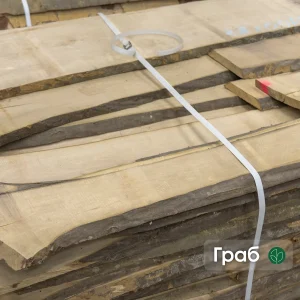
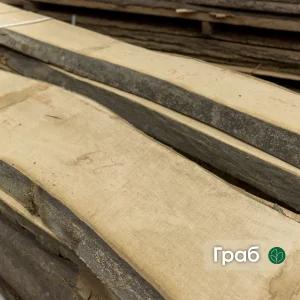
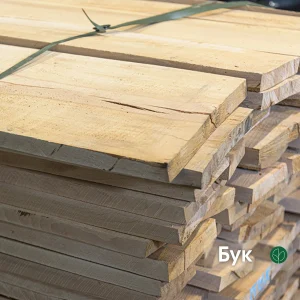
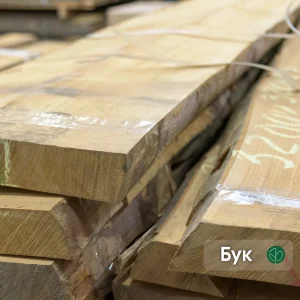
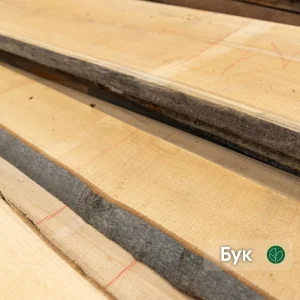
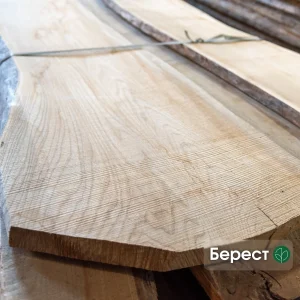
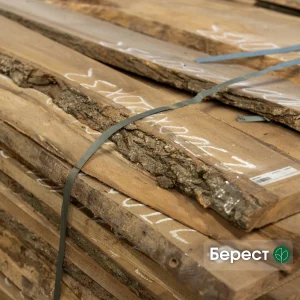
Unedged boards are obtained by sawing specially selected logs. The edges are not processed further, leaving the timber with a waney edge (bark). The resulting blanks are sent for drying: either atmospheric (natural) or in a special drying chamber.
Kiln-dried boards are considered superior quality because moisture evaporation is strictly controlled according to the wood species. Properly dried timber is stable, resistant to cracking, and processes well.
Depending on quality, timber is categorised as joinery or fencing board. Unedged boards without defects are used for interior items. Fencing board is lower-quality timber with cracks, wormholes, and stains. It is used for decking, battens, and making various fences (for garden plots, flower beds, and front gardens). We work exclusively with joinery-quality timber products.
Occasionally, semi-edged boards fall into the unedged category. Essentially, this timber occupies an intermediate position between edged boards and those with bark. The wane is sawn off only one edge of semi-edged boards. Main applications include auxiliary structures, roofing works, and the production of household and decorative items.
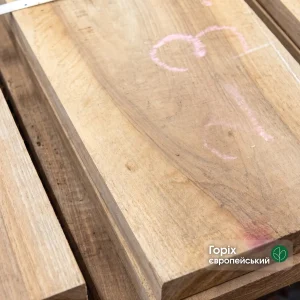
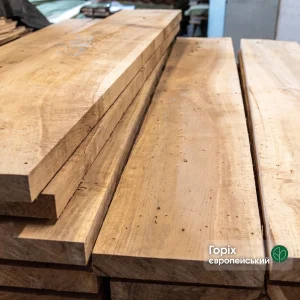
Edged board is timber manufactured from logs or beams. Before longitudinal sawing, the blanks are sawn on two sides. Typically, no wane remains on the side faces. However, according to technical documentation standards, a minor amount of bark may remain on the ends.
After additional processing on thicknessing and jointing machines, planed boards are obtained from edged ones.
We offer high-quality kiln-dried timber suitable for manufacturing furniture, wall and ceiling panels, doors, windowsills, and worktops. Products are stored in a heated warehouse, where we maintain proper conditions for correct wood storage.
Edged timber is utilised in construction and various manufacturing sectors. Craftsmen highlight the following characteristics:
Another important feature of wood is its decorative appeal. Each species differs in pattern, colour, and structure.
While Alder wood has a low-contrast pattern and an almost uniform coloured surface, American Walnut is notable for its clear and expressive grain. Textured Oak solid wood absorbs stains and oils excellently, highlighting growth rings. The delicate grain of Ash is appropriate in both modern and classic interiors. The pattern of European Walnut looks interesting on windowsills or doors, as well as on decorative boxes or figurines.
We offer a wide selection of wood with 8-10% moisture content. Boards are most often used in the furniture industry and interior decoration. Timber is used to manufacture:
| Application | Description |
|---|---|
| Furniture | Boards are easy-to-work materials, allowing for the creation of sturdy tables, wardrobes, chests of drawers, shelves, racks, and consoles. Solid Oak is used for furniture in country, loft, and minimalist styles, whilst American Walnut is often chosen for atmospheric classic, retro, or vintage settings. Timber is used in the production of cabinet facades. Some species are used for manufacturing frame elements of upholstered furniture or bent legs and armrests for chairs and sofas. |
| Flooring | Tongue-and-groove floorboards are manufactured from timber products. Strong, hard, and wear-resistant wood will serve for decades with proper processing and care. Wooden floors are chosen for both city flats and country houses. Solid wood is used in the production of engineered and parquet flooring. Modern flooring options consist of several layers: a base, a stabilisation part, and a solid wood face layer. |
| Wall & Ceiling Panels | Various woods are used for wall and ceiling cladding. Panels made of Walnut, Oak, or Ash fit into studies, bedrooms, living rooms, halls, hotel rooms, and conference halls. Boards of moisture-resistant Alder are used to make cladding (lining) for sauna and bathhouse walls. Wood on walls not only performs a decorative function but also improves the room’s microclimate. |
| Doors, Sills, Arches | Solid wood doors are an attribute of country cottages. Timber is used to create arches, room dividers, and screens that zone the space and make the room more functional. |
| Decor | Figurines, candlesticks, baskets, boxes, mirror frames, and picture frames made of solid wood are used in various styles: from Baroque and Provence to Ethno and Eclectic. |
WoodWay Expert supplies a comprehensive selection of edged and unedged sawn timber to flooring manufacturers, commercial joiners, furniture factories, craft workshops, and construction firms. The technical performance and specific applications of the material depend entirely on the selected wood species.
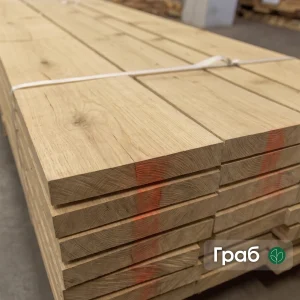
Oak. European Oak solid wood is used in internal and external works. The material is used for cladding floors, walls, and ceilings, as well as for making reliable furniture. Since European Oak and its timber withstand significant mechanical loads, furnishings for high-traffic public spaces are created from it.
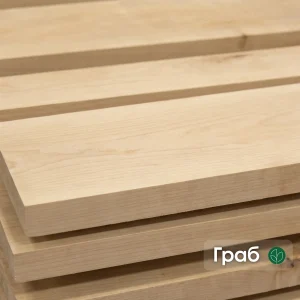
Ash. This hard wood maintains a stable shape. Ash is distinguished by its flexibility, which is why bent furniture elements and curved products are manufactured from it.
European Walnut. A strong and wear-resistant material that holds nails and screws well, and is easily toned and lacquered. European Walnut is used to create furnishings, gun stocks, musical instruments, and tableware.
American Walnut (Black). An exclusive species distinguished by its decorative properties. Boards of American Black Walnut are used in interior works. Parquet, wall panels, wall art, cabinet furniture, and collectible decor are produced from this valuable wood.
Alder. Joinery boards made of Alder can be easily decorated to mimic other species. The soft solid wood features good moisture-resistant qualities thanks to its dense and uniform structure.
Acacia. Acacia solid wood is called the hardest among hardwood species. The straw-coloured wood has a multi-directional structure: fibres are positioned towards each other. Properly treated Acacia products can be used for outfitting wet zones: in the kitchen or bathroom.
Elm. Elm wood belongs to medium-hardness species and is suitable for producing flooring, furniture, partitions, sports equipment, and musical instruments. The dense solid wood has a pronounced grain pattern. The surface is easily treated with stains, oils, and varnishes.
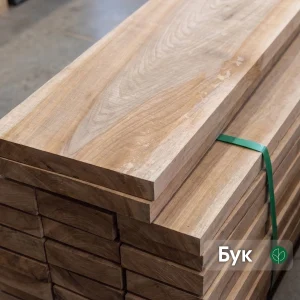
Beech. Beech wood is typically applied for interior works. This hard species is used in the furniture industry, turning, and the manufacture of household items. Beech board acquires a red hue over time.
Hornbeam. Another hard species for creating reliable and strong interior items. After drying, Hornbeam becomes denser, so processing requires attention and special tools. Hornbeam boards are also used in shipbuilding, automotive, and machine engineering.
Maple. Light and hard Maple solid wood has good bending strength indicators. A delicate wood pattern is noticeable on a level and smooth cut. Maple boards easily undergo cutting, sanding, toning, lacquering, and painting.
Cherry. Cherry wood, average in hardness and density, lends itself to bending. This heartwood species is trouble-free in processing. Thanks to a clear pattern and a pleasant warm palette of beige-brown shades, Cherry is often chosen by designers to create exclusive products.
Birch. A sapwood hardwood species of medium hardness, distinguished by viscosity and elasticity. The colour of the wood varies from cream to pale yellow. The texture is uniform and fine-grained. Birch timber undergoes all types of mechanical processing, including cutting and turning works. The surface of Birch boards can be sanded and polished, absorbing stains and toning mixtures well.
Red Oak. Red Oak belongs to the category of hard deciduous species and is distinguished by high density. The wood has a characteristic porous pattern. The colour range spans from light brown to a rich pinkish hue. The species undergoes mechanical processing and sanding, though it requires the use of carbide-tipped tools due to hardness. Features of the solid wood include the ability to bend under steam and high adhesion during gluing and painting. Due to open pores, Red Oak intensively absorbs toning agents and oils.
Lime (Linden). This soft solid wood is characterised by a uniform matte texture and low density. The wood is coloured in shades from almost white to cream or yellowish. Lime board is suitable for artistic carving, as it cuts easily in all directions, does not chip, and allows for the detailing of the finest elements. The viscous solid wood lends itself to turning, sanding, and polishing, holds fastenings, and can be painted or toned.
Spruce. A soft coniferous species distinguished by lightness and elasticity, as well as the presence of knots. The wood has a uniform light colour: from white to pale yellow, which acquires a warm golden hue over time under the influence of light. The solid wood is simple to process: it cuts, sands, and polishes well. Carpathian Spruce contains less resin than Pine, so it glues better. Due to the difference in density between early and late wood, the timber may absorb pigment unevenly during toning.
Teak. A valuable hard deciduous species known for resistance to moisture and temperature fluctuations. The wood has a rich golden-brown colour with dark streaks. Due to the high content of minerals and silicon, processing the solid wood requires the use of carbide tools. The natural oiliness of Teak complicates gluing and lacquering, so the surface should be thoroughly degreased before applying any coatings.
Poplar Burl (Mappa Burl). The burl structure of Black Poplar makes the species a valuable decorative material. The wood is distinguished by a chaotic interweaving of fibres: contrasting dark brown or black “eyes” are scattered on a light cream or golden background. Processing requires high skill and perfectly sharp tools, as there is a risk of chipping due to the multi-directional fibres. The solid wood lends itself to polishing and coating with varnishes.
Every timber species possesses distinct characteristics, ranging from grain pattern and wood colour to hardness, dimensional stability, and machining properties. Consequently, matching the raw material to the exact project requirements and environmental operating conditions is critical. Should you require technical assistance, please contact our team to help select the ideal boards for your production line.
WoodWay Expert offers premium timber boards available for purchase both in bulk wholesale volumes and individual retail orders. The catalogue features edged and unedged timber of Superior and Grade 1 quality.
To order dry boards:
IMPORTANT: Timber products are dispatched only after 100% payment.
Managers will calculate the price of the board per piece (the price of the board in the catalogue is listed per cubic metre), estimated delivery times, and payment options. Dispatch via carrier companies across Ukraine is available, as is collection from the warehouse in Kyiv.
WoodWay Expert offers premium timber boards available for purchase both in bulk wholesale volumes and individual retail orders. The catalogue features edged and unedged timber of Superior and Grade 1 quality.
To order dry boards:
IMPORTANT: Timber products are dispatched only after 100% payment.
Managers will calculate the price of the board per piece (the price of the board in the catalogue is listed per cubic metre), estimated delivery times, and payment options. Dispatch via carrier companies across Ukraine is available, as is collection from the warehouse in Kyiv.