Sawn Teak Veneer

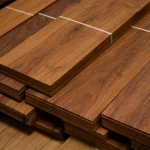
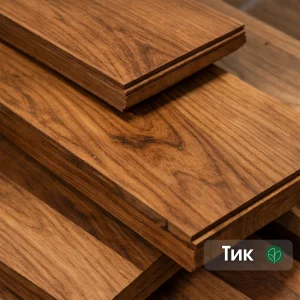
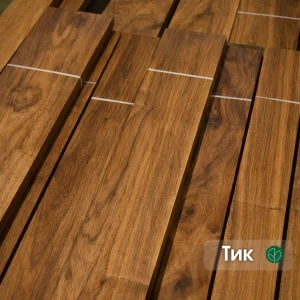
Sawn teak veneer (or teak lamella) consists of timber sheets ranging from 2 mm to 10 mm in thickness. These are produced by precisely sawing timber flitches. This sawing technology preserves the integrity of the wood fibres. It also maintains the natural grain pattern and the physical properties of the solid wood.

Sawn teak veneer 2.5 mm, 0.5–3 m

  • Wood species: Teak
  • Thickness: 2.5 mm
  • Type: Sawn
On request

Sawn teak veneer 4.5 mm, 0.5–3 m

  • Wood species: Teak
  • Thickness: 4.5 mm
  • Type: Sawn
On request

Sawn Teak Veneer: Characteristics, Applications, Grades, and Specifications

Sawn teak veneer (or teak lamella) consists of timber sheets ranging from 2 mm to 10 mm in thickness. These are produced by precisely sawing timber flitches. Craftsmen use this timber product for facing furniture, doors, and panels. Available from 1 pack; wholesale is available. We assist with material selection on-site and remotely. Warehouse collection, delivery across Ukraine.

This sawing technology preserves the integrity of the wood fibres. It also maintains the natural grain pattern and the physical properties of the solid wood. Let us examine the key features and technical advantages of teak lamella:

  • Natural oils and rubber content. Teak is one of the few wood species with a natural immunity to moisture. Even as a thin lamella, the material remains hydrophobic and highly resistant to rot.
  • Dimensional stability. Sawn teak veneer exhibits minimal hygroscopic expansion. This is crucial for manufacturing the top layer of engineered flooring or cabinet doors exposed to fluctuating humidity.
  • Unique aesthetics. The colour palette ranges from golden-brown to a deep chocolate hue. It frequently features distinctive dark veins.
  • Wear resistance. Thanks to its high density (approximately 650 kg/m³ at 12% moisture content) and silica content, teak lamella resists mechanical damage and abrasion.

These performance characteristics make sawn teak veneer the ultimate solution for damp environments. It is highly recommended for finishing bathrooms, saunas, and poolside areas.

The timber is also heavily utilised for marine decking and bespoke boat interiors. Furthermore, teak lamella is used to veneer furniture doors and worktops designed to last for decades.

Sawn Teak Veneer Dimensions: Stock Availability and Custom Orders

For immediate dispatch, we consistently stock timber products with the following technical specifications:

  • Thickness: 2.5 mm and 4.5 mm
  • Width: from 12 cm
  • Length: ranging from 0.5 m to 3 m

If our standard stock solutions do not meet your manufacturing requirements, we offer custom-cut sawn veneer.

This bespoke service is the optimal choice for furniture factories, joinery workshops, and design practices. Our advanced machinery allows us to maintain the following parameters:

  • Cut thickness: from 2 mm to 10 mm
  • Width: 12 cm to 21 cm
  • Length: 0.5 m to 3 m

The lead time for bespoke orders is up to 10 working days. Please note that we accept custom orders starting from a minimum volume of 10 square metres per wood species.

Grades of Sawn Teak Veneer

In woodworking, grade refers to the visual clarity and structural uniformity of the timber. Grades are assigned based on the presence or absence of natural characteristics. These include knots, sapwood, cracks, colour consistency, and grain direction.

A wood’s grade primarily affects its aesthetics and pricing. The foundational physical properties of teak—its exceptional moisture resistance, dimensional stability, and high essential oil content—remain intact across all lamella grades.

Sawn teak veneer is divided into three primary categories:

Criteria Grade 1 Grade 2 Grade 3
Feature A benchmark veneering material of the highest quality, undergoing the strictest selection. Material that combines high quality standards with the expressive natural aesthetics of the wood. Timber products with a highly pronounced natural character, displaying all the growth traits of the teak tree.
Texture Even, calm texture with parallel fibres. The colour is uniform: the classic golden-brown hue of teak with characteristic thin dark lines. Smooth tonal variations and a more dynamic grain pattern (wavy texture) are acceptable. Contrasting, variegated texture. Features sharp transitions from the dark heartwood to lighter areas.
Tolerances Defects are entirely excluded. No sapwood, knots (live or dead), cracks, insect marks, or rot are permitted. Small healthy (live) light knots (typically up to 10–15 mm in diameter) are allowed in small quantities. Occasional flecks of light sapwood on the lamella edges are also permitted. Through-cracks and dead (loose) knots are strictly prohibited. A significant percentage of sapwood is allowed. The presence of healthy and partially intergrown dark knots of larger diameter, pin knots, and minor surface (hairline) cracks that do not compromise the sheet’s integrity are acceptable.
Application Luxury furniture facades, yacht decking, exclusive wall panelling, bespoke interior details, and premium flooring. Manufacturing the top layer of engineered and parquet flooring, worktops, stair treads, and cabinetry. Interior design solutions in industrial, eco, or country styles. Ideal for crafting bespoke furniture (e.g., combined with epoxy resin). It is also used as a technical (sub-floor) layer or for hidden structural elements.

Understanding the specifics of each grade allows furniture makers and interior designers to optimise their project budgets rationally. It ensures they select the teak lamella that perfectly aligns with their visual and technical requirements.

Applications of Sawn Teak Veneer

Due to its moisture resistance, stability, and high density, teak sawn lamella is highly regarded as a versatile material for comprehensive interior fit-outs. Utilising lamella instead of solid wood optimises project costs and reduces the overall weight of joinery structures.

Let us explore the primary applications for this premium material:

  • Flooring. Teak is the correct choice for floors due to its minimal coefficient of hygroscopic expansion. Lamellae measuring 3–4 mm thick serve as a reliable facing layer for engineered and parquet boards. Such flooring resists humidity and temperature fluctuations and is fully compatible with underfloor heating systems.
  • Staircase cladding. Stair flights endure constant and significant operational wear. Teak lamella, securely bonded to the substrate, provides exceptional wear resistance and impact strength. Furthermore, the natural grain texture of teak creates a subtle anti-slip effect, enhancing safety.
  • Worktops for kitchens and bathrooms. With its high content of natural rubbers and silica, teak barely reacts to direct water contact. Veneering worktops with sawn veneer yields a surface highly resistant to fungal attacks, rot, and warping, even with constant microclimate shifts in wet zones.
  • Furniture doors and internal doors. Using teak lamella in door and cabinet manufacturing resolves a major joinery issue: the risk of warping. An MDF, chipboard, or plywood core finished with thick sawn veneer looks and feels identical to solid wood. However, it is vastly more stable and will not sag on its hinges due to its lighter weight.
  • Wall panelling (boiserie) and room dividers. Sawn teak lamella is extensively used to create feature walls and zone interior spaces. The material offers supplementary acoustic insulation while adding prestige to the interior. Additionally, teak’s specific reaction to ultraviolet light ensures the panels will not lose their appeal, eventually developing a deeper golden-chocolate hue.

The technological potential of sawn teak veneer facilitates the realisation of highly complex engineering tasks. It presents a rational and durable alternative to solid timber, adhering to the highest standards of quality and sustainability.

How is Teak Sawn Lamella Manufactured?

Producing sawn veneer is a multi-stage process requiring uncompromising precision at every step. The reliability and aesthetics of the final product depend entirely on strict adherence to timber processing standards.

Here is an overview of the key technological stages involved in creating this premium veneering material:

  1. Raw Material Selection. Sawn veneer is crafted from solid wood. Our technologists select only first and premium grade timber, forming the foundation for high-quality lamellae.
  2. Kiln Drying. The prepared timber undergoes a drying cycle in specialised kilns. This achieves an optimal joinery moisture content of 8–10%, guaranteeing material stability. Kiln drying neutralises internal stresses, protecting the blanks from longitudinal cracking or warping.
  3. Calibration. Next, the dried timber undergoes calibration. The boards are planed to ensure they perfectly fit the saw cassettes.
  4. Sawing. The timber blocks are fed into Wintersteiger machines. Specialists configure the parameters and begin sawing the solid wood into sheets of precise thickness. Advanced equipment ensures correct cutting geometry and significantly reduces sawdust waste.
  5. Packaging. Finished lamellae undergo strict quality control to ensure compliance with stated dimensions and grades. Sorted sheets are grouped into bundles, which are then placed on pallets for transport or storage.

Rigorous technological control results in a highly stable veneering material. Utilising professionally manufactured sawn veneer guarantees the longevity of premium furniture, doors, and flooring.

Teak Timber: A Brief Overview of the Species

Teak (Tectona grandis) is a premium heartwood species universally recognised as the benchmark for moisture resistance and biological stability. Its unique chemical composition features high levels of rubber, essential oils, and silica.

Consequently, the solid wood demonstrates exceptional performance metrics, even in the most aggressive climatic conditions.

Teak’s natural habitat encompasses the monsoon forests of South and Southeast Asia, including Myanmar (Burma), India, Indonesia, Thailand, and Laos. Historically, Burmese teak is considered the most valuable due to its slow growth and superior density.

Today, to satisfy industrial demand, teak is also successfully cultivated on plantations across Latin America (Costa Rica, Ecuador, Brazil) and equatorial Africa. Plantation timber has a slightly lower density but retains all the foundational properties of the species.

The density of the solid wood is 630–680 kg/m³ (wild Burmese teak can reach 750 kg/m³), with a Brinell hardness of 3.5. This provides ample hardness for manufacturing floor coverings. Wear resistance is exceptionally high.

The presence of silicon dioxide (silica) within the fibre structure makes teak highly resistant to abrasion. It is also impervious to termites, fungi, and rot. Teak absorbs impact loads well and has a moderate capacity for steam bending.

The heartwood boasts a golden-brown hue. Upon exposure to oxygen and UV light, the timber darkens to a rich chocolate tone. The sapwood is sharply demarcated, appearing thin and light yellow or greyish.

The texture is pronounced and somewhat heterogeneous, with growth rings clearly visible on the cross-section. The fibres are predominantly straight but can occasionally be slightly wavy.

The pores are large and frequently filled with tyloses (natural resinous deposits). To the touch, the freshly machined surface of the solid wood feels oily, as if coated in wax.

Working with teak requires joiners and technologists to strictly follow protocols dictated by its chemical composition. Because of the silica, teak causes significant blunting of cutting tools.

For sawing, planing, and routing, it is imperative to use saw blades and router bits exclusively fitted with tungsten carbide or diamond tips.

The high concentration of natural oils and rubber significantly impairs adhesion. Before applying adhesive (especially PVA or PUR), the cut surface must be thoroughly degreased with a solvent. Alternatively, two-component epoxy adhesives should be utilised.

The material sands exceptionally well. The optimal finishing choice involves oils (such as tung oil or specialised teak blends) or hard wax oils that penetrate deeply into the pores.

Applying polyurethane or acrylic varnishes is possible, but this must be preceded by the application of an isolating barrier primer.

7 Reasons to Order Sawn Teak Veneer from WoodWay Expert

Our objective is to provide manufacturers with rapid access to high-quality timber materials. We have established strong partnerships with leading furniture factories, architectural practices, and bespoke joinery workshops.

Here is why clients consistently choose WoodWay Expert as their primary supplier:

  1. Stock availability. Lamellae in 2.5 mm and 4.5 mm thicknesses are readily available in our warehouse. You can order timber products from stock and commence production immediately. Materials are dispatched upon payment. You can select your sawn veneer and collect your order on weekdays (from 08:00 to 17:00).
  2. Bespoke project manufacturing. To fulfill non-standard engineering and design briefs, we offer a custom sawn veneer service for thicknesses between 2 mm and 10 mm. The production cycle takes up to 10 working days, with a minimum order quantity of 10 square metres. A manager will calculate the precise cost per square metre after reviewing your enquiry.
  3. Extensive selection. Our catalogue features over 15 different timber species, encompassing popular local woods and valuable exotic options. If your project requires a specific timber not currently in our range, we can source the material and arrange custom sawing.
  4. Collection and nationwide delivery. In addition to direct warehouse collection, we ensure rapid dispatch of materials to any region. Transport is handled by reliable courier companies.
  5. Remote material selection. Provide your technical specifications, and our specialists will select bundles matching your required shade, grain, and usable area. You will receive photographs and precise timber specifications. Following approval and full prepayment, the order is prepared for dispatch.
  6. Convenient payment options. For maximum convenience, we accept both cash transactions (with a fiscal receipt provided at the warehouse) and bank transfers. We operate officially with corporate entities (VAT registered limited companies) and sole traders.
  7. Sales from 1 bundle, wholesale available. We sell sawn veneer by the bundle, with a minimum order of just one bundle. The square footage of each bundle is calculated individually, depending on the quantity and dimensions of the sheets. The bundle price is calculated via the formula: price per sq. m. × (length × width × number of sheets).

We offer bespoke commercial terms to our regular wholesale partners. The discount percentage is determined by the frequency of purchases, material type, and batch volumes.

How and Where to Buy Sawn Teak Veneer in Ukraine

Placing an order is designed to be as convenient and transparent as possible. To ensure an exceptional level of service, we have established three highly effective methods of interaction:

  • Warehouse visit. We invite you to visit our wholesale and retail warehouse, where you can inspect the timber products in person. Our consultants will assist with your selection and calculate your order price. We look forward to seeing you at: 7D Zdolbunivska Street, Kyiv (convenient access is available from 17E Dniprovska Embankment).
  • Contact our management team. Telephone or message our specialist on +380 (67) 180-38-13 (Telegram, Viber). In response to your enquiry, our manager will promptly prepare detailed specifications and send photos and videos of bundles matching your project requirements.
  • Online ordering. Simply select the required wood species, specify the sheet thickness, and add the item to your basket (or submit a quick enquiry). After processing your online application, a manager will contact you. This step ensures we agree on the square footage, confirm the payment method, and provide photos of the products being prepared for packaging and dispatch.

The WoodWay Expert team knows exactly how to execute tasks of varying complexity and scale. Contact us today, and we will help you source the highest quality timber materials!

FAQ: Frequently Asked Questions about Sawn Teak Veneer

Why does sawn teak lamella carry a relatively high price in the domestic market?

The price of these timber products depends on three main factors. Firstly, the complex logistics of importing exotic timber from Southeast Asia or Latin America. Secondly, teak holds a high intrinsic value due to its legendary durability. Thirdly, lamella manufacturing inherently produces a significant percentage of waste (sawdust). It also causes rapid tool wear owing to the high silica content within the wood.

Which adhesive is best for veneering with teak lamella?

Teak is an oily species with a high content of natural rubbers. Standard dispersion adhesives (such as PVA D3/D4) will not provide reliable adhesion. For bonding teak lamella, technologists highly recommend using two-component polyurethane (PUR) or epoxy adhesive systems. Crucially, immediately prior to applying the adhesive, the contact surface must be thoroughly degreased using a specialised solvent.

Is sawn teak veneer suitable for bathroom fit-outs?

Yes, it remains one of the absolute best materials for wet zones. Thanks to its natural oils, teak is hydrophobic (water-repellent) and highly resistant to mould and fungal attacks. Teak lamella measuring 3–4.5 mm thick is perfectly suited for veneering vanity units or creating luxurious timber floors in bathrooms and spa areas.

Which thickness of sawn teak veneer should I choose for different projects?

Selecting the correct thickness depends entirely on the operational load the finished product will endure. 2.5 mm — optimal for furniture doors, wall panelling, and internal doors. 3.0–4.5 mm — the standard European specification for the facing layer of engineered and parquet flooring, as well as worktops. 6.0–10 mm — utilised for flooring in commercial public spaces, manufacturing stair treads, and cladding areas subject to extreme wear.

How should I correctly finish a product made from sawn teak lamella?

Due to its oily structure, teak may reject standard polyurethane or acrylic varnishes (they might fail to polymerise or simply peel off). The best and most eco-friendly protection method is applying natural teak or tung oils. These finishes enhance the texture and allow the timber to breathe. If varnishing is absolutely necessary, a specialised barrier (isolating) primer must be applied beforehand.

Can engineered flooring featuring sawn teak veneer be used over underfloor heating?

Yes. Teak demonstrates the lowest rates of tangential and radial shrinkage among all commercial timber species. The solid wood will not warp, cup, or crack when heated or subjected to microclimate changes within a room. This stability makes it the benchmark solution for underfloor heating systems.

Does teak change colour over time?

Yes, this is a completely natural characteristic of the species. Freshly sawn lamella may exhibit uneven colouration, variegated stripes, or even a slight greenish tint. However, upon exposure to oxygen and UV light over a few weeks, the colour stabilises. It gradually darkens, transforming into a uniform golden-brown or rich chocolate hue.

What is the difference between Burmese and plantation teak?

Wild Burmese teak grows naturally for 80 to 150 years. It boasts a remarkably dense structure, exceptionally tight growth rings, and a higher concentration of natural oils. Plantation teak is cultivated on specialised farms (in Indonesia, Africa, and South America) and is harvested at 20–30 years of age. It features wider growth rings and a slightly lighter tone. Crucially, plantation teak is perfectly suitable for 90% of interior design projects. This more accessible option fully retains the foundational properties of the timber species.
View list
Compare