Amur Cork Tree Sawn Veneer

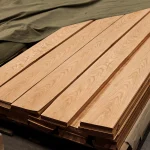
Sawn veneer from the Amur cork tree (Amur velvet) is a natural finishing and structural material. It is manufactured by sawing solid wood logs. Thanks to its sufficient thickness, the sawn lamella combines the aesthetic qualities and operational reliability of timber. The Amur cork tree is a relatively rare species.

Sawn Amur cork tree veneer 2.5 mm, 0.5–3 m

  • Wood species: Amur Cork Tree
  • Thickness: 2.5 mm
  • Type: Sawn
On request

Sawn Amur cork tree veneer 4.5 mm, 0.5–3 m

  • Wood species: Amur Cork Tree
  • Thickness: 4.5 mm
  • Type: Sawn
On request

Amur Cork Tree Sawn Veneer: Dimensions, Specific Uses, Grades, and Where to Buy

Sawn veneer from the Amur cork tree (Amur velvet) is a natural finishing and structural material. It is manufactured by sawing solid wood logs. Thanks to its sufficient thickness, the sawn lamella combines the aesthetic qualities and operational reliability of timber. Available from 1 pack; wholesale orders supplied. Collection from our warehouse in Kyiv, delivery across Ukraine. Remote timber selection for projects of varying complexity.

The Amur cork tree is a relatively rare species. Therefore, materials from this timber are considered an exclusive solution for the woodworking and furniture industries. In terms of physical, mechanical, and visual characteristics, cork tree timber holds a special place amongst hardwoods.

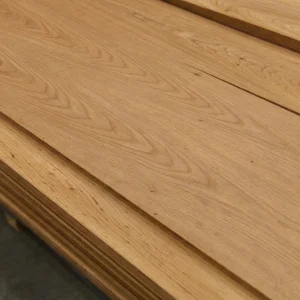
  • Texture: On the cut, the material features a pronounced pattern of annual rings. This visually resembles ash but differs with smoother, more blurred lines.
  • Colour palette: Warm yellow-brown and golden-brown shades prevail.
  • Surface: The timber has a characteristic natural silky shine. This is fully revealed after the final polishing.
  • Strength and stability: The timber offers sufficient hardness. It is ideal for use in areas with moderate mechanical load.
  • Workability: The material lends itself perfectly to joinery work. The lamella can be easily sawn, routed, bent, and glued. The wood absorbs stains, dyes, and polyurethane or acrylic varnishes evenly.

Amur Cork Tree Sawn Lamella Dimensions: Stock Availability and Custom Orders

We always maintain stocks of sawn timber with the following dimensions in our warehouse:

  • Thickness: 2.5 mm and 4.5 mm;
  • Width: 12+ cm;
  • Length: 0.5–3 m.

If the ready-made stock items do not meet the technical requirements of your project, we offer custom sawn veneer production. This is the optimal solution for furniture factories, private joinery workshops, and exclusive design projects. Sawn timber with the following characteristics is available to order:

  • Thickness: from 2 to 10 mm;
  • Width: from 12 to 21 cm;
  • Length: from 0.5 to 3 m.

The lead time for bespoke orders does not exceed 10 working days. We accept batches starting from 10 m² of a single wood species.

Grades of Amur Cork Tree Sawn Veneer

Grade is a standardised indicator of the visual and structural qualities of the timber. It is determined by the presence, quantity, and size of natural features in the solid wood. These include knots, cracks, sapwood, as well as the uniformity of colour and grain pattern.

It is important to understand that the grade primarily affects the decorative value of the material. The basic physical and mechanical properties of the Amur cork tree remain unchanged across all grades.

Parameter Grade 1 (I, A) Grade 2 (II, B) Grade 3 (III, C)
Key feature High-quality material used for facing premium-segment products. Sawn timber that perfectly conveys the natural, “living” texture of the wood. This is the most popular choice due to its optimal price-to-decoration ratio. Lamella with pronounced wood characteristics. It is used either for concealed structural work or bespoke design tasks.
Texture The surface is exceptionally clean. The pattern of the annual rings is even, and the colour is uniform. Natural colour variations and a more pronounced, contrasting texture are permitted. A contrasting surface with sharp colour transitions and a complex, often chaotic texture.
Tolerances Complete absence of defects or the presence of isolated “live” (sound) knots up to 2–3 mm in diameter. Cracks, sapwood, or sharp colour changes are not permitted. Presence of sound (intergrown) light and dark knots of small diameter. Slight deviations in the grain direction are possible, creating an interesting visual effect. Through-cracks are not allowed. Presence of large, dark, and partially non-intergrown knots. Small surface (non-through) cracks, a significant percentage of sapwood, and mineral inclusions are permitted.
Application Visible facades of cabinet furniture, wall panels, exclusive parquet flooring, and musical instrument components. Production of engineered flooring, worktops, internal doors, and furniture in Scandinavian, eco, or classic styles. Internal, unseen furniture parts. In modern design, Grade 3 is also actively used for facing loft or rustic interiors, where natural defects are intentionally highlighted with tinting or epoxy resin.

What is Made from Amur Cork Tree Sawn Veneer?

Sawn lamella allows for the creation of products that are visually and tactilely indistinguishable from solid wood. However, they are significantly more resistant to deformation.

Sawn timber from the Amur cork tree is used in the following areas of woodworking and interior design:

  • Floor coverings and staircase cladding: The lamella is used as the top (facing) layer in parquet and engineered flooring. The material provides the floor with a premium appearance. It also allows for 3–5 cycles of restorative sanding. Furthermore, sawn veneer is applied to clad internal staircase treads, as the timber sheets withstand mechanical loads well.
  • Furniture and worktop production: Using sawn veneer reduces the overall weight of large items. Facing the facades of cabinet furniture (wardrobes, kitchen units, chest of drawers) with Amur velvet lamella highlights the product’s prestige. The timber can be routed to create complex classic or modern geometric profiles. For work surfaces (kitchen and writing desks), the lamella is considered an optimal facing material due to its thickness. Once treated with varnishes, oils, or waxes, the veneered worktop is protected from scratches and moisture.
  • Internal doors: Veneering the door leaf and frame with thick lamella ensures high impact resistance. It also guarantees excellent sound insulation.
  • Wall panels: Wall and ceiling panels faced with cork tree sheets create a favourable microclimate. They also improve the thermal insulation characteristics of the room.
  • Internal partitions: Using thick sawn veneer for decorative slats (baffles) or sliding partitions ensures the structures maintain a stable shape. Timber sheets are also used to face MDF or chipboard panels, which are then used to make feature walls and screens.

The material is also used to craft a variety of interior decor: photo frames, boxes, storage crates, wall panels, key holders, and more.

How Amur Cork Tree Sawn Veneer is Manufactured

The production of sawn veneer requires strict control at every stage of timber processing. Modern technological lines transform solid boards into thin, stable sheets. These sheets are used to face interior products.

The main stages of manufacturing sawn veneer are as follows:

  1. Raw material sorting: To produce a high-quality lamella, specialists exclusively use first or premium-grade sawn timber.
  2. Kiln drying: Sorted blanks undergo mandatory thermal treatment in industrial drying kilns. This technology guarantees an optimal joinery moisture level of 8–10%. Kiln drying eliminates internal stress in the fibres and minimises the risk of subsequent warping or cracking.
  3. Calibration: Next, the blanks are fitted to the saw cassette. The dimensions of the board are adjusted to match the equipment size.
  4. Sawing process: Previously planed beams are fed into a Wintersteiger machine. Technologists set the sawing parameters and begin cutting the timber into lamellas of a specific thickness. Using advanced equipment ensures maximum cutting precision and significantly reduces production waste.
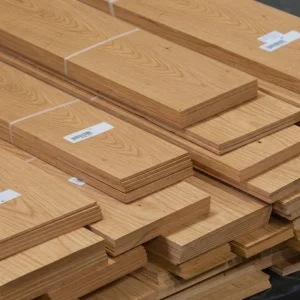
  5. Quality control: The resulting cuts undergo a thorough inspection. Experts check for adherence to specified dimensions and the absence of defects. The sorted products are then stacked into bundles based on their grade.

Strict adherence to this technology yields a reliable, long-lasting finishing material. Thanks to this approach, the sawn veneer retains all the operational advantages of solid wood.

Amur Cork Tree Timber: Characteristics, Properties, and Processing

The Amur cork tree (Phellodendron amurense) is a relict broadleaved species. In its natural habitat, it grows in the mixed and deciduous forests of East Asia. The main distribution area covers Northern China, the Korean Peninsula, Japan, and the Amur River basin.

As a decorative and park crop, this species is successfully cultivated in European countries, including Ukraine. However, imported raw material from its natural habitat is predominantly used for commercial timber harvesting.

The visual appearance of cork tree timber is often compared to ash. However, the pattern has smoother lines and a warmer colour palette. The heartwood boasts a rich golden-brown or yellow-brown colour, occasionally with a slight greenish tint. The sapwood is narrow, clearly defined, and light yellow or greyish.

Over time, the timber may darken slightly under the influence of ultraviolet light. The annual ring pattern is distinct, contrasting, and very clear on all cuts, particularly the tangential one. The grain is mostly straight, but areas with a wavy grain do occur. The pores are quite large and moderately deep.

The solid wood possesses a natural silky shine. This shine is fully revealed after final sanding and polishing.

In terms of physical and mechanical parameters, the Amur cork tree is classified as a medium-density timber (550–650 kg/m³). On the Brinell scale, its hardness rating ranges from 2.8 to 3.2. The material is harder than alder or lime, but softer than oak or beech.

The material has moderate toughness and a high elasticity index. When steamed, the timber bends exceptionally well. The solid wood is resistant to moderate mechanical loads. It is not prone to severe warping or cracking during use.

The cork tree is easily workable with both hand tools and industrial machinery. The surface sands smoothly without any issues. The timber demonstrates excellent adhesion with all types of industrial joinery glues, including PVA and PUR.

Due to the presence of large, open pores, the solid wood absorbs stains, dyes, oils, and waxes evenly. When applying paint and varnish coatings, a pore filler (primer) may be required.

Benefits of Ordering Amur Cork Tree Sawn Veneer from WoodWay Expert

The primary objective of our company is the prompt and uninterrupted supply of timber materials to enterprises, joinery workshops, and craft studios. We have established partnerships with furniture factories, architectural and design studios, as well as door and flooring manufacturers.

Below are the key points that make us a reliable B2B and B2C timber supplier:

  • Stock availability: Popular lamella items with standard thickness parameters (2.5 mm and 4.5 mm) are readily available. Customers can personally inspect the sheets, choose the required texture, and collect the goods immediately after payment on working days (Monday to Friday, 08:00–17:00).
  • Bespoke orders: To realise complex and exclusive design concepts, we offer custom sawn veneer production to your specifications. Thicknesses range from 2 to 10 mm. We accept batches starting from 10 m². The manufacturing process takes up to 10 working days. Our managers will calculate the current cost per square metre for your custom order upon processing your request.
  • Choice of species: Our catalogue features over 15 varieties of natural timber. If your project requires a specific species temporarily out of stock, we are ready to manufacture the material to order.
  • Collection and nationwide delivery: You can collect the purchased products from our warehouse using your own transport. We also organise deliveries throughout Ukraine via courier companies.
  • Remote sawn veneer selection: Submit an online request detailing your technical specifications. Our specialists will remotely find a suitable veneer option, considering the required colour, grain pattern, and total area. During the approval stage, you will receive photographs of specific bundles and exact timber specifications. Only after your final approval and a 100% advance payment against the issued invoice will the goods be prepared for dispatch.
  • Convenient payment: We accept cash payments at the warehouse. For corporate clients, bank transfers are also available. We work with sole traders and limited companies with VAT.
  • Retail and wholesale: You can purchase sawn lamellas in bundles. The minimum order is 1 piece. The square footage of a bundle varies depending on the dimensions and the number of sheets. The final cost of a bundle is calculated as follows: price per 1 m² × (length × width × number of sheets). In addition to selling individual bundles, we also fulfil wholesale orders.

We offer exclusive cooperation terms to wholesale buyers. The personal discount percentage is calculated individually, based on the chosen timber species and purchasing volume.

How to Buy Amur Cork Tree Sawn Veneer in Ukraine?

WoodWay Expert offers several convenient ways to purchase finishing materials:

  • Personal visit to our wholesale and retail base: We invite you to visit our warehouse to personally assess the timber quality. You can select bundles by pattern and texture. Our address is: 7d Zdolbunivska Street, Kyiv (please note that it is convenient to enter the premises from 17e Dniprovska Naberezhna).
  • Contacting a manager: For customers unable to visit us in person, we offer a remote selection service. Contact our specialists on +380 (67) 180-38-13 or message us via messengers (Viber, Telegram). In response to your technical requirements, our managers will promptly send detailed specifications and photographs of the available timber.
  • Online purchase: The functionality of our website allows you to quickly filter the required wood species and corresponding cut thickness. Submit a request or place an order via the basket. After logging the request in the system, our staff member will call you back. They will finalise the exact square footage, confirm the payment method, and, upon request, provide a photo of the batch being prepared for dispatch.

The WoodWay Expert team is ready for tasks of any scale. We look forward to your enquiries!

FAQ: Frequently Asked Questions about Amur Cork Tree Sawn Veneer

Cork tree timber visually resembles ash. What is their fundamental difference?

Indeed, the annual ring pattern of the cork tree is similar to ash. However, the Amur cork tree has a significantly warmer, richer golden-brown shade and smoother texture lines.

How does Amur cork tree timber react to temperature fluctuations?

Following proper kiln drying to a joinery moisture level (8-10%), cork tree timber becomes highly stable. When the lamella is correctly glued to a base (moisture-resistant plywood or MDF), the material neither warps nor cracks due to temperature and humidity changes in residential flats.

What standard sizes of Amur cork tree sawn lamella are available in stock?

Our stock programme always features timber with the following parameters: thickness — 2.5 mm and 4.5 mm; width — from 12 cm; length — from 0.5 to 3 metres. These items are ready for immediate dispatch.

Can I order lamella sawn to bespoke dimensions?

Yes, we provide a custom sawn veneer production service for non-standard projects. You can order timber with a thickness ranging from 2 to 10 mm. The lead time is 10 working days. The minimum order volume is 10 m² of a single species.

Which glues and varnishes are best to use for cork tree sawn veneer?

The Amur cork tree is easily bonded with professional joinery adhesives (PVA D3/D4, PUR). The timber absorbs stains and oils deeply and evenly. It is worth noting that the species has rather large pores. Therefore, to create a smooth, varnished surface, using a pore-filling primer is highly recommended.

How do I place an order and arrange delivery of sawn veneer within Ukraine?

You can personally select the material at our wholesale and retail warehouse in Kyiv (7d Zdolbunivska St) or place an order online. We will remotely select bundles based on your request, send photos/videos of the specifications, and organise prompt delivery via courier companies across Ukraine.
View list
Compare