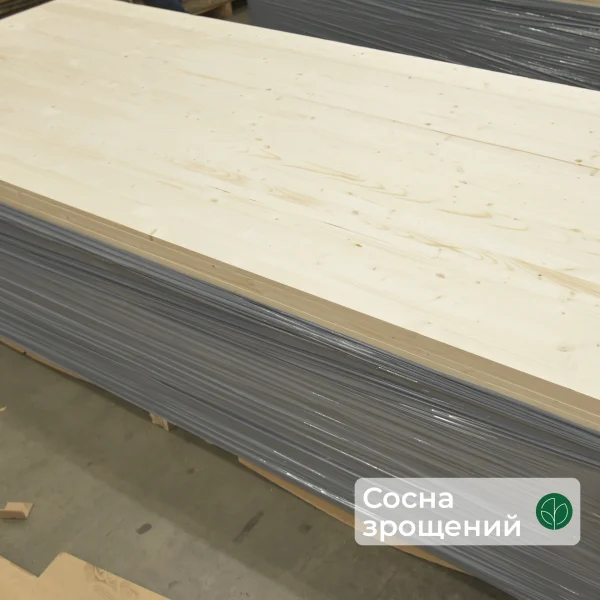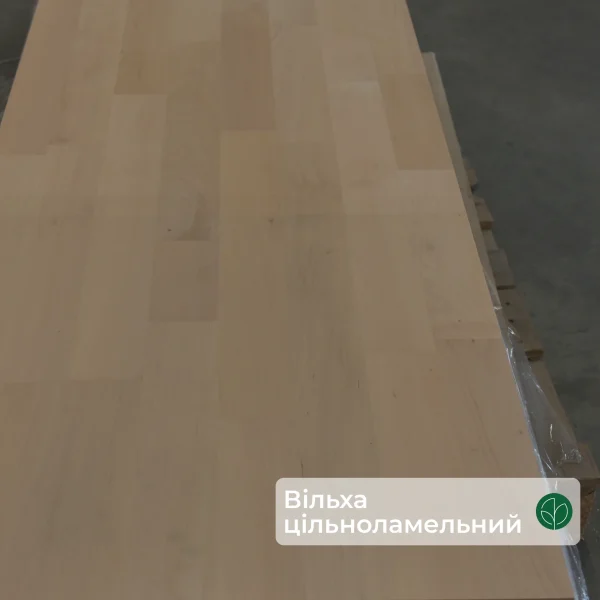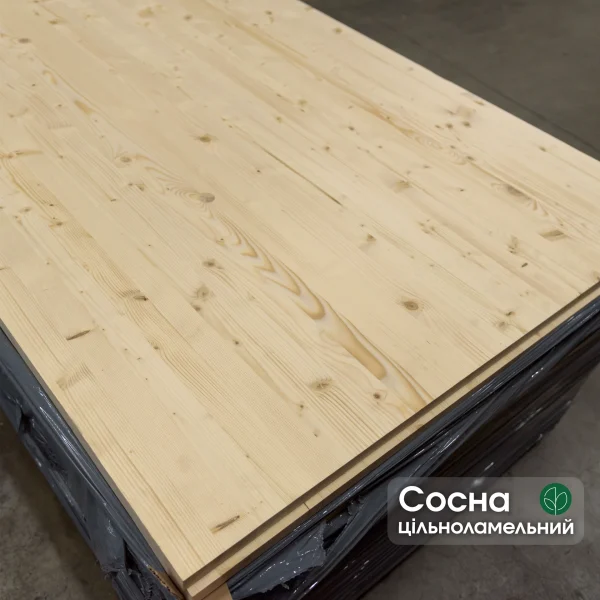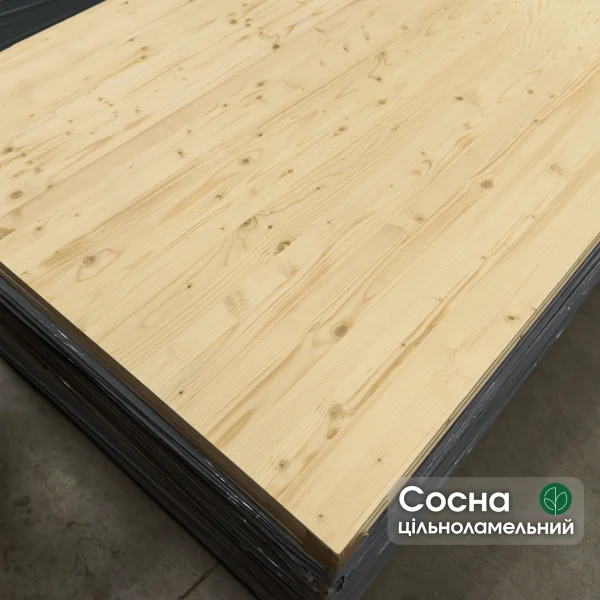
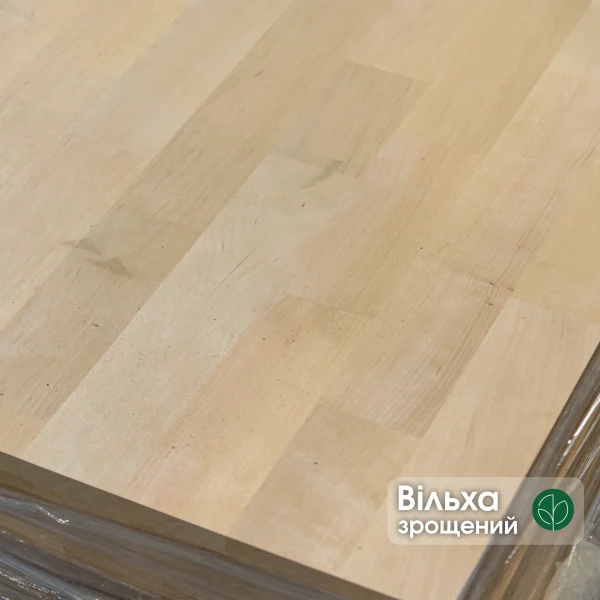

Grade A/A (Grade 1/1) finger-jointed alder edge-glued panels with a thickness of 40 mm and a size of 2×0.65 m are manufactured using a double-layer laminated construction (bonded from two 20 mm panels). This multi-layer design ensures enhanced structural rigidity and maximum resistance to warping, making the material perfectly suitable for heavy-duty worktops, stair components, and heavy furniture parts. Available for order from 1 piece. In-person warehouse collection or reliable shipping across Ukraine via transport companies is fully supported.
Advantages of Finger-Jointed Alder Edge-Glued Panels
A finger-jointed edge-glued panel is manufactured by joining short lamellas both along their length (using finger joints) and width (edge-gluing). This engineered structure provides the material with exceptional performance characteristics:
- Enhanced Stability. Due to the high density of glue joints and the opposing grain directions of adjacent lamellas, the internal stress of the timber is effectively neutralized. The material maintains its linear dimensions and flatness even when indoor humidity fluctuates.
- High Mechanical Strength. Finger-jointing technology creates a mechanical bond that often exceeds the strength of solid wood. The glued structure allows for even load distribution across the entire surface.
- Visual Uniformity. The production process allows for the removal of natural defects (knots, sapwood) to achieve a clean, uniform surface. The joined segments create a characteristic "block-pattern" or "mosaic" aesthetic that highlights the natural diversity of the ash grain.
- Optimal Moisture Content. A moisture level of 8-10% is the industry standard for interior joinery, furniture, and stairs.
- Eco-friendliness. Panels are made from sustainable timber and certified D3/D4 adhesives. The material is non-toxic and safe for use in residential and commercial premises.
The material retains the natural beauty of alder, while ensuring structural reliability and excellent machinability. The efficient utilization of timber during production also makes finger-jointed panels a cost-effective solution for many projects.
Alder Edge-Glued Panel Grades
The grade of an edge-glued panel determines the visual quality of the material rather than its strength or stability. The classification is based on permitted natural wood features and the quality of the stave bonding. The difference between panel grades is purely aesthetic and dictates the area of application.
I (A) |
The surface is virtually uniform in texture and colour. Occasional small white knots are permitted. Free from sapwood and other features. Typically used in the furniture industry for exclusive sets. |
II (B) |
Small sound knots are permitted. Moderate tone variations and a more active wood grain are possible. Suitable for carcase furniture, shelving, and worktops. |
III (C) |
Contains various types of knots, sapwood, and high-contrast textures. These panels are usually painted, laminated, or used for designer products in rustic, eco, country, or loft styles. |
Applications of Edge-Glued Panels
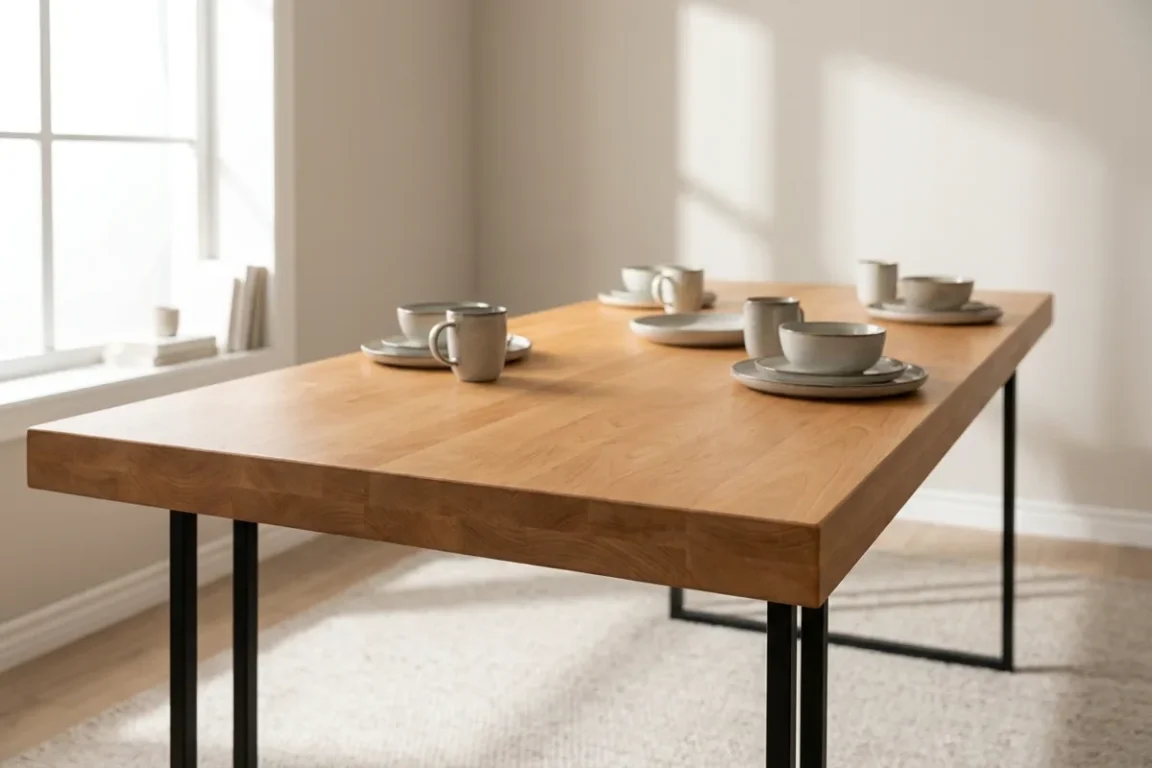
Work Surfaces and Worktops
This is the primary application for the material. The stable structure of the panel allows for the manufacture of home furniture, including dining tables, desks, and coffee tables. The glued structure makes it an optimal choice for kitchen worktops, where resistance to daily wear is critical. Panels are also used to create bar counters, kitchen islands, reception desks, and retail counters.
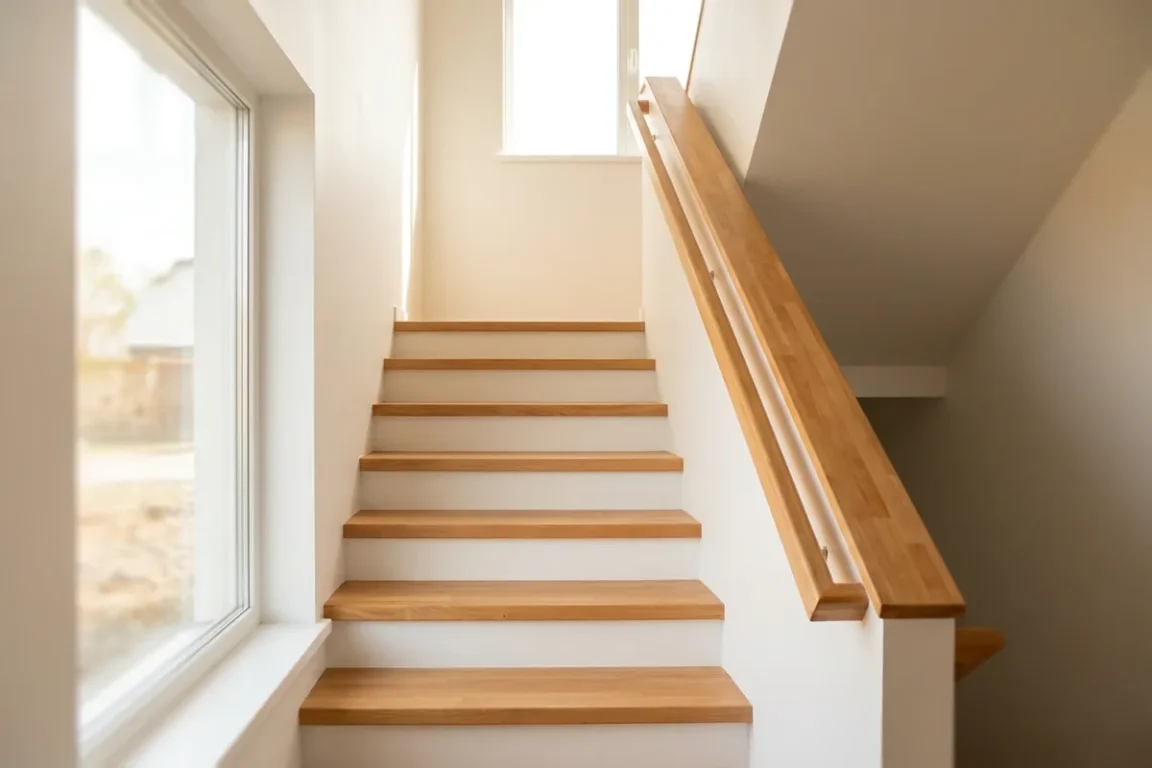
Staircase Components
Edge-glued panels are an ideal material for structures subject to constant mechanical stress. They are used to produce treads, landings, and handrails. Glued timber withstands static and dynamic loads significantly better than solid wood.
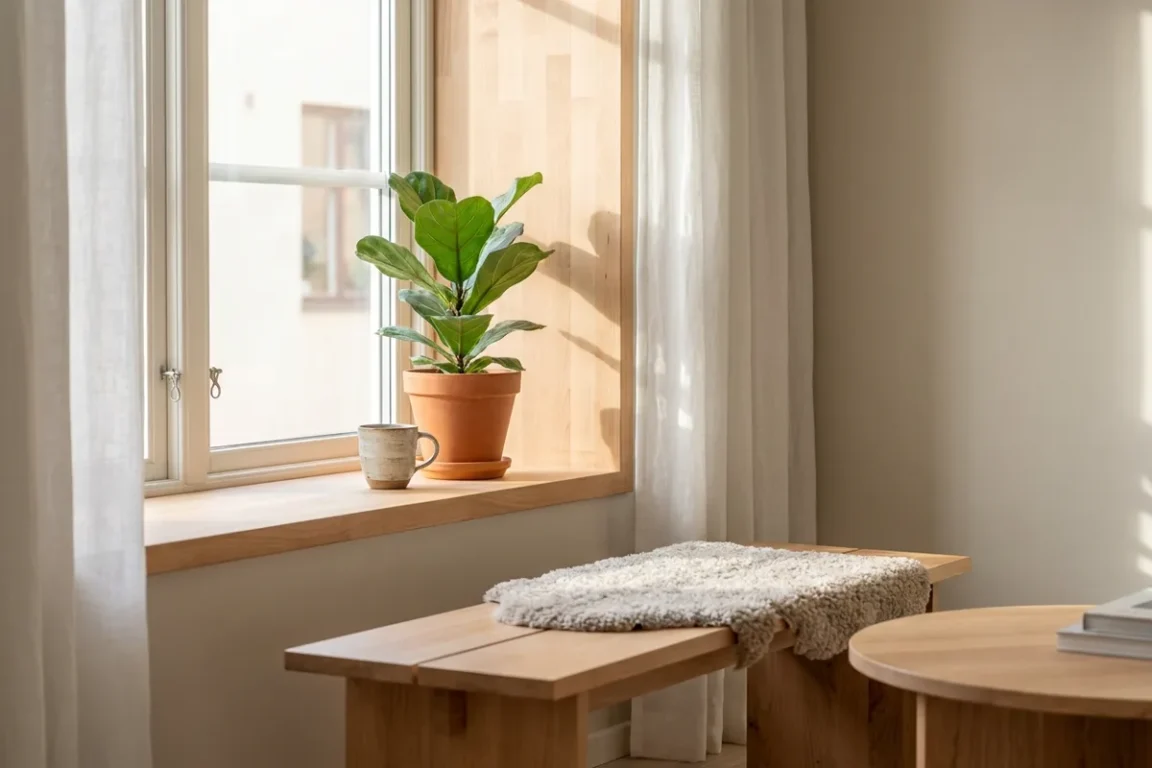
Window Sills
Using panels for window sills is a popular solution for residential flats, office centres, and conference halls. Unlike solid boards, a panel-based window sill does not deform under the influence of warm air from radiators or moisture from windows. The surface is treated with protective coatings.
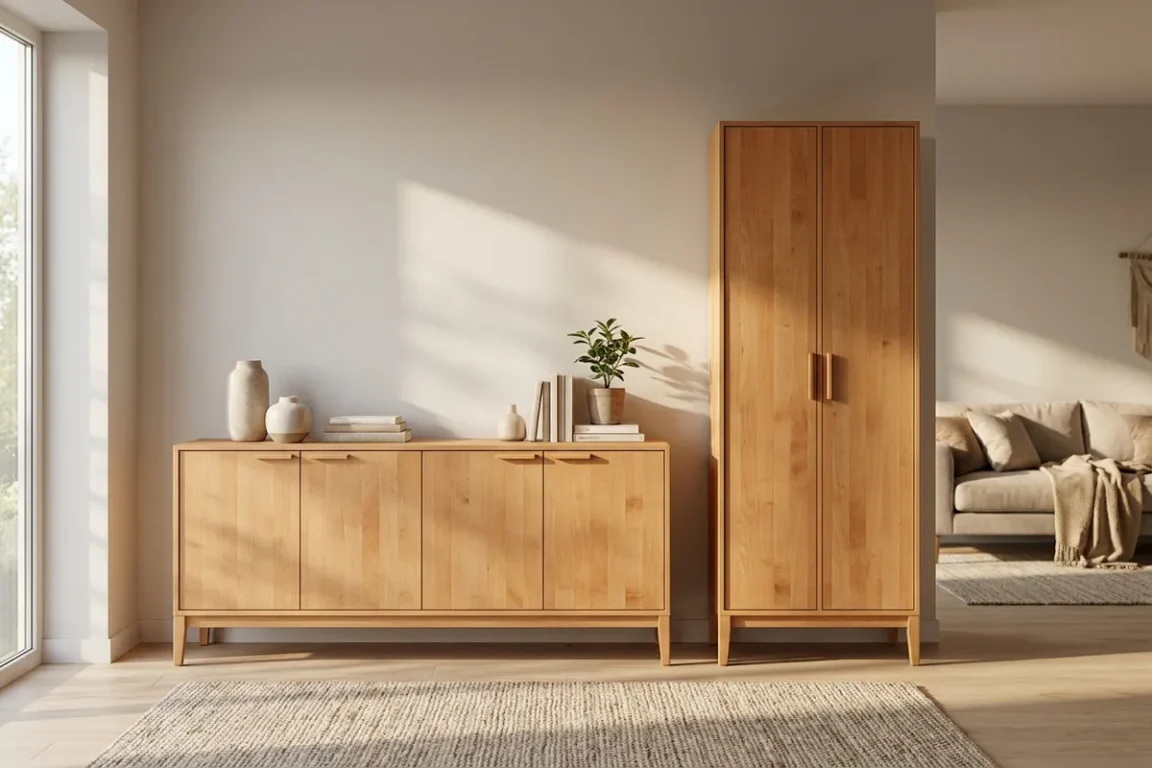
Carcase Furniture and Storage Systems
This structural material is used to create durable storage systems. Shelves and racking made from edge-glued panels can support the significant weight of books, decor, or kitchenware. They are also used for cabinet doors, chests of drawers, sideboards, and tall storage units.
Chairs, Benches, and Interior Decor
The strength of the adhesive bond allows for the creation of reliable hallway benches, stools, and bar chairs. Timber stave panels can also be used as interior wall cladding, screens, or partitions for space zoning.
Custom Manufacturing of Edge-Glued Panels
We accept bespoke orders for the production of custom-engineered edge-glued panels tailored to your specifications. Product specifications are as follows:
- Construction type: Full stave (continuous lamella) or finger-jointed.
- Wood species: Oak, Ash, Pine.
- Thickness: 20 mm, 27 mm, 40 mm.
- Grade: A, B, A/B (according to international grading standards).
- Moisture content: 8-10% (kiln-dried).
- Dimensional variety: A single order can include panels of both uniform and varying formats.
- Surface finish options:
- Uncoated (raw) panel.
- Pre-sanded for painting (120 grit).
- Finished with lacquer, paint, oil, or tinting. The cost of the final coating is calculated individually upon request.
Ordering Terms:
- We accept orders starting from 5-10 units. Wholesale pricing applies to volumes from 3 m³.
- Lead time for production is typically between 14 and 20 working days.
- Standard shipping is handled on pallets. Individual shrink-wrapping of each panel is available upon request (for an additional fee) to provide maximum protection against humidity and damage during transport.
Please submit a request to our managers — they will contact you to provide a detailed consultation.
Manufacturing Stages of Edge-Glued Panels
- Raw Material Selection. Only high-quality kiln-dried boards are selected for production. Timber with a moisture content of 8-10% provides the essential foundation for stable, warp-resistant panel materials.
- Sawing. Solid timber is ripped into blanks—lamellas of a specific width. These staves are then meticulously sorted. Segments with knots, cracks, wormholes, or other natural defects are either rejected or sent for defect removal. The selected lamellas are calibrated on four sides (S4S). For finger-jointed panels, a precision finger joint profile is milled into the ends of short staves before they are joined under a hydraulic press.
- Panel Formation. Lamellas are laid out according to a specific structural pattern: the grain direction in adjacent segments must be reversed (alternated). Staves are also color-matched to ensure aesthetic consistency in texture and tone.
- Gluing. Lamellas are joined using industrial D3 or D4 class wood adhesives, applied evenly to the edges. The assembled panel is then processed in a high-pressure press to ensure a permanent bond.
- Calibration and Sanding. Once the adhesive is fully cured, the panels undergo final calibration and professional sanding. This results in a smooth surface ready for lacquering, tinting, or oil treatments.
Why is an Alder Panel More Stable Than Solid Wood?
The primary challenge with solid timber is its hygroscopicity. Solid wood naturally absorbs and releases moisture, which often leads to warping, cupping, and cracking. An edge-glued panel resolves these issues through three technical factors:
- Internal Stress Compensation. In a solid board, wood fibers run in a single direction. If the board begins to warp during seasonal drying, the entire piece deforms. In an edge-glued panel, lamellas are oriented so that their grains counteract each other. The internal tension of one lamella is balanced by the resistance of the adjacent one.
- Absence of Critical Fracture Points. Cracks in timber typically propagate along the grain. Since a panel consists of separate, bonded segments, a micro-crack appearing in one lamella cannot physically transfer to the next. The glue line acts as a structural barrier.
- Uniform Reaction to Humidity. Because the panel consists of narrow, engineered lamellas, each element reacts to humidity changes more predictably and subtly. This significantly reduces internal tension and minimizes the risk of dimensional distortion.
In summary, an ash edge-glued panel is technically superior to solid wood for high-end furniture and joinery because its construction compensates for the natural hygroscopicity of timber. The multi-directional grain of the lamellas neutralizes stress, glue joints block the spread of defects, and the narrow elements ensure long-term dimensional stability.
Alder Timber: A Brief Overview
Alder (Alnus) is one of the most popular species in the furniture and woodworking industries. This soft hardwood is highly valued for its dimensional stability and excellent workability.
Alder is classified as a low-density hardwood with moderate strength properties. At 12% moisture content, its density is 490–530 kg/m³, and its Brinell hardness is approximately 2.1. Its bending strength is moderate. While solid alder is structurally weaker than beech or ash, it possesses excellent steam-bending characteristics.
Alder features a fine, uniform texture. Freshly cut timber is almost white, but upon exposure to air (oxidation), the wood quickly develops a reddish-yellow, orange, or light brown tint. There is no clear visual distinction between heartwood and sapwood; the entire cross-section of the log presents a consistent colour. The grain is generally straight, and the structural composition is uniform. The pores are small and evenly distributed, allowing the surface to be sanded to a smooth finish with ease.
Alder is easy to machine, producing a clean cut without splintering or chipping. It is an outstanding species for staining and finishing. Lacking large pores, the solid wood absorbs stains exceptionally well, enabling it to replicate the appearance of premium hardwoods such as mahogany, cherry, or walnut. It offers excellent gluing and screw-holding properties, with minimal risk of splitting during fastening. Furthermore, it readily accepts varnishes and oil finishes, providing a uniform sheen without blotching.
Choose the edge-glued panels of the required thickness and dimensions, then add them to your cart, request a quote, or call us: +380 (67) 180-38-13 (Viber, Telegram).