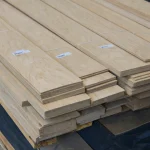
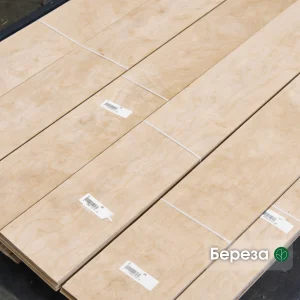
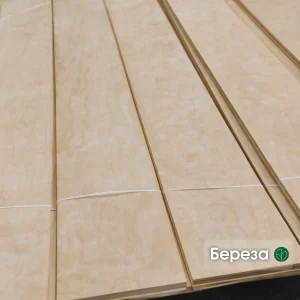
Sawn Birch Veneer

Sawn birch veneer (sawn lamella) consists of planks manufactured by sawing prepared timber blanks. The lamella thickness typically ranges from 2 to 10 mm. This brings the material’s physical and mechanical properties closer to those of solid wood boards.

Sawn birch veneer 2.5 mm, 0.5–3 m

  • Wood species: Birch
  • Thickness: 2.5 mm
  • Type: Sawn
On request

Sawn birch veneer 4.5 mm, 0.5–3 m

  • Wood species: Birch
  • Thickness: 4.5 mm
  • Type: Sawn
On request

Sawn birch veneer: specific uses, grades, and characteristics

Sawn birch veneer (sawn lamella) consists of planks manufactured by sawing prepared timber blanks. The lamella thickness typically ranges from 2 to 10 mm. This brings the material’s physical and mechanical properties closer to those of solid wood boards. Available from 1 pack. Warehouse collection, delivery across Ukraine via carrier companies. Remote material selection by dimensions, grain, and colour shade.

Unlike sliced veneer, the solid wood is not boiled or steamed before sawing. Therefore, the sawn timber retains its natural wood colour.

Birch lamella is highly valued for its combination of toughness, impact resistance, and uniform structure. The use of this material in interior solutions and furniture manufacturing is driven by several technical parameters:

  • Strength and elasticity. Birch shows excellent resistance to bending and compression. Veneer sheets with a thickness of 4–5 mm withstand significant mechanical loads. This is critical for manufacturing parquet flooring and staircases.
  • Texture and colour. The timber has a white-yellowish or light cream hue with a delicate natural lustre. Its fine-pored structure ensures uniform absorption of lacquers and paints. This allows it to imitate more expensive wood species like walnut or cherry.
  • Dimensional stability. Thanks to the sawing technology and kiln drying to a moisture content of 8–10%, the sawn birch veneer maintains a stable shape.
  • Eco-friendliness and safety. Natural birch timber is hypoallergenic and does not emit resinous substances. This makes it perfectly safe for use in nurseries, bedrooms, and medical facilities.

We work with retail and wholesale customers. We have operated in the Ukrainian market for over 30 years and are ready for new projects.

What sizes of sawn birch veneer are available in stock and for bespoke orders?

Besides working with our standard stock range, the company also fulfils bespoke orders. We produce timber materials with non-standard parameters upon request.

Timber products with standard characteristics are permanently available in our warehouse:

  • thickness: 2.5 mm and 4.5 mm;
  • width: from 12 cm;
  • length: between 0.5 and 3 m.

If necessary, we can manufacture sawn veneer according to the client’s individual requirements. This type of collaboration is ideal for furniture factories, carpentry workshops, and design studios.

The following parameters are available within bespoke manufacturing:

  • thickness: in the range of 2–10 mm;
  • width: from 12 to 21 cm;
  • length: from 0.5 to 3 m.

The production time for birch lamella usually does not exceed 10 working days. The minimum order volume is 10 m² of material from a single wood species.

Quality classification: grades of sawn birch veneer

The grade of sawn veneer is an indicator of timber quality. It is determined by the presence, quantity, and size of natural features (knots, cracks, colour variations, sapwood, grain uniformity) per unit area. It also accounts for any mechanical processing defects.

It is important to understand that a lower grade does not indicate poor wood quality regarding physical and mechanical properties. The grade primarily affects the aesthetic appearance of the lamella.

These decorative qualities determine the subsequent application of the timber. Uses range from premium face finishing to hidden structural elements. According to woodworking industry standards, birch sawn lamella is divided into three main grades.

Characteristic Grade I Grade II Grade III
Feature This is the highest quality category of timber, selected for premium products. Grade I lamella features a clean surface, uniform texture, and the light hue characteristic of birch. The so-called working grade. It combines good visual characteristics with a more affordable cost compared to the first grade. Grade III material exhibits pronounced natural tree growth features. This most affordable product is used where appearance is not critical or, conversely, forms part of a design concept.
What is permitted? Occasional healthy “dormant” pin knots (up to 2-3 mm in diameter) that do not disrupt the overall pattern. Healthy intergrown (light) knots of medium diameter (usually up to 15-20 mm). Minor colour changes (small strips of false heartwood) and micro-cracks on the ends that do not affect the sheet’s overall integrity are allowed. Large intergrown and partially intergrown knots. Contrasting colour changes (large false heartwood), sapwood, and small cracks are permitted.
What is not permitted? False heartwood (darkening), rot, any cracks, loose or black knots, and signs of insect activity. Through holes, rot, and large dead (black) knots that fall out. Friable rot that destroys the structural integrity of the fibres and reduces the veneer’s strength.
Application Furniture facades, the top layer of parquet flooring, and decorative wall panels. It is ideal for clear lacquer or oil finishes. Side and internal parts of cabinet furniture. It serves as a base for opaque painting or dark stain tinting (which hides colour transitions) and interior door manufacturing. Hidden structural elements. Recently, Grade III has been actively used in loft, country, or eco-style interiors, where natural defects are highlighted through brushing or epoxy resin filling.

The choice of birch lamella grade should be based strictly on the project’s technical specifications. For light Scandinavian interiors, using Grade I is advisable.

Conversely, to optimise production costs for hidden details or painted furniture, selecting Grade II or Grade III is much more rational.

Application of sawn birch veneer in modern interiors

Sawn lamella with a thickness of 2 to 10 mm allows for the creation of products that are visually and operationally identical to solid wood. This optimises the consumption of valuable raw materials and reduces the overall weight of structures.

Let us look more closely at the main uses of birch lamella:

  1. Flooring. In floor manufacturing, sawn veneer plays a key role as the top layer. Birch lamella 3–4 mm thick is glued to a stable base (moisture-resistant plywood or HDF). This working layer ensures abrasion resistance and tolerates temperature and moisture fluctuations better than solid wood.
  2. Furniture facades. Birch sawn veneer is used for veneering cabinet furniture. The timber’s uniform structure ensures the easy application of any paints and varnishes. Its light hue and fine-pored texture make it an ideal base for durable furniture.
  3. Worktops and surfaces. Lamella from 4 mm thick is used for kitchen worktops and writing desks. The timber sheets are glued to an MDF, chipboard, or plywood base. The veneered surface is easily restored, allows edge routing, and withstands domestic wear.
  4. Stair treads. Lamella with a thickness of 4–10 mm is an optimal solution for cladding internal staircases. When coated with oils or lacquers, birch sawn veneer is highly resistant to mechanical loads.
  5. Interior doors. Using sawn veneer for veneering door leaves and mouldings (frames, architraves) guarantees structural stability. The doors will not dry out or warp under their own weight.
  6. Wall panels (boiserie). This is an eco-friendly material for decorative wall cladding in residential and commercial spaces. Panels finished with solid birch can be tinted to fit a specific design project.
  7. Interior partitions. Slatted partitions are a simple way to zone a room while providing good natural light. Birch veneer is also used to decorate internal walls or mobile screens. They look like massive architectural elements without overloading the floor.

Birch lamella is bonded to the base using D3/D4 moisture-resistant glues or polyurethane (PUR) systems. For final protection of high-traffic surfaces, applying two-component polyurethane lacquers or hard wax oils is highly recommended.

Production technology of birch sawn lamella

Manufacturing high-quality sawn veneer is a multi-stage process that requires strict adherence to technology. Each step aims to transform solid birch timber into a stable and aesthetic covering. This makes it ready for use in premium carpentry projects.

Below is a detailed overview of the main production cycle stages:

  • Raw material selection. The lamella creation process begins with selecting the right timber. Specialists choose premium or first-grade boards with minimal natural features and a uniform grain structure for further processing.
  • Kiln drying. A crucial stage is the thermal treatment of blanks in software-controlled drying kilns, tailored to the wood species. This achieves a stable carpentry moisture content of 8–10%. It neutralises internal stresses and protects the future product from warping or cracking.
  • Precise blank calibration. Before the actual sawing, boards are prepared and calibrated on jointing machines. The material is adjusted to the size of the saw cassette to ensure even pressure within the machine.
  • Sawing. The prepared timber block is fed into a Wintersteiger thin-cutting band saw. Here, the wood is sliced into sheets of the specified thickness. Using thin blades saves valuable raw material and provides a smooth surface with uniform thickness.
  • Quality control and grading. The final stage involves checking each sawn lamella against the specified thickness, width, and grade parameters. The sorted veneer sheets are then stacked into bundles for convenient transport and storage.

Birch lamella retains all the advantages of solid wood. At the same time, it ensures ease of processing and the stability of finished products. Precise execution of each technological step guarantees the material will serve for decades without losing its shape or appearance.

Birch timber: properties and characteristics

Birch (Betula) is one of the most popular deciduous species in industrial woodworking. The species is widespread across the Northern Hemisphere. Its habitat covers the temperate and cold climatic zones of Europe, Asia, and North America.

The highest quality industrial timber is harvested in northern regions, the Baltic states, Scandinavia, and Ukrainian forests. The climatic growth conditions directly affect the width of the annual rings. The harsher the climate, the denser the wood.

Birch is classified as a medium-heavy and moderately hard wood. The key advantage of this timber is its high impact toughness. The solid wood density is 630–670 kg/m³ (at a standard carpentry moisture content of 12%).

This density can vary depending on the tree’s growth conditions. Its Brinell hardness is 2.6. The wood withstands dynamic (impact) loads without chipping.

After steaming, it becomes highly pliable. Solid birch is considered the benchmark material for producing bentwood and curved furniture components.

The sapwood and heartwood are practically indistinguishable in colour. The hue ranges from almost white to light cream or pale yellow, featuring a characteristic silky lustre. Mature trees may develop a false heartwood (darkening in the centre appearing as red-brown stains).

The texture is uniform, without a strongly pronounced annual ring pattern. The grain is mostly straight. Occasionally, logs with wavy grain (fiddleback) are encountered.

The pores are very fine, diffuse, and evenly distributed across the entire cut surface. It machines well with both hand tools and power equipment.

However, due to the high toughness of the fibres, extremely sharp router bits and saw blades must be used. This prevents fuzziness and burn marks on the surface.

Thanks to its uniform density, birch offers excellent adhesion with all types of carpentry glues (PVA, PUR systems, urea resins). It holds nails and screws well. Pre-drilling is recommended to prevent the blanks from splitting.

Because of its uniform, fine-pored structure, the timber readily absorbs wood stains and oils. Birch is often used to imitate expensive and exotic woods like mahogany, walnut, and cherry. The solid wood polishes and lacquers beautifully.

7 reasons to order sawn birch lamella from WoodWay Expert

Providing quick access to high-quality wood materials for manufacturers and craftsmen is our primary focus. For over three decades, we have collaborated with furniture factories, architectural studios, and flooring manufacturers.

This experience has allowed us to form a systematic approach to supplying timber. Below are the main arguments in favour of working with our company.

  1. Stock availability. Our stock programme includes timber products in standard thicknesses of 2.5 mm and 4.5 mm. Customers can personally select the lamella by texture and shade, receiving the products immediately after payment. Order collection from the warehouse is available on weekdays from 08:00 to 17:00.
  2. Bespoke production. For projects with non-standard material requirements, we offer lamella manufacturing in thicknesses from 2 to 10 mm. The minimum order is 10 m² of a single species. The standard production cycle takes up to 10 working days.
  3. Species assortment. Our catalogue features timber products from over 15 wood species. This covers the needs of both mass production and bespoke design projects. If necessary, we can manufacture lamella from species not included in our standard stock.
  4. Collection and delivery. You can collect your order directly from our warehouse. We also organise deliveries across Ukraine via reliable transport companies.
  5. Remote selection. If a customer cannot visit the warehouse, we provide a remote material selection service. The manager selects options according to the technical brief (area, grain, colour) and provides detailed photos. Following approval, an invoice is issued, and dispatch occurs upon 100% prepayment.
  6. Payment options. Payment can be made in cash at the warehouse with a fiscal receipt. We also accept cashless payments for sole traders and limited companies (including VAT).
  7. Wholesale and bundle sales. We sell sawn birch veneer in bundles, the total area of which depends on the dimensions and number of sheets. The price is calculated as: price per m² × (length × width × number of sheets). Wholesale supplies are also available for manufacturing facilities.

We offer personalised commercial proposals for our regular partners. Discounts are determined based on the specific products and purchase volume.

Where and how to buy sawn birch veneer in Ukraine

You can place an order for this surfacing material in several convenient ways:

  • Warehouse visit. Our wholesale and retail warehouse in Kyiv allows you to personally inspect and select lamella bundles. Our specialists will advise you on the assortment, select optimal options, and calculate the final cost. Warehouse location: 7d Zdolbunivska Street, Kyiv (entry from 17e Dniprovska Embankment).
  • Contacting a manager. If you cannot physically visit the warehouse, please call +380 (67) 180-38-13 or use Telegram/Viber for a consultation. After processing your request, the manager will provide photos, videos, and technical specifications.
  • Ordering via the website. In our online shop, you can select the wood species and lamella thickness. You can then place an order via the basket or request form. The manager will clarify the square footage, payment terms, and dispatch dates.

We work with both individual craftsmen and large-scale manufacturing facilities. We ensure the seamless fulfilment of orders of varying volumes and complexity levels.

FAQ: frequently asked questions about sawn birch veneer

What is sawn birch veneer and how does it differ from sliced veneer?

Sawn lamella is produced by sawing a solid timber block. The sheet thickness typically ranges from 2 to 10 mm. It is essentially a thin board that retains all the physical properties of the wood. Sliced veneer is significantly thinner (0.55–1.5 mm) and is cut with a knife. Sawn lamella is much stronger and withstands repeated sanding. It is used where maximum wear resistance is required.

What thickness of birch lamella is available to order?

For furniture and parquet manufacturing, timber products with a thickness of 2.5 mm and 4.5 mm are used. To create worktops and clad stairs, timber 6–10 mm thick is required.

Is sawn birch veneer suitable for manufacturing parquet flooring?

Yes, it is one of the best materials for the face layer of engineered and parquet flooring. Birch has a Brinell hardness of 2.6, providing sufficient resistance to domestic wear. Flooring made from birch lamella can be restored and sanded 3–5 times.

How does birch sawn lamella react to humidity changes in a room?

High-quality sawn veneer with a moisture content of 8–10% shows high resistance to warping. To prevent micro-cracks in finished products, we recommend maintaining a relative indoor humidity of 40–60%.

Which glue is best for bonding sawn birch veneer to MDF or chipboard?

For reliable adhesion of birch lamella to a base in dry interiors, class D3 PVA carpentry glues are used. If the product will be exposed to moisture or temperature fluctuations, experts recommend class D4 moisture-resistant glues or two-component PUR systems.

Can birch sawn veneer be stained to match other wood species?

Yes, this is one of the material's main advantages. Thanks to its fine-pored and uniform structure, birch absorbs stains and tinting oils beautifully. This allows craftsmen to create realistic imitations of expensive woods like walnut, cherry, mahogany, and oak.

Can birch sawn veneer be used in nurseries?

Yes, absolutely. Birch wood does not contain resins or volatile substances. Sawn lamella is a 100% hypoallergenic material. The eco-friendliness of the finished product depends entirely on the safety of the chosen glue and lacquer finish.

What natural features are characteristic of birch timber?

The most common feature is a false heartwood. This is a reddening or darkening of the central part of the trunk that creates a contrasting pattern. Birch is also characterised by the presence of small "dormant" pin knots. In higher grades, these flaws are minimised or completely absent.
View list
Compare