Elm Timber

Kiln-dried elm boards are widely specified in construction, furniture manufacturing, and the production of musical instruments, sports equipment, and various structural components. WoodWay Expert supplies premium and Grade I elm joinery boards.

Made to order

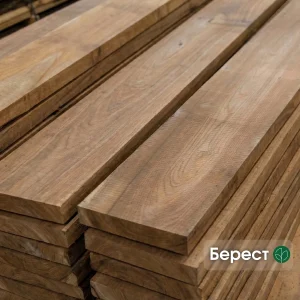
Elm edged board 32/52 mm, grade 1, 8-10%

  • Wood species: Elm
  • Thickness: 32 mm, 52 mm
  • Grade: 1
28 268  / m³
Type
Edged
Moisture content
8-10%
Width
20+ cm
Length
1–4.5 m
Made to order

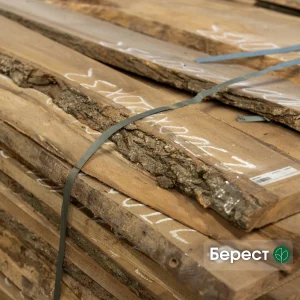
Elm unedged board 32/52 mm, grade 1, 8-10%

  • Wood species: Elm
  • Thickness: 32 mm, 52 mm
  • Grade: 1
23 119  / m³
Type
Unedged
Moisture content
8-10%
Width
20+ cm
Length
1–4.5 m

Elm Joinery Board: Grades, Varieties and Applications

Kiln-dried elm boards are widely specified in construction, furniture manufacturing, and the production of musical instruments, sports equipment, and various structural components.

WoodWay Expert supplies premium and Grade I elm joinery boards. The following sawn timber specifications are available in stock:

  • Thickness: 32 mm, 52 mm
  • Length: 14.5 m (typically 2.5–3 m)
  • Width: from 20 cm

You can select the boards yourself by visiting our warehouse shop or ask our managers for assistance. We sell from a single board upwards and provide an additional service for transport (rough) cutting. Collection is available in person, or orders can be dispatched across Ukraine via carrier companies.

Applications of Elm Joinery Boards

Natural timber is employed in various industrial sectors. The material is most in demand during construction works, furniture manufacturing, and for various household items.

The following are particularly popular:

  1. Furniture Board. Worktops, shelving units, shelves, and bookcases made of solid Elm are used to furnish residential and public spaces. Elm furniture board is the correct material for manufacturing high-quality wardrobes, chests of drawers, bedside tables, and sideboards. Such items are distinguished by a presentable appearance and a long service life.
  2. Parquet Board. This flooring consists of three layers. The first is rigid moisture-resistant plywood, the second is softwood strips, and the third is a valuable or decorative wood species. The face layer is coated with wax, oil, or varnish.
  3. Floor Board. Solid floor board is a premium covering laid using a tongue-and-groove system. Elm tongue-and-groove boards have a specific profile (ridge) around the perimeter, facilitating installation. Flooring made from these boards offers a smooth surface, no gaps, reliable connection of elements, and ecological safety.
  4. Decking Board. Manufacturers offer decking boards made of natural, impregnated, and thermo-treated wood, as well as wood-polymer composite (WPC).
  • Natural decking board for outdoor use is made from coniferous and exotic species, which are moisture-resistant due to resin content. The surface is usually ribbed to prevent slipping. For natural decking to serve for a long time, additional treatment with antiseptics and protective coatings is required.
  • Thermo-treated decking undergoes drying in an autoclave, treatment with water steam, and re-drying. This reduces its moisture content to 4%. Thermo-wood becomes denser and resistant to moisture, temperature changes, fungi, and mould.
  • Impregnated board is a timber material treated with a special antiseptic solution. Blanks with a moisture content of 12–14% are placed in an industrial autoclave, where the wood is “soaked” in a special agent. The protective solution penetrates the pores, making the boards resistant to weather conditions, sunlight, and mould.
  • Composite decking board is made from wood flour, polymers, dyes, and modifiers. WPC decking is strong, stable, and resistant to moisture, UV light, and temperature fluctuations.
  1. Scandinavian Board. The production technology for this facade material originated in Sweden. Essentially, it is cladding manufactured in a specific way. Scandinavian (Swedish) facade board is planed on three sides, while the face side remains rough. The un-sanded surface is primed and painted. Paint penetrates open wood pores better, so the painted surface lasts significantly longer.
  2. Decking Planking. Like terrace boards, these are used for open-air coverings: garden paths, verandas, and pool areas. Planking does not have a ribbed surface or grooves on the back. The edges of such floorboards are bevelled, which helps to negate expansion/shrinkage during changes in humidity and temperature.

The solid Elm board presented in our catalogue can be used for furniture, wall cladding, and building facades, as well as for parquet, tongue-and-groove, and decking boards.

Elm Board: The Difference Between Edged and Unedged Timber

Type Characteristic
Edged Elm Board Timber production that has undergone full primary processing. Bark and wane are removed from the sides, giving the board correct geometry and a rectangular cross-section. This timber minimises waste. The craftsman immediately receives “clean” solid wood for cutting, gluing, or routing. A characteristic “moire” pattern is clearly visible on the cut of an edged Elm board. It is used to create furniture panels for cabinet furniture, chairs, parquet boards, and staircases.
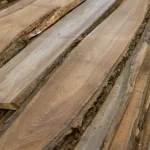
Unedged Elm Board Material with preserved side edges. The edges of such a board repeat the natural curve of the trunk. In unedged boards, the transition from light sapwood to the darker brownish-red heartwood is often preserved, creating a contrast. It is applied in the manufacture of massive dining tables in a loft style, window sills, bar counters, wall panels, and headboards.

Which Board to Choose: Edged or Unedged?

Choose edged board if your task is the serial production of furniture or creating items with a flat surface. This applies to flooring and panels where precise geometry of the workpiece is essential.

Select unedged board if you are creating worktops with a “live” edge or a designer art object. In these cases, the curvature of the lines and the natural features of the wood become the main advantage of the product.

Solid Elm Wood: Characteristics of the Species

The boards are manufactured from Elm timber (Ulmus minor Mill), also known as Field Elm. This tree thrives in moisture, so its natural habitat covers countries such as Denmark, Lithuania, Spain, and Greece. Elm also grows in the deciduous forests of Ukraine.

The tree lives for up to 300 years, growing to 30 metres in height, with a trunk diameter reaching 1.5 metres.

Solid wood is used in construction, turning, the furniture industry, and plywood production. It is also utilised for musical instruments and sports equipment. The colour palette of the solid wood consists of light yellow and reddish-brown tones.

The sapwood is lighter and distinct. The fibres are dense, interlocked, and occasionally confused.

Elm belongs to the hardwood category. In terms of physical and mechanical properties, it is often compared to Oak and Ash. The average density of the wood in a dry state is approximately 640–660 kg/m³, which ensures the products have significant weight and mass.

The primary technical feature of this species is the interlocked fibre structure, which gives the material exceptional viscosity. Thanks to this structure, Elm is resistant to splitting and impact loads.

Mechanical processing of Elm can be challenging due to the multi-directional fibres. Therefore, sharp cutting tools and a reduced feed speed are necessary to obtain a smooth surface. The breed lends itself well to staining, gluing, and final polishing.

How and Where to Buy Dry Elm Board?

Our warehouse stocks a wide assortment of Elm joinery board in various thicknesses, widths, and lengths. To obtain quality material for manufacturing furniture, floors, stairs, or terraces, choose the most convenient purchasing method:

  • Visit the wholesale and retail warehouse. The optimal option for those who wish to personally verify the timber quality. You have the opportunity to select each board according to your project requirements. Address: Kyiv, Zdolbunivska St., 7d (entry to the territory from Dniprovska Embankment, 17e).
  • Get a consultation by phone. Call us at +380 (67) 180-38-13 (Viber, Telegram). Our managers will help select material for tasks of any complexity. They will promptly quote the current price per cubic metre or per piece, and inform you about estimated delivery times across Ukraine.
  • Place an order on the website. The online catalogue lists detailed technical specifications and features real photos of dry edged boards. Add the item to your basket, and our specialists will contact you to clarify details. We can also send you photos/videos of the products actually in stock via messenger.

Please note that the dispatch of timber (for collection or shipping by transport companies) is carried out exclusively after 100% payment of the order.

FAQ (Frequently Asked Questions)

What sizes of elm boards are most commonly available in stock?

We stock kiln-dried (KD) edged and unedged elm timber with standard thicknesses of 32 mm and 52 mm (the most sought-after specifications for manufacturing solid tabletops and furniture frontages).

What is the correct moisture content of boards for joinery?

The optimal moisture content (MC) for high-end joinery is 8–10%. Kiln-dried boards ensure maximum dimensional stability and maintain a stable shape.

What products are elm joinery boards used for?

Due to its high bending strength and exceptional impact resistance, solid elm is highly specified for manufacturing wear-resistant tabletops, furniture fronts, beds, chests of drawers, stair treads, and sports equipment.

What is the natural colour and grain of elm?

The wood features clearly defined zones: the sapwood is typically light yellow or beige, while the heartwood exhibits rich shades ranging from reddish-brown to dark brown. The wood texture is coarse, with a distinct and prominent growth ring pattern.

Can elm timber be used for outdoor applications (terraces, facades)?

Not without specialized chemical treatment. For outdoor exposure, the lumber must undergo thermal modification or pressure-treated impregnation with appropriate wood preservatives.

What is the best finish for elm products (varnish, oil, wax)?

Elm accepts all commercial wood finishes excellently. Hard-wax oils are highly recommended to best reveal the beauty of its complex grain pattern. The oil penetrates deeply into the wood pores, highlighting the contrast between the light and dark fibres while leaving the surface tactilely pleasant.

How and Where to Buy Dry Elm Board?

Our warehouse stocks a wide assortment of Elm joinery board in various thicknesses, widths, and lengths. To obtain quality material for manufacturing furniture, floors, stairs, or terraces, choose the most convenient purchasing method:

  • Visit the wholesale and retail warehouse. The optimal option for those who wish to personally verify the timber quality. You have the opportunity to select each board according to your project requirements. Address: Kyiv, Zdolbunivska St., 7d (entry to the territory from Dniprovska Embankment, 17e).
  • Get a consultation by phone. Call us at +380 (67) 180-38-13 (Viber, Telegram). Our managers will help select material for tasks of any complexity. They will promptly quote the current price per cubic metre or per piece, and inform you about estimated delivery times across Ukraine.
  • Place an order on the website. The online catalogue lists detailed technical specifications and features real photos of dry edged boards. Add the item to your basket, and our specialists will contact you to clarify details. We can also send you photos/videos of the products actually in stock via messenger.

Please note that the dispatch of timber (for collection or shipping by transport companies) is carried out exclusively after 100% payment of the order.

FAQ (Frequently Asked Questions)

What sizes of elm timber boards are most commonly available in stock?

We stock both edged and unedged kiln-dried elm boards in thicknesses of 32 mm and 52 mm (the most popular options for manufacturing worktops and furniture fascias).

What is the correct moisture content for joinery and woodworking?

The optimal moisture content for joinery is 8–10%. Kiln-dried boards maintain exceptional dimensional stability.

What products are manufactured using elm timber?

Thanks to its high bending strength and impact toughness, solid elm is highly suitable for producing hard-wearing worktops, cabinet fascias, beds, chests of drawers, staircases, and sports equipment.

What are the natural colour and texture of elm?

The wood has clearly defined zones: the sapwood is typically light yellow or beige, whilst the heartwood features rich shades (ranging from reddish-brown to dark brown). The texture is coarse, with a distinct and prominent growth ring pattern.

Can elm boards be used for exterior applications (decking, cladding)?

Elm is not naturally durable for outdoor use. For exterior applications, it requires protection such as thermal modification or pressure impregnation with preservatives.

What is the best finish for elm products (varnish, oil, or wax)?

Elm accepts all types of finishes exceptionally well. Hard wax oils are the best choice for revealing the beauty of its complex texture. The oil penetrates deeply into the pores, highlighting the contrast between the light and dark fibres, whilst leaving the surface pleasant to the touch.
View list
Compare