Ash Timber

Joinery board made from Ash is a timber product distinguished by its strength, ease of processing, and decorative qualities. This hardwood is widely used for the production of sports equipment, musical instruments, and various household items. At Woodway Expert, you can purchase timber on favourable terms.

Made to order

Ash edged board 32/52 mm, extra, 8-10%

  • Wood species: Ash
  • Thickness: 32 mm, 52 mm
  • Grade: Extra
On request
Type
Edged
Moisture content
8-10%
Width
20+ cm
Length
1–4.5 m
Made to order

Ash unedged board 32/52 mm, extra, 8-10%

  • Wood species: Ash
  • Thickness: 32 mm, 52 mm
  • Grade: Extra
549,00  / m³
Type
Unedged
Moisture content
8-10%
Width
20+ cm
Length
1–4.5 m

Kiln-Dried Ash Timber: Edged and Unedged Boards, Grade Differences

Ash joinery boards are a timber product characterized by strength, ease of processing, and decorative qualities. Edged and unedged ash boards are available with the following specifications:

  • thickness: 32 mm, 52 mm;
  • length: 1-4.5 metres;
  • width: From 20 cm;
  • grade: Extra, I;
  • moisture content: 8–10%.

Our managers will provide information regarding availability and current prices for both wholesale and retail buyers. They will also outline payment methods and estimated delivery times. We offer shipping across Ukraine and collection from our warehouse store in Kyiv.

Edged and Unedged Ash Boards: Grade Differences

When choosing solid Ash (edged or unedged board), the key parameter for pricing and application is the grade. This is a standardised classification that helps the craftsman understand which part of the board can be used for the “finished” product.

What determines the grade and does it affect timber strength?

It is important to understand: grade is an aesthetic, not a structural characteristic. It determines the quantity and size of natural features of the wood per linear metre. These include knots (live or dark), sapwood, colour changes (heartwood), cracks, and grain curvature.

The physical and mechanical properties (density, hardness) of Ash are the same for all grades. A 2nd grade board is just as strong and durable as Extra grade. The difference lies only in the percentage of “clean” material yield.

Extra Grade

Elite timber for premium products where a perfect surface is essential.

  • Characteristics: Uniform colour and texture. Absence of knots, sapwood, cracks, and heartwood.
  • Application: Front furniture facades, worktops, expensive wall panels, musical instruments, and decor elements where flawless visual characteristics are required.

1st Grade

These timber materials represent a balance between price and a high yield of clean billet.

  • Characteristics: Occasional live (light) knots of small diameter (usually up to 10-15 mm), minor colour variations, and healthy sapwood are permitted.
  • Application: Cabinet furniture, stairs, mouldings (skirting boards, architraves), parquet.

2nd Grade

Material with a vividly expressed natural character.

  • Characteristics: The presence of a dark kernel (olive colour, characteristic of Ash), contrasting sapwood, large knots (including dark ones, provided they are not loose), and micro-cracks is permitted.
  • Application: Furniture in Loft, Rustic, Eco, and Country styles, flooring with expressive texture, frame elements of upholstered furniture, and parts for painting.

Edged or Unedged Ash Board?

Ash is a hard, viscous, and aesthetically attractive wood. For joinery tasks, Ash Timber is used in two main formats: edged and unedged. Understanding the difference between them will help optimise your budget and production process.

Edged Ash Board

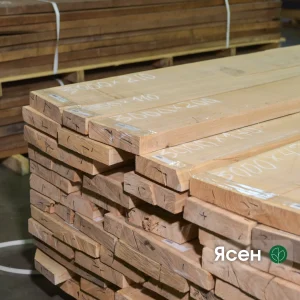
This is timber where the bark and wane have been removed from the side edges. The sawn product has a correct rectangular shape along its entire length. The width is fixed or varies within clear limits, and the edges are even.

The main advantage is time savings. The material is practically ready for cutting, gluing, and milling. You do not spend equipment resources on removing bark.

Optimal for serial production and standard joinery tasks. Suitable for:

  • Manufacturing furniture panels;
  • Production of stairs, window sills, worktops;
  • Mouldings (skirting boards, architraves, cladding);
  • Furniture frames and load-bearing structures.

Edged boards minimise waste in the workshop and significantly speed up the workflow, as they do not require preliminary edge jointing.

Unedged Ash Board

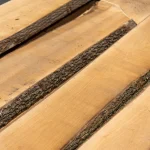
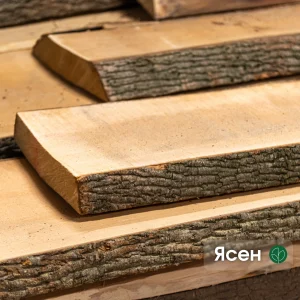
This is a board where the side edges retain the bark and natural shape. The width of the board can change from one end to the other.

The main advantage: maximum preservation of the tree’s natural beauty and a lower cost per cubic metre compared to edged board.

The choice of craftsmen working with exclusive items or having a full timber processing cycle. Used for:

  • “Live Edge” style products. Worktops, bar counters, and shelves where preserving the natural edge with bark is important.
  • Complex curved details. When a craftsman needs to cut specific shapes manually, and a rectangular billet is not mandatory.
  • Budget optimisation. If you have the necessary equipment (planers and thicknessers), buying unedged board and processing it yourself will be cheaper.

Thanks to its lower cost per cubic metre and the capability for in-house cutting, this timber provides flexibility when working with curved parts and helps to optimise budgets. It is a cost-effective solution for craftsmen who have the necessary equipment and aim to highlight the raw, natural beauty of the wood.

Areas of Application for Ash Board

Due to its strength, wear resistance, and high aesthetic indicators, Ash and its timber are used in various production spheres. Specifically, the wood is actively applied to create items for residential and public interiors.

Application Description
Furniture Flexible and reliable material is excellent for manufacturing durable furniture, particularly items with flowing lines. Sofas, chairs, coffee tables, desks, dining tables, chests of drawers, shelves, cabinets, and racks made of Ash fit into classic and modern interiors.
Wall and Floor Cladding Solid Ash Board is used for floor and wall coverings. Decorative panels and wall cladding adorn interiors in Country, Neoclassical, Boho, and Eco styles. Ash parquet board has also proven itself well in residential spaces.
Sports Equipment Hardwood is suitable for creating wall bars, baseball bats, bows, cues, and other sports equipment.
Household Items Ash board is used to manufacture door handles, handles for rakes, shovels, and other garden tools. Weaving looms, threshers, wheels, and their elements are made from this wood. Ash is also used in the automotive industry, carriage building, and musical instrument production.

Characteristics of Solid Ash

Master cabinetmakers note the high aesthetic qualities of solid Ash. The timber features a distinct pattern that fits seamlessly into dozens of modern and classical design directions.

In addition to its pleasing appearance, Ash Timber is a durable material used for centuries to create household objects. Wooden products resistant to mechanical impact serve for years when properly processed and maintained.

Ash belongs to the hardwood category: 4 on the Brinell scale, with an average density of 670 kg/m³. The timber has straight grain. The central and side parts usually do not differ in colour.

Ash timber is commonly found in grey, yellowish, whitish, and reddish tones. Signs of high-quality material include a pattern with noticeable wavy lines of light brown shades. The wood may darken slightly over time.

Operational parameters of Ash tree:

  1. Strength. With proper processing, products made from solid Ash boards serve for decades. The material retains a stable shape and withstands operational loads.
  2. Elasticity. Compared to other timber species, Ash is flexible. Thanks to this quality, the lumber is used to manufacture bent elements for armchairs, sofas, other furniture, and various decor items.
  3. Workability. The wood is amenable to sawing, sanding, polishing, and further decorative processing. The smooth surface absorbs stain excellently and is easily covered with paints and varnishes.

How to Buy Ash Board: Three Convenient Options

We have structured our sales system so that the purchasing process is comfortable in any format: from a personal visit to the warehouse to a fully remote order.

  1. Selection at the warehouse. By visiting our warehouse in Kyiv, you can view the Ash Board in person, evaluate the wood shade and texture expressiveness, and select the required grade. The warehouse is located at: 7d Zdolbunivska St, access from 17e Dniprovska Embankment.
  2. Remote consultation. If visiting is not possible, you can select timber remotely. Simply contact our specialist at +380 (67) 180-38-13 — calls, Viber, and Telegram are available. The manager will help you choose edged or unedged Ash board, calculate the cost per piece, and recommend the optimal grade for your task.
  3. Online order via the website. You can make a purchase directly in the online shop by adding the necessary items to your basket. Before dispatch, we send real photos of the specific boards being prepared for shipment, so you see the chosen material in advance.

Delivery across Ukraine is carried out by transport companies. Please note: Shipment of timber to carriers is possible only after 100% prepayment.

How to Buy Ash Board: Three Convenient Options

We have structured our sales system so that the purchasing process is comfortable in any format: from a personal visit to the warehouse to a fully remote order.

  1. Selection at the warehouse. By visiting our warehouse in Kyiv, you can view the Ash Board in person, evaluate the wood shade and texture expressiveness, and select the required grade. The warehouse is located at: 7d Zdolbunivska St, access from 17e Dniprovska Embankment.
  2. Remote consultation. If visiting is not possible, you can select timber remotely. Simply contact our specialist at +380 (67) 180-38-13 — calls, Viber, and Telegram are available. The manager will help you choose edged or unedged Ash board, calculate the cost per piece, and recommend the optimal grade for your task.
  3. Online order via the website. You can make a purchase directly in the online shop by adding the necessary items to your basket. Before dispatch, we send real photos of the specific boards being prepared for shipment, so you see the chosen material in advance.


Delivery across Ukraine is carried out by transport companies. Please note: Shipment of timber to carriers is possible only after 100% prepayment.

FAQ: Frequently Asked Questions

What is the moisture content of Ash board?

We sell kiln-dried boards. The standard moisture content of the product is 8-10% (±2%). This is the optimal indicator for joinery production (furniture, stairs, parquet), guaranteeing the stable shape of products in residential conditions.

What are the advantages of kiln-dried board over fresh cut?

Board dried in an industrial kiln is stable. Internal stress is removed from the wood, so the timber does not warp over time. High temperature in the chamber kills fungi, mould, and insect pests. The material can be processed immediately without waiting months for it to dry naturally.

How to calculate the cubic volume of Ash board?

The calculation formula depends on the type of board. For Edged Board, use the formula: V = Length (m) x Width (m) x Thickness (m). Example: 3 m x 0.15 m x 0.05 m = 0.0225 m³. For Unedged Board, thickness and length are measured normally, while width is measured in the middle of the board's length (excluding bark) or as the arithmetic mean between the widest and narrowest part of the face.

How to find out the price for a single board?

To calculate the cost of one board, you need to multiply the volume (cubage) by the price per 1 m³. Formula: Price of board = Volume of board (m³) x Price per cube. If a cube costs 20,000 UAH and the board volume is 0.0225 m³, then: 0.0225 x 20,000 = 450 UAH.

How does Ash differ from Oak and which is better to choose?

In terms of physical indicators (Brinell hardness), Ash is almost equal to Oak (Ash — 4.0-4.1, Oak — 3.7-3.9). Ash is more viscous and elastic, so it withstands shock loads better. Choose Ash if you need an expressive texture, a lighter shade, and plan to save money (Ash is usually cheaper than Oak). Choose Oak if you need a status look, resistance to moisture (thanks to tannins), or darker shades.

What is the olive kernel in Ash and is it a defect?

No, this is not a defect. It is a natural feature of mature Ash: the heart of the trunk has a brown-olive colour, while the sapwood is light. In Extra grade, boards are usually selected to be light, without the kernel. In 1st and 2nd grades, the presence of the kernel is permitted and is often valued by designers for its unique pattern (Coloured Ash).

What is the loss coefficient when processing unedged Ash board?

When processing unedged board into edged board, material waste can range from 20% to 40%. This depends on the curvature of the trunk, the number of knots, and the width of the sapwood. When buying unedged board, always allow a margin for trimming.

Is a 50 mm board a rough or finished size?

Usually, the nominal (sawn) size is indicated. After kiln drying, minor shrinkage of the wood occurs (approximately 4-6% of volume). That is, a board with a nominal value of 50 mm may have an actual thickness of 47-48 mm after drying. When planning a finished product, be sure to account for an allowance for planing and sanding (another minus 3-5 mm).
View list
Compare