Alder Timber

Edged and unedged Alder timber is a popular and accessible material used in construction, the furniture industry, and the production of household items.

Made to order

Alder edged board 32/52 mm, grade 1, 8-10%

  • Wood species: Alder
  • Thickness: 32 mm, 52 mm
  • Grade: 1
499,00  / m³
Type
Edged
Moisture content
8-10%
Width
20+ cm
Length
1–4.5 m
Made to order

Alder unedged board 32/52 mm, grade 1, 8-10%

  • Wood species: Alder
  • Thickness: 32 mm, 52 mm
  • Grade: 1
399,00  / m³
Type
Unedged
Moisture content
8-10%
Width
20+ cm
Length
1–4.5 m

Dry Alder Timber: Edged and Unedged Boards, Grades, and Where to Buy

Edged and unedged Alder timber is a popular and accessible material used in construction, the furniture industry, and the production of household items. Available timber products feature the following specifications:

  • Thickness: 32 mm, 52 mm;
  • Length: 1-4.5 m (typically 2.5-3 m);
  • Width: from 20 cm;
  • Grade: Extra, I.

Shipping across Ukraine is available, as well as collection from the warehouse store. Our managers will provide information regarding stock availability, current pricing for wholesale and retail buyers, payment methods, and delivery terms.

Alder Joinery Timber: Grades

When selecting timber, the grade plays a key role. This indicator does not affect strength: Alder products possess appropriate performance characteristics regardless of class. The grade determines the visual appearance of the material, the level of texture uniformity, and the presence of natural features.

Grade Visual Characteristics Sphere of Use Advantages
Extra Alder board is distinguished by a uniform texture and a characteristic light pink or warm cream shade. The surface looks integral, without contrasting tone transitions. Natural defects—knots, cracks, sapwood, or inclusions—are completely absent. The material is used in projects with elevated aesthetic requirements: for staircase elements, decorative panels, furniture facades, and other items where visual perfection is crucial. This is select timber. The main pros are maximum yield of useful material without waste during cutting and ease of finishing.
1 The appearance of separate small, healthy knots fused with the mass is permitted. The colour may have minor natural variations that do not disturb the general visual harmony. The timber is suitable for manufacturing worktops, kitchen and furniture facades, door elements, wall slats, and cladding. A practical solution for joinery workshops: the board retains decorative qualities while demonstrating the natural character of the wood. It is a balanced option regarding price and appearance.
2 Numerous natural features are permissible: knots of various types, small cracks, pronounced colour variations, dark streaks, or spots. The general grain pattern is more pronounced. The board is optimal for items intended for painting, internal structures of upholstered furniture, tool handles, sub-floors, pallets, as well as furniture in loft, eco, or rustic styles. The lowest cost among grades while maintaining good physical-mechanical properties of Alder—strength and viscosity. It allows for creating reliable structures with minimal budget expenditure.

Types of Alder Timber: Edged and Unedged

Alder is one of the most popular materials for interior decoration and furniture manufacturing due to its homogeneous structure and ease of toning to mimic valuable species. The answer to the question “Which board to choose: edged or unedged?” depends on the budget, available equipment, and the final goal of the project.

Edged Alder Timber: Speed of Work and Correct Geometry

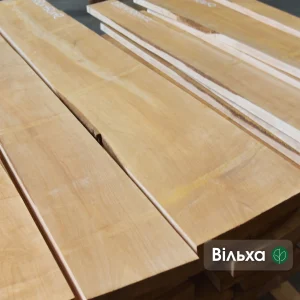
This type of board lacks wane (bark on the side edges), and the cross-section has a distinct rectangular shape.

For which tasks is edged Alder purchased?

  • Manufacturing furniture panels. Suitable for gluing shields as it does not require lengthy preparation.
  • Mouldings. Manufacturing of skirting boards, architraves, cladding, and mouldings.
  • Serial furniture production. You immediately receive a semi-finished product ready for jointing and cutting.
  • Precise joinery structures. Door frames and carcasses where stable geometry is important.

Main advantage: saving time on processing and minimising waste in the joinery workshop.

Unedged Alder Timber: Savings and Design Potential

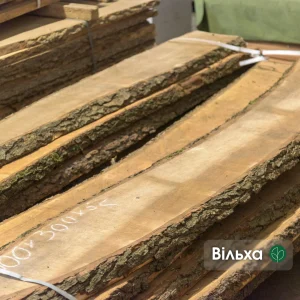
The side edges of the board remain untreated, preserving the bark and the natural contour of the trunk.

For which tasks is unedged Alder purchased:

  • Designer items in Loft style and with a “Live” edge. Creating tables, shelves, or bar counters where preserving the natural edge of the wood is important.
  • Curved details. If you plan to cut figured elements (chair legs, curved armrests) from the board, there is no sense in overpaying for straight edges that will be cut off anyway.
  • Hidden elements. Manufacturing internal frames for upholstered furniture, where edge aesthetics do not matter.
  • Self-sawing. For craftsmen who have the time and equipment to remove the wane themselves and obtain clean timber at a lower entry price.

Advantages: Lower material cost and unique opportunities for creative solutions with natural texture.

Joinery Moisture Content of Alder Timber

One of the main criteria for the suitability of Alder wood for furniture manufacturing is moisture content. WoodWay Expert sells exclusively kiln-dried timber, with moisture levels of 8–12%. This is the generally accepted standard for joinery moisture, necessary for using wood indoors.

Why is it important to use specifically dry Alder timber (8-12%)?

  • Geometric Stability. Alder is a wood of medium density. Proper drying relieves internal fibre tension, preventing warping and cracking of the finished product when the room temperature changes.
  • Quality Sanding, Toning, Varnishing. Damp wood produces “fuzz” when sanded, which is difficult to remove. Furthermore, Alder is often toned to look like walnut or cherry. On damp wood, finishing materials apply unevenly, and spots or varnish peeling may occur.
  • Reliability of Glue Joints. For manufacturing furniture panels, facades, or worktops, glue must penetrate the pores of dry wood. If the board is damp, the glue line will be brittle and will eventually separate.
  • Biological Resistance. At moisture levels below 12-15%, the development of fungus and mould in the wood becomes impossible, guaranteeing the longevity of the furniture.

Before dispatching an order or selling from the warehouse, we check the batch with a professional moisture meter so that you receive material fully ready for work in the workshop.

Spheres of Application for Alder Boards

The operational properties of Alder allow the use of timber for various interior tasks. Joinery boards are used to manufacture:

  • Furniture. Tables, shelving units, cabinets, chests of drawers, wardrobes, chairs, and stools made of Alder look good in various design styles. Kitchen sets are created from this wood, which is resistant to humidity and temperature changes.
  • Wall Panels and Cladding. If neutral and unobtrusive patterned wall panels are required, Alder cladding is often chosen. The material has proven itself excellent in residential and public spaces. Edged and unedged Alder boards are also used for lining walls in saunas, bathhouses, and other sanitary spaces.
  • Internal Doors and Windowsills. Properly treated wood withstands direct sunlight and operational loads standard for living spaces.
  • Decor Items and Souvenirs. The soft mass can be sawn and decorated without excessive effort. The smooth surface lends itself to carving, burning, toning, and varnishing.

Since Alder mass can be stored underwater for a long time, it is also used to manufacture small underwater structures or their elements.

Key Characteristics of Alder Wood

Among deciduous species, Alder (Alnus) stands out favourably. Due to its specific structure, the wood possesses a low density yet withstands direct contact with moisture. This easy-to-process material is eco-friendly, sufficiently hard-wearing, and suitable for items of various styles.

The plant is widespread across Europe, North Africa, and Asia. The Alder tree grows up to 35 metres, with a trunk thickness reaching 40-50 cm. The outer layers of the wood differ little in colour from the central part.

The timber surface is golden-pink, with possible flecks of red. Brown tones can be found in the core. Under the influence of air and sunlight, the material darkens. The growth rings are visible in the pattern but are not high-contrast.

Solid Alder timber is notable for the following characteristics:

  1. Workability. The tree belongs to the softwoods category, making it easy to process. Adhering to sawing technology yields a smooth Alder board suitable for sanding, polishing, staining, painting, and carving.
  2. Moisture Resistance. Thanks to its homogeneous structure, properly treated timber withstands humidity fluctuations and steam exposure. The material retains its shape and presentable appearance.
  3. Temperature Stability. Edged and unedged Alder boards are used in residential and sanitary rooms, as they do not heat up, and condensation does not form on the surface. The material does not shrink during temperature changes.
  4. Significant Service Life. Alder is characterised by wear resistance. Special oils, waxes, and varnishes are used to protect the wood from moisture and sunlight.

Solid alder is valued by craftsmen for its ease of processing and dimensional stability. Due to its uniform structure and ability to imitate more expensive species when stained, alder is a popular choice for the manufacture of furniture, interior panels, and wall panelling.

How to Order Edged and Unedged Alder Timber

We have provided several formats for placing an order so that you can choose the optimal option.

  1. Personal Visit to the Warehouse. Come to us to evaluate the quality of the Alder timber with your own eyes and select the necessary material. Our warehouse is located in Kyiv at: 7d Zdolbunivska St (entry from 17e Dniprovska Embankment).
  2. Consultation by Phone or Messenger. You can contact a manager at +380 (67) 180-38-13 — calls, Viber, and Telegram are available. Specialists will help calculate the cost of edged or unedged boards per piece and suggest the appropriate grade for your tasks.
  3. Ordering via the Online Shop. Make a purchase directly on the website by adding the item to the basket. Before dispatch, we send current photos of the specific Alder boards being prepared for shipment so that you are confident in your choice.

Delivery is carried out throughout Ukraine: to Lviv, Zhytomyr, Kharkiv, Odesa, Ivano-Frankivsk, Dnipro, Rivne, Chernihiv, Khmelnytskyi, Mykolaiv, Zaporizhzhia, Uzhhorod, and other settlements.

Please note: handover of orders to transport companies occurs only after receiving full (100%) prepayment.

How to Order Edged and Unedged Alder Timber

We have provided several formats for placing an order so that you can choose the optimal option.

  1. Personal Visit to the Warehouse. Come to us to evaluate the quality of the Alder timber with your own eyes and select the necessary material. Our warehouse is located in Kyiv at: 7d Zdolbunivska St (entry from 17e Dniprovska Embankment).
  2. Consultation by Phone or Messenger. You can contact a manager at +380 (67) 180-38-13 — calls, Viber, and Telegram are available. Specialists will help calculate the cost of edged or unedged boards per piece and suggest the appropriate grade for your tasks.
  3. Ordering via the Online Shop. Make a purchase directly on the website by adding the item to the basket. Before dispatch, we send current photos of the specific Alder boards being prepared for shipment so that you are confident in your choice.

Delivery is carried out throughout Ukraine: to Lviv, Zhytomyr, Kharkiv, Odesa, Ivano-Frankivsk, Dnipro, Rivne, Chernihiv, Khmelnytskyi, Mykolaiv, Zaporizhzhia, Uzhhorod, and other settlements.

Please note: handover of orders to transport companies occurs only after receiving full (100%) prepayment.

FAQ (Frequently Asked Questions)

What is the main difference between edged and unedged alder boards?

Edged boards have trimmed side edges, are ready for work, and ensure minimal waste. Unedged boards have bark on the side edges (wane), cost less, but require additional processing.

Is Alder suitable for finishing bathhouses and saunas?

Yes, it is one of the best materials for a bathhouse or sauna. Alder has low thermal conductivity (does not burn the body upon contact), does not release resin when heated, and withstands conditions of high humidity.

Can Alder boards be used for flooring or stairs?

It is not recommended for zones with intense traffic. Alder is a soft species (softer than oak or ash), so dents from heels or falling objects may quickly appear on stairs or parquet. The species is usually used for panels, facades, and doors.

What is the percentage of waste when working with unedged Alder boards?

When cutting unedged boards to a "clean" size, waste typically constitutes 20% to 30%, depending on the curvature of the trunk and the width of the board. This is worth considering when calculating the budget; sometimes it is more profitable to buy edged timber immediately.

Is Alder suitable for carving and CNC milling?

Yes, Alder wood has a homogeneous structure without distinct annual rings; it is viscous and does not chip. This allows for cutting the finest details and complex ornaments without the risk of damaging the workpiece.

How is the price of a single Alder board calculated?

The price on the website is indicated per cubic metre. To find out the price of one board, we use the formula: thickness x width x length x price per cube.

How is the width of unedged Alder measured?

The width of unedged timber is measured in the middle of the board's length (excluding bark). This is a generally accepted standard that allows calculating the useful volume of wood (cubic capacity) without overpaying for waste. If the board has noticeable narrowing or widening, measurement in two places (near the ends) with subsequent averaging of the result is permitted.
View list
Compare