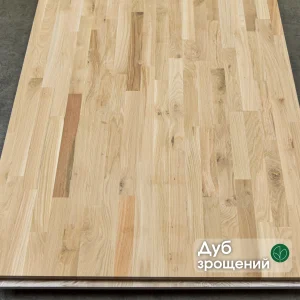
Finger-Jointed Oak Solid Wood Panels

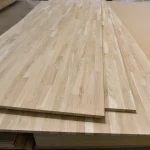
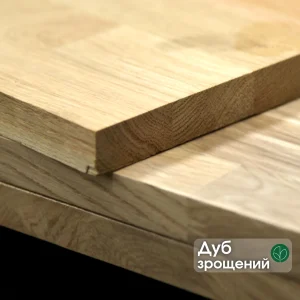
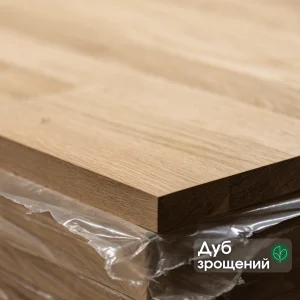
Finger-jointed oak solid wood panels are hard-wearing engineered materials composed of wooden staves glued together both by width and length. Our clients choose 18 mm, 20 mm, and 40 mm panels for projects of varying complexity. Product specifications for stock items are available from our managers.

Finger-Jointed Oak Solid Wood Panel, 20 mm, 2.25×0.76 m, Grade 2

  • Wood species: Oak
  • Thickness: 20 mm
  • Grade: 2
3 081  / sheet
Type
Finger-jointed
Moisture content
8-10%
Dimensions
2.25x0.76 m

Finger-Jointed Oak Solid Wood Panel, 20 mm, 3×0.8 m, Grade 2

  • Wood species: Oak
  • Thickness: 20 mm
  • Grade: 2
4 324  / sheet
Type
Finger-jointed
Moisture content
8-10%
Dimensions
3x0.8 m

Finger-Jointed Oak Solid Wood Panel, 20 mm, 3×1 m, Grade 2

  • Wood species: Oak
  • Thickness: 20 mm
  • Grade: 2
5 405  / sheet
Type
Finger-jointed
Moisture content
8-10%
Dimensions
3x1 m

Finger-Jointed Oak Solid Wood Panel, 20 mm, 3×1.22 m, Grade 2

  • Wood species: Oak
  • Thickness: 20 mm
  • Grade: 2
6 594  / sheet
Type
Finger-jointed
Moisture content
8-10%
Dimensions
3x1.22 m

Finger-Jointed Oak Solid Wood Panels: Grades, Moisture, and Structural Features

Finger-jointed oak solid wood panels are hard-wearing engineered materials composed of wooden staves glued together both by width and length. Our clients choose 18 mm, 20 mm, and 40 mm panels for projects of varying complexity. Product specifications for stock items are available from our managers. Warehouse self-pickup or shipping across Ukraine. Oak panels are available with a minimum order quantity (MOQ) of a single board, and bulk wholesale supply is provided.

Thanks to this bonded structure, the edge-glued panel is exceptionally rigid and capable of withstanding significant mechanical loads. The material retains a stable shape and is not prone to cracking or warping. Craftsmen note that oak solid wood panels hold fixings securely and possess excellent thermal and acoustic insulation qualities.

We have extensive experience in sourcing and selecting materials for projects of various scales and are ready for new challenges. We have been operating in the market since 1996. Our client base includes furniture factories, joinery workshops, construction companies, artisan manufacturers, and designers. Read on to discover why clients choose us, how to order finger-jointed oak on favourable terms, and what makes this material unique.

Oak Solid Wood Panels: Structure and Varieties

An edge-glued panel is a technical wood product made from timber staves (lamellas) with a width ranging approximately from 10 mm to 50 mm. The staves are bonded with high-performance adhesives, which increase the wear and moisture resistance of the panel.

The material is suitable for both interior and exterior applications due to the superior physical properties of oak. When treated correctly, this hard, dense, and robust timber offers high resistance to moisture and splitting.

Comparison: Edge-Glued Panels vs. Solid Timber

Edge-glued panels can be compared to solid timber planks across several characteristics. Both materials are eco-friendly and valued for their aesthetic appeal. However, wide solid timber is naturally prone to deformation and checking; the larger the surface area, the higher the probability of the wood shrinking or cupping.

Thanks to the bonded structure, the solid wood panel has sufficient internal stability to ensure the flatness of the sheet. The likelihood of cracks and deformation appearing is minimal, ensuring that products made from glued oak remain durable for decades.

Oak Solid Wood Panels by Field of Application

Oak solid wood panels differ by application and production technology. Panels intended for internal and external joinery are available on the professional market.

  • Interior Use (MR). Panels marked MR (Moisture Resistant) are designed for interior environments. This variety is humidity-resistant and withstands the operational loads of public and residential spaces. MR oak panels are used to manufacture doors, furniture, window sills, shutters, partitions, flooring, and wall cladding.
  • Exterior Use (BWP). For exterior applications, solid wood panels of the BWP (Boiling Water Proof) type are required. These are distinguished by increased durability and resilience to high humidity and temperature fluctuations.

Types of Edge-Glued Panels by Structure

Structurally, two primary types are distinguished:

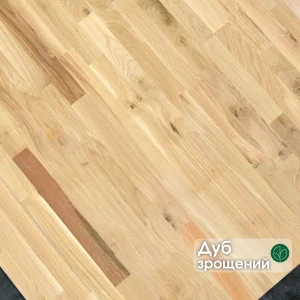
  1. Finger-Jointed Solid Wood Panels. Staves of the same width but varying lengths are used to manufacture these panels. The lamellas are arranged in a specific staggered pattern and bonded longitudinally (finger joints) and laterally. Thanks to this multi-directional gluing, the panel gains maximum structural strength. Finger-jointed oak is more cost-effective than full-stave options but may not suit all high-end aesthetic requirements. The surface, consisting of segments with different grain patterns, creates a ‘patchwork’ effect. This material is also known as ‘block-glued’ or ‘butcher block’. It is chosen for projects where highlighting the vibrant, multifaceted texture of the wood is a priority.
  2. Full-Stave Solid Wood Panels. This material is made from staves of identical length, meaning the length of the panel equals the length of the wooden segments. The lamellas are edge-glued along their length. The result is a panel that visually replicates the appearance of a solid wide plank. Full-stave edge-glued panels are available at a price point dependent on the timber grade. Matching staves not only by length but also by grain pattern and shade significantly increases the cost of the panels.

Our catalogue features finger-jointed oak panels—a premium material selected for heavy-duty and aesthetic applications.

Advantages of Finger-Jointed Oak Solid Wood Panels

Finger-jointed oak edge-glued panels combine the strength of solid timber with the practicality of engineered wood products. Due to the finger-jointing technology, the material retains the excellent mechanical properties and decorative qualities of oak.

  • Resistance to Sagging and Warping. The edge-glued panel features a rigid internal structure, ensuring stable dimensions and resistance to mechanical stress. The material is significantly stronger than MDF or particleboard. Oak panels are ideal for the production of load-bearing shelving and long-span surfaces.
  • Wear Resistance. These panels are suitable for manufacturing furniture and joinery for residential premises and high-traffic public spaces.
  • Acoustic and Thermal Insulation. Cladding walls, ceilings, and floors with finger-jointed panels helps reduce noise transfer and improve the indoor microclimate.
  • Weight Efficiency. A panel made of glued staves often exhibits better weight-to-strength ratios than solid timber planks. This makes the material easier to handle and transport.
  • Optimal Cost-Performance Ratio. Industry specialists note a highly favourable ratio of technical performance to price.
  • Aesthetics and Finish. The panels are easy to process; the surface can be sanded, stained, and finished with oils, waxes, or varnishes.

The combination of strength, durability, aesthetics, and cost-effectiveness compared to solid-stave panels makes finger-jointed oak panels highly preferred among furniture manufacturers and designers.

Grades of Finger-Jointed Oak Solid Wood Panels

The choice of grade primarily affects the aesthetic appearance of the material, while the strength properties, density, and bonding reliability remain consistently high across all classes.

Grade 1 (A, Select)

This category includes premium-grade material with a defect-free surface. To achieve a uniform visual effect, staves are manually selected based on texture and colour. A consistent tone, flat plane, and the complete absence of knots, sapwood, and structural flaws are mandatory features of this grade.

Grade 2 (B, Natur)

This class is considered a versatile solution for most modern interiors. The natural character of the timber is preserved through permitted small knots (up to 10–20 mm in diameter), isolated areas of sapwood, and subtle colour transitions.

Grade 3 (C, Rustic / Antique)

This segment features a highly expressive texture, valued for both its competitive price and its unique designer effect. Large knots (including those with stable cracks), contrasting colouration, prominent sapwood, and small fissures create a characteristic ‘live’ wood appearance.

Combined Grades (1/2, 2/2, 2/3, etc.)

Fractional designations are used for multi-layered or doubled solid wood panels. By using a lower-grade panel for the reverse side, production costs are reduced without compromising the visual appeal of the face.

  • Grade 1/2 (A/B). This option is most frequently selected for stair treads and worktops. The face consists of a Grade A panel (knot-free, uniform tone), while the reverse side allows for minor defects and non-uniform grain patterns.
  • Grade 2/2 (B/B). Recommended for applications where both sides remain visible. Both planes feature a natural, ‘live’ pattern without significant structural flaws.
  • Grade 2/3 (B/C) or 1/3 (A/C). These edge-glued panels serve as technical solutions for projects where one side is concealed within the construction or intended for an opaque paint finish.

Optimal Moisture Content for Oak Panels

When selecting material, the moisture level is a critical parameter. For interior applications—such as furniture, stairs, and window sills—industry standards prescribe a range of 8–10%.

This requirement is dictated by the physical properties of oak. At a relative humidity of 40–60% in a room, a solid wood panel with 8–10% moisture maintains its dimensional stability without noticeable changes.

Exceeding the 12% threshold in a dry environment triggers active drying of the timber. As the wood fibres contract, shrinkage occurs, which can lead to checking (cracks), compromised glue joints, and warping.

Overly dry timber (below 6%) will rapidly absorb moisture from the air. This leads to swelling, cupping, and potential issues with the integrity of fixings and hardware.

Oak Solid Wood Panels: Areas of Application

The material can be cut and processed with a standard set of joinery tools, allowing for the realisation of design tasks of varying complexity. Edge-glued panels are utilised in the production of the following items:

Application Description
Furniture A worktop made from a solid wood panel looks striking in both modern and classic interiors. Finger-jointed oak is used in the production of kitchen island worktops, reception and bar counters, desks, dining tables, coffee tables, and side tables. Wardrobes, chests of drawers, shelving units, shelves, cabinets, and bed headboards are created from the material. Thanks to its strength and wear resistance, edge-glued oak is used for manufacturing elements of upholstered furniture (armrests, integrated shelves).
Partitions, Doors, Sills, Stairs The solid wood panel is used when zoning spaces. Internal partitions, screens, sliding, and bifold doors are created from the material. Using an edge-glued panel as a window sill is a technique frequently used by designers. Stair treads made from the panel are another example of the effective use of glued oak.
Cladding for Floors, Walls, Ceilings Solid wood panels are utilised in the decoration of walls, floors, and ceilings. Designers choose the material as an alternative to customary plaster or painting. Oak timber fits into the interiors of studies, libraries, living rooms, dining rooms, halls, bedrooms, hotel rooms, and conference halls. Wall cladding with edge-glued panels is appropriate in city flats, country houses, and offices.

Dimensions of Oak Solid Wood Panels

Our warehouse programme features oak solid wood panels with the following technical specifications:

Size (m) Thickness (mm) Grade
3 x 0.62 20 1
3 x 0.92 40 («sandwich») 2
3 x 1.22 1/2
3 x 1 2/2
1-3 x 1 1-3

Oak edge-glued panels with a thickness of 20 mm are available in stock. You can select individual panels by visiting our timber distribution centre or by consulting with a manager.

Solid wood panels with a thickness of 40 mm are available both as part of our stock programme and for custom orders. We achieve the 40 mm thickness by laminating two 20 mm panels together. The layered structure of this ‘sandwich’ construction provides the panel with superior stability and resistance to deformation—a feature repeatedly proven in our clients’ projects.

How to Purchase Oak Solid Wood Panels

  • Visit the Warehouse. To inspect and select material personally, visit our warehouse in Kyiv at: 7d Zdolbunivska St (entry landmark — 17e Dniprovska Embankment).
  • Contact Us. If you cannot visit in person, contact our sales department by phone: +380 (67) 180-38-13 (Viber, Telegram).
  • Order Online. Placing a remote order is simple — use the shopping cart on the website to submit an online application.

7 Reasons to Buy Oak Solid Wood Panels from WoodWay Expert

Why is it profitable to partner with our company? Regular clients cite the following advantages:

  1. Warehouse Availability. We operate a stock programme, giving buyers the opportunity to select edge-glued panels from available inventory personally.
  2. Assistance in Selection (Including Remote). Experienced managers select solid wood panels upon request. Contact our specialist to receive specifications and photos of products that match your dimensions, grade, and texture.
  3. Bespoke Orders. We produce edge-glued oak panels 40 mm thick to order. We manufacture ‘sandwiches’ (laminated panels) of 1/2 and 2/2 grades. Supplies of panel material in other sizes are also possible.
  4. Special Offers for Wholesale. We offer discounts to wholesale buyers, the scale of which depends on the volume and type of products.
  5. Fast Dispatch Across Ukraine. We send orders across Ukraine via carrier companies. Materials can also be collected from the warehouse via self-pickup.
  6. Additional Production Services. For materials purchased in our shop, we provide additional services. Transport cutting of panels is available, as well as cutting list compilation (optimisation), edge banding, and veneering of chipboard, MDF, and plywood.
  7. Convenient Payment. You can pay for orders in cash at the warehouse (with a fiscal receipt) or via bank transfer (for sole traders and limited companies with VAT).

We have been providing manufacturers with high-quality solid wood materials for over 30 years. Our team is ready for tasks of varying complexity and scale—please get in touch!

Oak Timber: Brief Characteristics

Oak holds a leading position in the market for commercial timber. Solid wood is used in the furniture industry, construction, and high-end decoration.

Oak timber features a greyish-yellow light sapwood and a heartwood coloured in warm brownish-yellow shades. Over time, oak naturally darkens. The surface of the solid wood is textured and slightly coarse. Fibres are usually straight, and the pattern of growth rings is clearly expressed.

Oak is a premium hardwood species. The density of dry timber varies within 700–900 kg/m³, and the Brinell hardness stands at approximately 3.7. It possesses high strength in bending, compression, and tension, and is exceptionally resistant to mechanical loads. It is easily cut, sawn, milled, glued, sanded, tinted, and varnished, and it holds fixings and hardware securely.

We have been providing manufacturers with quality timber materials for over 20 years. Our team is ready for tasks of varying complexity and scale—contact us!

FAQ (Frequently Asked Questions)

Where can I buy oak solid wood panels with delivery?

You can profitably buy finger-jointed oak solid wood panels at our timber distribution centre located at: Kyiv, 7d Zdolbunivska St. We sell wholesale and retail. Self-pickup and dispatch across Ukraine via transport companies are available.

Why is a finger-jointed oak panel cheaper than a full-stave one?

The price is lower due to more efficient raw material utilisation. Shorter, defect-free blanks are used for finger-jointed panels, whereas full-stave panels require long, premium lamellas, which are scarcer and more expensive. Notably, the physical and mechanical stability of the finger-jointed panel is often superior to that of full-stave options.

Can oak panels be used for stairs?

Yes, finger-jointed oak is the industry standard for stairs. Oak timber has high hardness (3.7–3.9 Brinell), ensuring excellent resistance to abrasion on steps. The finger-jointed structure guarantees an even distribution of the load across the surface and prevents warping.

Which is better: plywood or an edge-glued panel?

A solid wood panel is chosen if a prestigious appearance, eco-friendliness, strength, and wear resistance of the final product are priorities. Plywood is recommended for temporary structures and budget products where the surface will be additionally decorated or concealed.

What is a finger-jointed solid wood panel and how does it differ from solid-stave?

A finger-jointed panel consists of short oak blocks (staves) connected by length (using a 'finger joint') and width. Unlike full-stave panels, where long lamellas run the full length of the sheet, finger-jointed material has a characteristic parquet-like appearance. A solid wood panel made of finger-jointed staves is more resistant to deformation and more affordable.

Is a finger-jointed oak panel suitable for kitchen worktops?

Yes, it is one of the best materials available. Thanks to the splicing of staves, the internal stress of the timber is minimised, so the work surface remains stable even in conditions of fluctuating humidity and temperature changes. To ensure the oak worktop serves as long as possible, it should be treated with hard wax oil or high-quality varnish.

What is the optimal moisture content for oak panels in interiors?

For internal joinery, the optimal indicator is 8–10% moisture content. At these specific levels, the timber remains stable during the heating season, does not crack, and does not shrink excessively.

What glue is used for edge-glued panel production?

To join the segments, moisture-resistant adhesives of class D3 or D4 (according to EN 204) are used. D3 glue is optimal for furniture in living rooms and bedrooms, while D4 is required for kitchen surfaces and bathrooms where short-term contact with water or high humidity is expected.

Is it better to coat an oak panel with varnish or oil?

To preserve the tactile sensation of the wood, craftsmen recommend choosing hard wax oil. This coating penetrates the pores and allows the wood to 'breathe'. Varnish creates a hard protective film that is easier to maintain but more difficult to spot-repair compared to oil finishes.
View list
Compare