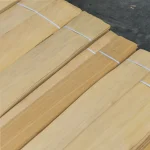
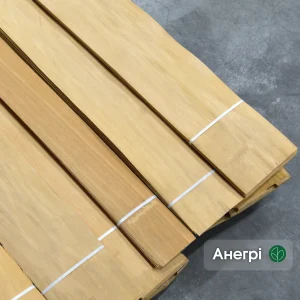
Sliced Anegre Veneer

Natural sliced Anegre veneer, with its uniform texture and light colour palette, has become a favourite among designers for creating modern minimalist and Scandinavian interiors.

Anegre veneer 0.6 mm, 2.1–3.8 m, grade 1

  • Wood species: Anegre
  • Thickness: 0.6 mm
  • Grade: 1
128  / m²
Type
Sliced
Moisture content
8-10%

Sliced Anegre Veneer: Features, Grades, and Applications

Natural sliced Anegre veneer, with its uniform texture and light colour palette, has become a favourite among designers for creating modern minimalist and Scandinavian interiors.

We have material available with the following characteristics:

  • thickness: 0.6 mm;
  • length: 1-3.8 m;
  • width: from 9 cm;
  • grade: 1;
  • moisture content: 8-10%.

Furniture and door veneer for projects of varying complexity is available in stock. Sales start from 1 bundle. We ship across Ukraine via transport companies. Self-pickup is also available.

Advantages of Natural Anegre Veneer

Anegre veneer is valued for its clean, minimalist texture. The material does not visually overload the product and adds a finished look.

  • Satin luster. After coating with clear coat (varnish) or oil, the surface acquires a soft, silky glow.
  • Versatility in staining. Thanks to its light color and neutral texture, the veneer is highly suitable for staining. The material can imitate more expensive wood species or take on any pastel shade while preserving the underlying pattern.
  • Stability in work. Anegre wood has a fine-pored structure, making it less prone to fuzziness when sanding. This simplifies the finishing process of veneered surfaces.
  • Aesthetic neutrality. The absence of highly pronounced patterns allows anegre veneer to be used for facing large areas: wall panels, office partitions, and cabinet furniture.

Natural facing material should be purchased with a 30–40% allowance for matching sheets. This allows you to compose a lay-up with the required pattern and complete orders on time.

Anegre Veneer: Classification by Grades

Classifying anegre veneer by grade allows you to choose a material that meets the technical requirements and budget of a specific project. Grade is a visual characteristic based on the clarity of the pattern and the presence of natural wood features.

Grade Features
1 (A) Designed for front-facing surfaces where flawless aesthetics are critical. The surface is clean, with a uniform texture. Quarter cut features clear parallel lines; flat cut features barely noticeable “arches”. Characterized by a distinct natural luster. The coloring is uniform. Only slight natural shade transitions typical of a single log are allowed. Knots are practically not allowed. Isolated pin knots (up to 2 mm) are possible, no more than 1 per 2 linear meters. Complete absence of sapwood, cracks, burls, or medullary rays that disrupt the overall rhythm of the pattern.
2 (B) An optimal choice for products where the natural texture of solid wood is acceptable. The surface is uniform. Noticeable color differences (lighter or darker areas) and slight unevenness of tone are allowed. Sound, tight knots up to 10 mm in diameter occur. Quantity — up to 2–3 pieces per linear meter. Sapwood may be present as light stripes along the edges of the sheet (up to 10% of the area).
3 (C) Used for elements to be painted or products that have no decorative purpose. The texture can have a chaotic pattern and pronounced unevenness of the fibers. Presence of dark spots, stripes, or a significant color difference between sheets in one bundle. Tight and partially tight knots without size restrictions are allowed (provided the integrity of the sheet is maintained). Sapwood can take up more than 20% of the area.

Applications of Anegre Veneer

  • Cabinet furniture. This is the main area of use for anegre facing material. The veneer is suitable for finishing the facades of cabinets, dressers, walk-in closets, and kitchen sets. Thanks to the sufficient thickness of 0.6 mm and good adhesion, the furniture looks as if it were made of solid wood, but at the same time, the products are lighter and more resistant to humidity changes.
  • Wall panels. Thin slices of light wood with a uniform texture are used to decorate wall panels in offices, hotels, and living rooms. Anegre veneered wall panels do not visually overload the space.
  • Interior doors. Door leaves veneered with anegre have a clean, premium look. The material pairs well with metal hardware and glass inserts. Since anegre is easily stained, such doors can be adapted to any interior color scheme.
  • Decor items. Anegre veneer is often used to make exclusive jewelry boxes and cases, mirror and picture frames, and souvenirs.
  • Interior partitions and mobile screens. Wood-veneered partitions and screens help zone spaces in studio apartments, offices, and exhibition galleries.
  • Lighting fixtures. Veneer is used to decorate lampshades, table lamp bases, and wall sconces. Exclusive lamps fit seamlessly into modern and classic design projects.

How Sliced Anegre Veneer is Made

The production process of anegre veneer consists of the following stages:

  • Preparation of raw materials. Large-diameter logs are selected for production, stripped of bark, and sawn into flitches.
  • Hydrothermal treatment. The flitches undergo a steaming stage in special chambers. This makes the wood soft and pliable, allowing for a smooth cut without tearing the fibers.
  • Slicing. The steamed blanks are loaded into a veneer slicing machine. A knife slices sheets of wood of a specified thickness, usually 0.6 mm. This specific method makes it possible to fully reveal the natural luster and slight “wavy” pattern characteristic of anegre.
  • Drying and stabilization. The resulting sheets are dried to a moisture content of 8–10%, which ensures the stability of the material and prevents its deformation after gluing to a base.
  • Bundling. The sheets are stacked in bundles in the exact sequence they were sliced from the log, which ensures an identical pattern within a single batch.

When choosing veneer, pay attention to the type of cut. Two main types of patterns are characteristic of this wood species.

Quarter Cut (Radial)

The surface features a pattern of parallel straight lines. The quarter cut best reveals the satin luster and uniform color inherent in this African species. It is optimal for creating products for modern, clean-lined interiors where visual lightness is needed.

Flat Cut (Tangential)

The veneer sheets feature distinct arch-like patterns and wavy lines. This cut has a more dynamic and natural look. It is in the flat cut that you can find a 3D or marbled texture effect. Used for accent facades, doors, and decorative elements where it is important to emphasize the natural origin and character of the wood.

Why is 0.6 mm the Optimal Thickness for Anegre Veneer?

Using the standard 0.6 mm for this species is justified by both economic and technical factors.

  1. Reliable glue retention. A thickness of 0.6 mm is sufficient to prevent the glue from seeping through the veneer to the front side (bleed-through). This is critically important for anegre, as any glue stains would be highly noticeable after varnishing due to its light color.
  2. Flexibility for complex shapes. Since anegre is often used for interior solutions with flowing lines, 0.6 mm veneer provides the necessary flexibility for veneering curved elements without the risk of cracking.
  3. Sufficient layer for restoration. A 0.6 mm thick sheet allows for professional sanding and multiple renewals of the clear coat throughout the product’s service life.
  4. Eco-friendly use of raw materials. Slicing into thin sheets yields a large amount of facing material: about 850 sq. m. of 0.55 mm thick veneer is obtained from 1 cubic meter of solid wood. Exotic wood becomes much more accessible.

Anegre Wood: Technical and Aesthetic Characteristics

Anegre (Aningeria) belongs to medium-density species and has good performance indicators. The density is approximately 510–570 kg/m³ (at 12% moisture content), meaning the exotic solid wood is quite strong and easy to process. The Janka hardness is about 4.2–4.4 kN, which is comparable to alder or birch. The wood has moderate flexibility: it holds its shape well after drying. The species has average resistance to mechanical damage, so products made of anegre veneer must always be protected with a layer of clear coat. Anegre is often called “African maple” because of its light palette and delicate pattern. The heartwood and sapwood usually do not have a clear boundary. The color varies from light sandy and cream to pale brown, sometimes with a slight pinkish or grayish tint. The natural pattern is delicate: in the quarter cut, it appears as thin stripes, and in the flat cut — as barely noticeable arch-like swirls. The texture is fine and uniform. The main feature is a silky luster that looks striking when the lighting angle changes. Some trees have pronounced curly fibers, creating a three-dimensional wavy pattern on the surface (fiddleback). Anegre is considered a highly workable material. Thanks to its fine pores, the wood sands to a smooth finish. The light solid wood is a perfect canvas for wood stains. The species easily takes on any shade: from “whitewashed oak” to “dark walnut”. The wood holds glue well, ensuring reliable veneering on any substrate (MDF, particleboard).

Why You Should Order Anegre Veneer from WoodWay Expert?

We have created the most convenient cooperation conditions for both individual craftsmen and large furniture manufacturers. Here are the main reasons why people choose us:

  1. Sales starting from 1 bundle. We value clients with any order volume, so we offer the opportunity to buy veneer in individual bundles without overpaying for whole pallets.
  2. Personalized selection. Our managers will help you select the material by texture (quarter/flat cut), exact dimensions, and the required square footage.
  3. In-stock availability. Anegre veneer is constantly in stock, which allows you to avoid long wait times and start working on your order immediately.
  4. Shipping across Ukraine, local pickup. You can utilize local pickup from our warehouse in Kyiv or order prompt shipping across Ukraine via transport companies.
  5. Special conditions for wholesale. Personalized price offers are available for regular partners and large customers. The discount size depends on the order volume.
  6. Flexible payment. We offer convenient payment methods. At the warehouse, orders can be paid in cash (we issue a cash register receipt). Cashless payment is available (LLC with VAT, sole proprietorship).
  7. Additional services. We don’t just sell veneer; we help you create a finished product. Our specialists will perform veneer face matching, and accept orders for veneering boards (MDF, particleboard, plywood).

Over 25 varieties of sliced veneer are available at our wholesale and retail timber depot. Provide your technical specification to our manager, and our specialist will select the suitable material for your design project.

How to Buy Anegre Veneer in Kyiv and Ukraine?

To purchase natural veneer, you can use one of three convenient methods.

  1. Warehouse visit (Kyiv). Visit us in person to choose the material for your project. You have the opportunity to inspect the bundles and evaluate the texture and coloring. Our specialists will help calculate the required square footage and select bundles of the appropriate size. Warehouse address: 7d Zdolbunivska St. (landmark for entry — 17e Dniprovska Embankment).
  2. Ordering through the website. Choose anegre veneer of the required length in our online store, and leave a request through the cart or the feedback form, indicating the desired dimensions and quantity. We ship orders across Ukraine in secure packaging.
  3. Call or message a manager. Call a manager: +380 (67) 180-38-13. Upon your request, the manager will take and send photos or videos of specific bundles via Viber, Telegram, or email. The specialist will help determine the order volume, taking into account allowances for trimming and pattern matching (veneer faces).

We are open to cooperation and ready for tasks of any complexity. Contact us!

FAQ (Frequently Asked Questions)

Can I order a remote selection of anegre bundles based on the pattern?

Yes, upon request, our managers can send photos and videos of specific bundles to messengers so you can evaluate the texture and shade before making a purchase.

What additional services can be ordered along with the veneer?

At WoodWay Expert, you can order professional veneer matching (splicing sheets by pattern), as well as veneering services (gluing veneer) onto MDF, particleboard, or plywood boards. In addition, cutting maps (nesting), cutting to size, and edge banding are available.

What is the minimum quantity of anegre veneer to order?

You can purchase the material starting from just one bundle. Wholesale supply is also possible.

Which veneer cut is best to choose for a modern minimalist interior?

The quarter cut (radial) is best suited for clean, minimalist styles. It features a pattern of parallel lines and a pronounced, uniform luster.

Is a thickness of 0.6 mm enough for veneer that will be used to face interior doors?

Yes, this thickness provides excellent adhesion to the base and a sufficient layer for high-quality sanding, without letting glue bleed through to the front side.

How does anegre behave when stained?

Thanks to its fine pores and light color, anegre veneer is easily stained. It absorbs wood stains evenly, allowing you to imitate more expensive wood species or create pastel shades.

What is the difference between Grade 1 and Grade 2 anegre veneer?

Grade 1 (A) has the cleanest and most uniform surface possible without any knots. Grade 2 (B) allows for sound, tight knots up to 10-15 mm and slight natural color unevenness.

View list
Compare