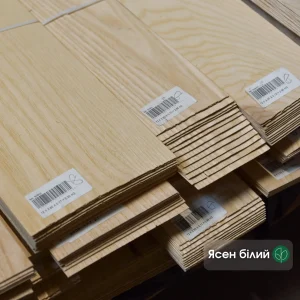
Natural Sliced Veneer

Sliced veneer is a premium cladding material derived from high-quality timber. Advanced manufacturing technology produces sheets with exceptional physical properties, unique textures, and distinct shades. Consequently, sliced veneer is highly popular in the production of furniture, doors, and wall panels.

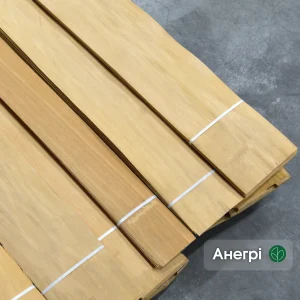
Anegre veneer 0.6 mm, 2.1–3.8 m, grade 1

  • Wood species: Anegre
  • Thickness: 0.6 mm
  • Grade: 1
2,49  / m²
Type
Sliced
Moisture content
8-10%
Made to order

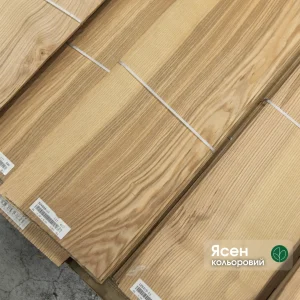
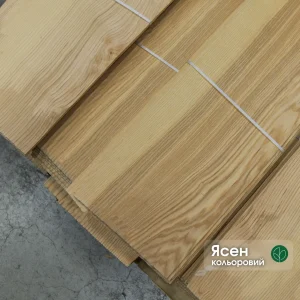
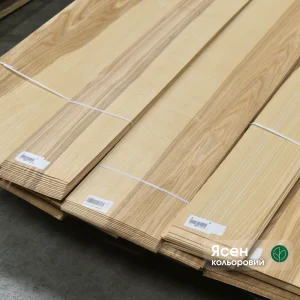
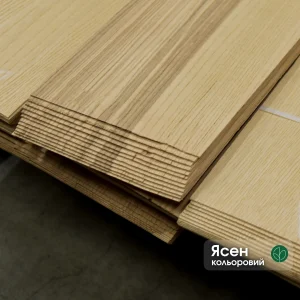
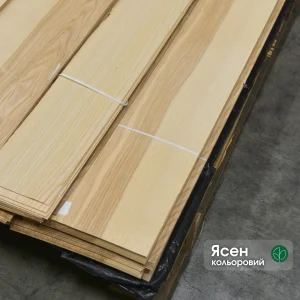
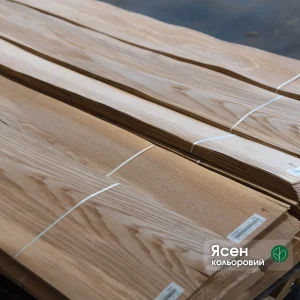
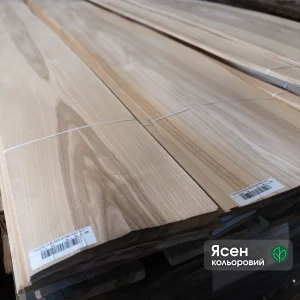
Olive ash veneer 2.5 mm, 2.1–3.8 m, grade 2

  • Wood species: Ash
  • Thickness: 2.5 mm
  • Grade: 2
4,99  / m²
Type
Sliced

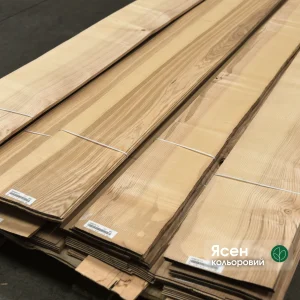
Olive ash veneer 2.5 mm, 2.1–3.8 m, grade 1

  • Wood species: Ash
  • Thickness: 2.5 mm
  • Grade: 1
8,99  / m²
Type
Sliced

Olive ash veneer 2.5 mm, 0.8–2.05 m, grade 1

  • Wood species: Ash
  • Thickness: 2.5 mm
  • Grade: 1
4,99  / m²
Type
Sliced

Olive ash veneer 1.5 mm, 2.1–3.8 m, grade 1

  • Wood species: Ash
  • Thickness: 1.5 mm
  • Grade: 1
4,99  / m²
Type
Sliced

Olive ash veneer 1.5 mm, 0.8–2.05 m, grade 1

  • Wood species: Ash
  • Thickness: 1.5 mm
  • Grade: 1
2,49  / m²
Type
Sliced
Made to order

Olive ash veneer 1.5 mm, 0.5–0.75 m, grade 1

  • Wood species: Ash
  • Thickness: 1.5 mm
  • Grade: 1
2,49  / m²
Type
Sliced
Made to order

Olive ash veneer 0.6 mm, 2.1–3.8 m, grade 2

  • Wood species: Ash
  • Thickness: 0.6 mm
  • Grade: 2
1,49  / m²
Type
Sliced

Olive ash veneer 0.6 mm, 2.1–3.8 m, extra

  • Wood species: Ash
  • Thickness: 0.6 mm
  • Grade: Extra
2,49  / m²
Type
Sliced
Made to order

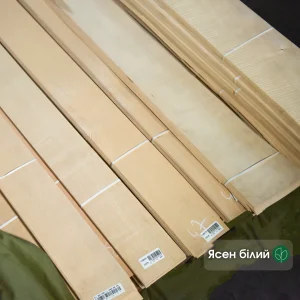
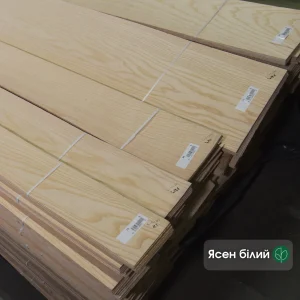
White ash veneer 0.6 mm, 1–2 m, grade 1

  • Wood species: Ash
  • Thickness: 0.6 mm
  • Grade: 1
1,49  / m²
Type
Sliced

White ash veneer 2.5 mm, 2.1–3.8 m, grade 1

  • Wood species: Ash
  • Thickness: 2.5 mm
  • Grade: 1
13,99  / m²
Type
Sliced
Made to order

White ash veneer 1.5 mm, 2.1–3.8 m, grade 1

  • Wood species: Ash
  • Thickness: 1.5 mm
  • Grade: 1
8,99  / m²
Type
Sliced

Natural Sliced Veneer: Grades, Features, and Applications

Sliced veneer is a premium facing material used in high-end furniture manufacturing, door production, and wall panelling. Natural veneer with a moisture content of 8–10% and thicknesses of 0.6, 0.9, 1.5, and 2.5 mm is bonded to MDF, particleboard, or plywood, creating a surface virtually indistinguishable from solid wood.

Our catalogue features sliced veneer produced from hardwood, softwood, and exotic species. We offer oak, ash, walnut, alder, cherry, pine, maple, and beech veneer in Extra, 1st, 2nd, and 3rd grades. Our managers select veneer bundles based on grain cut (quarter-cut, crown-cut), dimensions, and shade. Self-pickup and nationwide delivery across Ukraine are available.

Where is Sliced Veneer Applied?

Eco-friendliness, a relatively affordable price, and simple processing make sliced veneer indispensable for surface cladding. The material is most often used in the manufacture of:

  • Cabinet furniture. Thin slices retain most of the operational characteristics of solid wood. A standard set of joinery tools is used to work with the timber material. Sheets are subject to sanding, polishing, lacquering, and coating with stains and oils. All this makes sliced veneer a versatile material for creating furniture for residential and public spaces. To protect the veneered surface from abrasions, scratches, and direct sunlight, special varnishes are used.
  • Doors. Veneered doors, as well as cornices and skirting boards, help create a unified stylistic design.
  • Mobile partitions. Screens and partitions, decorated with veneer with an expressive wood pattern, help to place accents in the interior.
  • Wall panels. Veneer is also used for decorating interior panels. Decorated MDF boards are a popular way to accentuate a wall in bedrooms, living rooms, studies, hotel rooms, conference halls, and libraries.
  • Handmade items. Decorative elements fill the room with the necessary atmosphere and help create the interior’s character. Sliced veneer is used to decorate statuettes, frames for photographs, paintings, mirrors, jewellery boxes, etc.
  • Car interiors. Premium cars feature exclusive décor. In particular, dashboards are often veneered with exclusive species.

We supply natural veneer to furniture factories, joinery workshops, craft studios, and design agencies. We work with both retail and wholesale clients.

Why is 0.6 mm the Optimal Thickness for Sliced Veneer?

Most clients are accustomed to thinking that “more means better”, but in the case of sliced veneer, a thickness of 0.6 mm is the global standard for several technical reasons.

  1. Plasticity and Adhesion. The thinner the veneer, the better it adheres to the substrate surface, especially on uneven areas or curved facades. Veneer with a thickness of 0.6 mm is evenly saturated with glue, ensuring reliable bonding with the board. Thicker sheets (e.g., 2–4 mm) have higher internal stress and may delaminate over time.
  2. Sanding Quality. After gluing to the board, the veneer must be sanded. A thickness of 0.6 mm allows a minimal layer (0.1–0.2 mm) to be removed to achieve perfect smoothness. After sanding, enough useful layer remains to be coated with varnish or oil-wax.
  3. Physical-Mechanical Properties. With correct veneering, the veneer becomes one with the substrate board. Since the main load is borne by the board (MDF or chipboard), the function of the veneer is purely decorative. 0.6 mm is quite sufficient to withstand standard household loads and the restoration of lacquer coatings.
  4. Dye Permeability. Stains penetrate deep into the structure of the slice. Toning ensures a rich colour.
  5. Optimal Glue Barrier. A thickness of 0.6 mm is sufficient to hold the glue layer and prevent glue bleed-through to the face side. When pressing technology is followed, the glue fills the micropores of the back side but does not exit onto the surface, which is critical for subsequent toning or lacquering.

Sliced veneer with a thickness of 0.6 mm is the benchmark for the furniture industry. The balance between plasticity and strength allows the veneer to adhere to the base without the risk of delamination due to internal wood stress. Such a layer is quite sufficient for quality sanding and subsequent restoration, while the material remains economically viable and eco-friendly.

Features and Benefits of Natural Sliced Veneer

  • Aesthetic Uniqueness. Each sheet of veneer has a unique pattern. Thanks to the formation of bundles (sheets from a single log), you can create symmetrical patterns (“layons”) that are impossible to achieve when working with solid boards.
  • Dimensional Stability. Veneer glued to a substrate (MDF, chipboard, plywood) is less prone to cracking or warping under the influence of moisture and temperature than solid wood.
  • Eco-friendliness. This is a 100% natural product. Using veneer allows tens of times more products to be made from a single log than using solid wood.
  • Access to Exotics. Slicing allows the use of expensive and rare species (Rosewood, Ebony, Root Burls) for decorating large areas at a reasonable price.

Sliced Veneer Grades

Grade Characteristics
1 (A) Select material intended for premium furniture face surfaces and door leaves. The texture is clearly defined, characteristic of the specific wood species and chosen cut type (radial or tangential). The pattern is maximally symmetrical and uniform. Colouring is even, without sharp colour transitions. Knots are practically not allowed. Only singular “pin” knots up to 2–3 mm in diameter are permitted, no more than 1 per linear metre. Sapwood is not allowed unless it is a specific feature of the décor. Cracks, rot, or traces of insects are completely excluded.
2 (B) Material with natural features that highlight the naturalness of the wood. Slight deviations from pattern symmetry are allowed. Natural shade variations may be observed. Accreted healthy knots of small size are permitted: up to 10–15 mm. Quantity — up to 2–3 pieces per linear metre. Sapwood is allowed in limited quantities (up to 10–15% of the sheet area). Barely noticeable medullary rays or curly grain may be present.
3 (C) Budget material for technical tasks. Used for internal furniture parts, back panels, or for painting. The texture may be chaotic, with irregular growth ring geometry. Colouring is not uniform; dark spots and streaks occur. Knots are allowed in large quantities, including partially accreted ones with a diameter exceeding 15–20 mm. The quantity is not strictly regulated, but the integrity of the sheet must be maintained. Sapwood may occupy a significant part of the area. Swirly areas and small cracks are permitted.

Stages of Sliced Veneer Manufacturing

The production process demands high precision and professional equipment to preserve fibre integrity and the wood’s aesthetic appeal.

  1. Selection and Preparation of Raw Material (Logs). We use healthy logs (oak, ash, walnut, alder, etc.). The logs are debarked and sawn into flitches (three-sided or rectangular blocks), depending on the desired pattern: radial or tangential.
  2. Hydrothermal Treatment or Steaming. The flitches are soaked in hot water or steamed in chambers. This renders the timber plastic, allowing for a smooth cut without cracks or chipping.
  3. Slicing on Veneer Slicers. The fixed flitch moves against a knife, or the knife moves across the flitch. The result is a thin layer of wood, typically 0.55-0.6 mm thick. Sheets of 0.7 mm, 0.9 mm, 1.5 mm, and 2.5 mm are also produced.
  4. Drying. The resulting sheets pass through drying chambers where the timber’s moisture content stabilises at 8–10%. This is a critical stage to prevent deformation during future use.
  5. Sorting and Bundle Formation. Veneer sheets are stacked in the sequence they were sliced from the log. This forms a bundle (often called a log in the trade) with an identical pattern, allowing craftsmen to match the grain “mirror-style” when cladding large surfaces.
  6. Edge Trimming. The veneer bundles are trimmed on guillotines to ensure straight edges for tight jointing of the sheets.

Types of Sliced Veneer Cuts

The texture (pattern) of the veneer depends directly on the angle at which the machine knife intersects the tree’s growth rings. There are three main types of cuts.

Radial Cut (Quarter Cut)

The knife passes through the centre of the log perpendicular to the growth rings. The cut texture is formed of straight and parallel lines. The pattern is maximally uniform.

This veneer is considered the most stable and expensive, as the yield of useful material is lower with a radial cut. It is used for cladding furniture and door leaves where visual restraint and symmetry are required.

Tangential Cut (Crown Cut)

The knife slices the sheet at a certain distance from the centre, tangent to the growth rings. An arch-like pattern, curved lines, rings, and “cathedrals” are clearly visible on the surface.

This is the most natural and expressive wood pattern. Tangential veneer highlights the “character”, age, and structure of the tree. It is the optimal choice for feature facades, wall panels, and furniture in both classic and contemporary styles.

Semi-Radial Cut

This is a transitional type: the knife passes at an angle to the growth rings. The texture combines features of the previous options.

In the centre of the sheet, lines may be straight (radial), while closer to the edges they transition into gentle arcs or slanted lines. It is a versatile cladding type offering an interesting, yet not overly dominant texture. It is most often used in mass furniture production due to the optimal balance of aesthetics and price.

Natural Sliced Veneer and the Environment

The timber products in our catalogue are manufactured from trees grown in managed forestry estates. A thin slice of timber is an effective way to reduce industrial deforestation and conserve rare species.

For instance, from one cubic metre of timber sliced at 0.55 mm, approximately 850 m² of veneer can be produced.

Furthermore, wood sheets make items made from exotic timber much more accessible. Species such as Macore, Koto, Anegre, and Sapele are not always available to the furniture industry in significant volumes. This may be due to limited forest stocks or expensive and complex transport.

Sliced veneer of soft and hard species does not strictly differ from solid wood in terms of eco-friendliness and aesthetics. The wood slice retains the pattern, colour, and texture.

With proper surface treatment, veneer and veneered products last for years, maintaining a presentable appearance. Products created from veneered chipboard, MDF, or plywood are actively used in residential and public interiors.

What is a Veneer “Layon” and How is it Formed?

For manufacturing furniture or panels, it is important not only to choose the wood species but also to properly compose the veneer sheets together. In woodworking, this process is called creating a “layon” (or “shirt”).

A veneer layon is a single decorative canvas assembled from several sheets of veneer, matched by colour and texture. Since natural veneer is sold in bundles, where sheets follow one another in the order they were cut from the log, the craftsman has the opportunity to create repeating or symmetrical patterns.

The formation process includes:

  • Selecting sheets from one or different bundles for the intended pattern.
  • Jointing — levelling the edges for a tight fit.
  • Splicing sheets using gummed tape or special glue thread.

Main Types of Veneer Layons

  1. Book Match. Sheets from one bundle are unfolded like the pages of a book: every second sheet is flipped 180° face down. As a result, a mirror-symmetrical pattern is created.
  2. Slip Match. Sheets are taken from the bundle one after another and shifted without turning over. The pattern repeats rhythmically but without mirror symmetry.
  3. Reverse Slip Match. Every second sheet in the bundle is rotated 180° on its axis but not flipped “face” down. In this way, it is possible to balance the natural slope of the grain and minimise tone discrepancy.
  4. Slip and Swing (End Match). The pattern is formed by a combination of shifting and flipping the sheet lengthways 180° face down. It creates a dynamic pattern, though it can also result in a difference in tonality between the “face” and “back”.
  5. Random Match. Sheets are assembled from different bundles or even different logs in a random order. The pattern mimics the look of solid boards of varying widths and textures. Used to create an authentic, rustic style.
  6. Mismatch. Sheets from a single log are mixed to preserve the overall tone but show different fibre structures.

Veneer Species Available in Stock and on Order

WoodWay Expert is a wholesale and retail timber materials base. We operate a warehouse programme, so you can order veneer from stock. Wholesale batches can also be supplied on order.

We have veneer available with the following specifications:

  • Thickness: 0.6 mm, 0.7 mm, 0.9 mm, 1.5 mm, 2.5 mm.
  • Width: from 9 cm.
  • Length: 0.5 – 3.8 m.

We offer furniture veneer (up to 2 m) as well as door veneer (over 2.1 m) in various grades. The material is sold in bundles. The price of a bundle depends on the species, grade, dimensions, and is calculated individually. Leave a request, and a manager will select the most suitable options.

Cladding material from the following species is available for order:

How to Buy Sliced Veneer at WoodWay Expert: Three Convenient Ways

We ensure that the selection and purchase process is comfortable for both craftsmen and factory representatives. To order veneer, you can use one of the following options:

  1. Warehouse Visit. You can personally visit our warehouse in Kyiv to see the texture with your own eyes and choose a specific bundle of veneer. Our specialists will help you choose between radial and tangential cuts, and select bundles by grade and size. Warehouse address: vul. Zdolbunivska, 7d (entry from Dniprovska Embankment, 17e).
  2. Order via Website. The fastest way for those who value their time. The online catalogue presents the current assortment with detailed characteristics. Choose the desired wood species, specify the volume, and place an order through the basket. A manager will clarify payment methods, the carrier, and estimated dispatch times.
  3. Consultation and Order by Phone. If you need help with calculations or are looking for a specific wood species, our managers are always in touch. Call: +380 (67) 180-38-13. The manager can send you additional photos or videos of specific veneer bundles via Viber, Telegram, or email so that you can be confident in your choice.

How to Buy Sliced Veneer at WoodWay Expert: Three Convenient Ways

We ensure that the selection and purchase process is comfortable for both craftsmen and factory representatives. To order veneer, you can use one of the following options:

  1. Warehouse Visit. You can personally visit our warehouse in Kyiv to see the texture with your own eyes and choose a specific bundle of veneer. Our specialists will help you choose between radial and tangential cuts, and select bundles by grade and size. Warehouse address: vul. Zdolbunivska, 7d (entry from Dniprovska Embankment, 17e).
  2. Order via Website. The fastest way for those who value their time. The online catalogue presents the current assortment with detailed characteristics. Choose the desired wood species, specify the volume, and place an order through the basket. A manager will clarify payment methods, the carrier, and estimated dispatch times.
  3. Consultation and Order by Phone. If you need help with calculations or are looking for a specific wood species, our managers are always in touch. Call: +380 (67) 180-38-13. The manager can send you additional photos or videos of specific veneer bundles via Viber, Telegram, or email so that you can be confident in your choice.

FAQ (Frequently Asked Questions)

Can I buy veneer by the bundle?

The minimum order is from 1 bundle. The manager will select bundles that maximally correspond to the required square meterage, dimensions, and texture.

What is the standard veneer thickness for furniture cladding?

Standard thickness for finishing cabinet furniture is considered to be 0.6 mm. Such sheets are pliable, adhere reliably to the board (MDF, chipboard), and allow for high-quality surface sanding.

How does radial cut differ from tangential?

Radial cut yields a pattern in the form of parallel straight lines. Tangential has a more expressive texture with "arches" and wavy lines, which emphasises the natural character of the tree.

Does glue bleed through 0.6 mm thick veneer?

No, a thickness of 0.6 mm is sufficient to serve as a barrier for the glue. When pressing technology is adhered to, the glue remains inside the structure and does not exit onto the face side, which is important for toning.

Which veneer grade should I choose for wardrobe facades?

For face surfaces, Grade 1 (A) is recommended, where knots and other texture features are practically absent. For side or internal walls, Grade 2 (AB) is suitable, which has a more natural appearance.

How can I check the quality of the veneer remotely before purchasing?

Our managers can send you detailed photos or videos of specific bundles via messengers. This allows you to see the real colour, texture, and presence of natural wood features.

Can I order veneer delivery across Ukraine without damaging the material?

Yes, we send orders via transport companies across Ukraine. The veneer is packed in stretch film and a rigid cardboard box, which minimises the risk of cracks or chipping during transport.
View list
Compare