Sawn Spruce Veneer

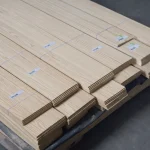
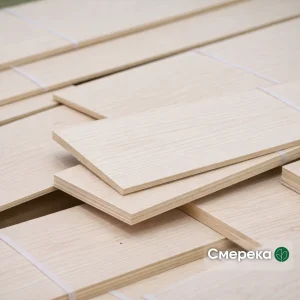
Sawn spruce veneer, or spruce lamella, is a premium timber material produced by precisely sawing solid wood. It is considerably thicker than standard peeled or sliced veneer. This specific manufacturing process beautifully preserves the natural grain and authentic colour of the timber.

Sawn spruce veneer 2.5 mm, 0.5–3 m

  • Wood species: Spruce
  • Thickness: 2.5 mm
  • Type: Sawn
On request

Sawn spruce veneer 4.5 mm, 0.5–3 m

  • Wood species: Spruce
  • Thickness: 4.5 mm
  • Type: Sawn
On request

Sawn Spruce Veneer: Uses, Dimensions, and Grades

Sawn spruce veneer, or spruce lamella, is a premium timber material produced by precisely sawing solid wood. It is considerably thicker than standard peeled or sliced veneer. This specific manufacturing process beautifully preserves the natural grain and authentic colour of the timber. Craftsmen use this timber product for facing furniture, doors, and panels. Available from 1 pack; wholesale is available. We assist with material selection on-site and remotely. Warehouse collection, delivery across Ukraine.

Spruce, specifically Carpathian or European spruce, is highly valued across the commercial woodworking industry. It offers a highly sought-after combination of lightness and natural elasticity. Furthermore, its characteristic pale hue remains remarkably stable over time without suffering from significant yellowing.

Here are the key features and inherent benefits of sawn spruce lamella:

  • Stability. Thanks to careful kiln drying (achieving an 8-10% moisture content), the timber remains highly stable. It effectively withstands daily humidity fluctuations within standard residential spaces.
  • Texture. This sawn timber product perfectly conveys the natural wood grain pattern. It elegantly displays small knots whilst maintaining the authentic, pale colour palette of the wood.
  • Mechanical Durability. The generous thickness of the lamella provides excellent, long-lasting durability. It comfortably allows for repeated sanding and professional restoration over its lifespan.
  • Eco-friendliness. Sawn veneer is a 100% natural, sustainable, and entirely safe product. It is officially approved for heavy use in both residential properties and commercial public spaces.
  • Ease of Processing. The pale spruce timber responds exceptionally well to modern tinting, varnishing, and wire-brushing (artificial ageing) techniques. Furthermore, the material is incredibly easy to glue, cut, and sand down.

When selecting your facing timber, pay close attention to the specific material grade. We highly recommend premium grades for exposed, visible facing surfaces. Conversely, lamellas with a pronounced, knotty texture are absolutely ideal for creating a cosy, rustic, chalet-style interior design.

Sawn Spruce Veneer Dimensions: Stock Programme and Bespoke Production

We consistently stock the most highly demanded timber sizes in our central warehouse. The following standard lamella specifications are readily available for immediate commercial dispatch:

  • Thickness: 2.5 and 4.5 mm;
  • Width: from 12 cm;
  • Length: 0.5–3 m.

If these standard sizes do not precisely meet your requirements, we offer comprehensive bespoke sawn veneer production tailored to your exact specifications. This is the optimal solution for unique interior designs, bespoke joinery workshops, and large-scale furniture factories. We routinely manufacture premium facing materials to the following custom dimensions:

  • Thickness: 2 to 10 mm;
  • Width: 12 to 21 cm;
  • Length: 0.5 to 3 m.

The standard lead time for processing bespoke, exclusive orders is strictly 10 working days. Please kindly note that the minimum order volume for a single custom timber species is set at 10 square metres.

Quality Classification: Grades of Sawn Spruce Veneer

Timber grading is the fundamental criterion for accurately assessing quality within the woodworking sector. It is determined by the presence, size, and concentration of natural features, alongside any potential sawing defects. Sorting sawn spruce veneer ensures the material is properly categorised by its aesthetic and physical properties, ultimately optimising production costs.

Carpathian spruce naturally possesses an almost white timber profile with a highly distinctive grain and numerous small knots. Depending entirely on the purity of the surface finish, sawn spruce lamella is divided into three primary commercial grades.

Criteria Grade I (A) Grade II (B) Grade III (C)
Feature Premium quality material subject to rigorous selection. Since spruce naturally contains many knots, obtaining a clean sheet requires meticulous raw material sourcing. Timber products showcasing the natural beauty and texture of softwood. This material enjoys the highest demand in commercial mass production. Technical or highly decorative timber. It contains a significant amount of natural features, yet the sheets retain their overall structural integrity.
Texture Maximum uniformity in grain texture. Natural, featuring standard wood grain patterns. Highly variegated, heavily rustic appearance.
Knots Up to 5 mm (isolated occurrences only). Sound, intergrown knots of light and dark colour, measuring up to 15–25 mm in diameter. Large intergrown and partially intergrown knots (over 25 mm), including noticeable black knots.
Colour Uniform, pale colouration without any sharp tonal variations. Minor, smooth, and gradual variations in natural hue. Highly pronounced and distinct colour variations.
Resin Pockets Strictly not permitted. Small resin pockets (up to 2-3 mm wide) are officially permitted. Resin pockets of any size are fully permitted.
Splits Strictly not permitted. Hairline (superficial surface) splits only. Non-critical splits are officially permitted.
Blue Stain / Discolouration Strictly not permitted. Strictly not permitted. Permitted.
Target Application Premium finishes for luxury furniture fronts, high-end wall panels, worktops, and bespoke headboards. Scandinavian, eco, and country-style furniture, alongside the interior surfaces of cabinet fronts. Internal layers for multi-layer structures, framing elements, and roughing work. Ideal for specific loft-style designer pieces emphasising raw, industrial timber textures.

Applications of Sawn Spruce Veneer

Sawn spruce lamella, ranging from 2 to 10 mm in thickness, is an incredibly versatile and highly cost-effective material. It seamlessly combines lightness, sustainability, and exceptional aesthetic appeal. Thanks to its pale hue, characteristic knots, and post-kiln stability, it is heavily utilised in bespoke interior manufacturing.

  • Furniture Fronts. Veneering MDF, chipboard, or blockboard with spruce creates stunning, lightweight fronts for kitchen units, wardrobes, and chests of drawers. Crucially, these veneered facades are visually indistinguishable from solid wood.
  • Worktops. Thicker lamellas are frequently used to expertly craft bespoke dining, coffee, and side table tops. Because it is a softwood, these working surfaces must be completely sealed with protective varnish or epoxy resin to prevent mechanical damage.
  • Wall Panels. Spruce veneer is absolutely ideal for manufacturing traditional wall panelling (boiserie) and decorative ceiling panels. The pale timber visually enlarges the room whilst significantly improving thermal and acoustic insulation. Softwood panels are a vital staple in country, chalet, Scandi, and Japandi interiors.
  • Room Dividers and Screens. Decorative spruce slats (baffles) allow for elegant spatial zoning without overloading the structural floor. Additionally, sawn veneer is often used to finish MDF or plywood partitions during major layout alterations. Spruce lamella is also excellent for detailing mobile screens in offices or hotel foyers.
  • Doors. Utilising sawn veneer for facing internal door leaves is a widely recognised industry standard. Spruce provides internal doors with outstanding sound insulation and an authentic timber aesthetic at a highly accessible price point.

Sawn spruce lamella is a highly rational choice for projects prioritising eco-friendliness, reduced structural weight, and overall budget efficiency. A thorough understanding of this specific softwood’s physical properties enables joiners to apply the most appropriate finishing coats.

Production Technology of Sawn Spruce Veneer

Every single stage of our timber processing is carefully managed to preserve the wood’s decorative and physical properties. Let us thoroughly examine how this premium softwood facing material is expertly manufactured:

  • Raw Material Selection. The veneer manufacturing process begins with the rigorous selection of solid boards. We exclusively choose first-grade or premium sawn timber to produce our high-quality lamellas.
  • Thermal Treatment (Drying). The prepared boards are then safely transferred to specialised kilns. This strictly controlled dehydration process achieves an optimal joinery moisture content of 8–10%. Kiln drying effectively eliminates internal fibre stress, thereby protecting the final product from warping and splitting.
  • Calibration. The timber boards are meticulously planed and jointed by our specialists. This crucial step ensures the workpiece dimensions perfectly align with the sawing block specifications of our heavy machinery.
  • Sawing. The calibrated boards are mechanically fed into a state-of-the-art Wintersteiger machine. The timber is precisely sawn into uniform sheets of the required thickness. This modern, high-tech equipment guarantees a flawless cut whilst heavily minimising raw material waste.
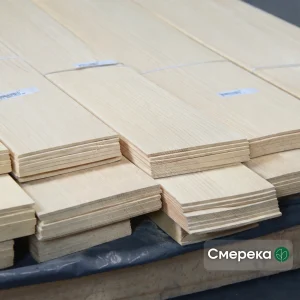
  • Final Quality Control. The finished sheets undergo strict manual checks for thickness, dimensions, and grade accuracy. The sorted timber is then bundled, securely labelled, and stacked onto timber pallets ready for secure storage or direct delivery to the client.

The resulting wooden lamella provides a remarkably reliable and structurally stable foundation. It is unequivocally the perfect choice for crafting exclusive bespoke furniture and long-lasting interior design solutions.

Spruce Timber: Technical and Visual Characteristics

Spruce, also known as Carpathian or European spruce (Picea abies), is a primary softwood species utilised in commercial woodworking. Its natural habitat spans Northern, Central, and Eastern Europe. In Ukraine, premium commercial timber is heavily concentrated in the ecologically clean, high-altitude regions of the Carpathian Mountains.

High-altitude Carpathian spruce is valued far more than lowland varieties due to its notably denser timber structure. Because the tree’s growth slows in harsh climates, the annual growth rings are packed much closer together. This incredibly tight grain structure has a highly positive impact on the solid wood’s overall strength and durability.

The timber is exceptionally pale, almost white, with a faint pale yellow or delicate golden hue. Unlike pine, spruce exhibits significantly less yellowing over time when repeatedly exposed to natural ultraviolet light. Furthermore, there is practically no discernible colour difference between the sapwood and the heartwood.

The texture is generally uniform, featuring very clearly defined annual rings. A hallmark characteristic of this species is the abundance of small “dormant buds” (knots), which create its easily recognisable, rustic grain pattern. The wood fibres are notably straight and true.

Botanically, like all softwoods, spruce lacks true pores (vessels); its internal cellular structure consists entirely of tracheids. Whilst natural resin canals are present, they are considerably fewer and smaller than those found in pine.

The timber is officially classified as both soft and lightweight. The solid wood density ranges from 430 to 470 kg/m³, with a Brinell hardness score of just 1.3 to 1.6. Because spruce is prone to denting under point-load mechanical stress, it requires a robust, hard-wearing finish when used for worktops.

However, the species is remarkably elastic and definitely not prone to brittleness. Unlike ash or beech, spruce does not respond well to steam bending, as the stiff fibres tend to fracture at sharp angles. Conversely, it possesses outstanding acoustic properties, making premium select spruce the benchmark “tonewood” for string and keyboard instrument soundboards.

The wood is exceptionally easy to saw, route, and plane in the workshop. Nevertheless, due to the timber’s inherent softness, all cutting tools (saws, router bits) must be immaculately sharpened. Failure to do so may result in crushed fibres and a noticeably “fuzzy” surface rather than a perfectly clean cut.

While it sands very well, the natural resin (even in minor quantities) can accelerate the clogging of abrasive sanding belts. Spruce bonds excellently with all standard industrial joinery adhesives, including PVA, PUR, and urea-formaldehyde resins. Prior de-resination is typically deemed unnecessary by professionals.

Because of the differing densities between the early (porous) and late (dense) wood within the growth rings, spruce can absorb wood stains unevenly. Therefore, to achieve a completely flawless finish, experts strongly recommend applying a pre-stain wood conditioner prior to tinting.

Why Order Sawn Spruce Veneer from WoodWay Expert: 7 Key Benefits

Our company’s primary mission is the uninterrupted, reliable supply of first-class timber for artisans, bespoke joinery workshops, and mass production facilities. Over three decades in the joinery market, we have forged strong partnerships with leading architectural studios, door manufacturers, and furniture factories. Below are the core reasons why choosing us as your trusted timber supplier makes perfect commercial sense:

  1. Reliable Stock Programme. Materials with standard thicknesses of 2.5 mm and 4.5 mm are permanently maintained in our core stock programme. Clients are welcome to personally hand-pick their bundles and collect their orders immediately after payment. Our warehouse operates strictly from Monday to Friday, between 08:00 and 17:00.
  2. Bespoke Manufacturing. Non-standard interior designs often demand highly specific raw materials. Our advanced production facilities can easily manufacture bespoke timber ranging from 2 to 10 mm in thickness. The minimum batch volume to initiate production is just 10 square metres. Custom orders carry a standard lead time of up to 10 working days; our managers will provide an exact price per square metre upon request.
  3. Extensive Selection. Our comprehensive catalogue features premium sawn timber from over 15 distinct wood species. Furthermore, we can eagerly arrange the custom manufacture of veneer from niche timber not currently listed in our standard stock inventory.
  4. Convenient Nationwide Logistics. Buyers are perfectly welcome to collect their purchased timber directly from our Kyiv warehouse using their own transport. For clients based in other regions, we swiftly organise prompt, secure delivery via trusted commercial courier networks.
  5. Remote Selection Service. Simply submit a detailed request, and our timber specialists will meticulously source the perfect match for your project’s required hue, grain, and square footage. Our managers will promptly send photographs and exact bundle specifications for your final approval. Invoices are issued upon product confirmation, and dispatch occurs strictly following 100% upfront payment.
  6. Flexible Payment Options. When purchasing directly at our warehouse, you may conveniently settle your order in cash (a standard receipt is provided). We also fully facilitate seamless bank transfers for registered companies (LLC with VAT) and sole traders.
  7. Retail and Wholesale Supply. You can effortlessly purchase our premium sawn spruce veneer in individual bundles, starting from just one unit. We also expertly handle large-scale commercial wholesale orders. Dispatch is consistently executed following full prepayment. The total square footage of a bundle depends entirely on the sheet dimensions and quantity. The exact price of each bundle is calculated using the formula: Price per 1 m² × (length × width × number of sheets).

For our valued wholesale buyers, our sales managers will gladly prepare bespoke commercial offers. Naturally, the final discount applied is influenced by both the specific timber type and the overall order volume.

How to Purchase Sawn Spruce Veneer

Since 1996, we have proudly collaborated with small, medium, and large-scale enterprises across the sector. We fully understand that the material selection process varies drastically depending on the project’s precise scale. We are highly accommodating and currently offer the following straightforward purchasing methods for our timber products:

  • Personal Warehouse Visit. We warmly invite you to visit our wholesale and retail base. Here, you will have the prime opportunity to personally assess the sheer quality of the sheets and hand-select the appropriate timber. Our specialists will assist with choosing the optimal solution and swiftly calculate your order cost. We look forward to welcoming you at: 7d Zdolbunivska Street, Kyiv (please note: vehicle access is strictly via 17e Dniprovska Embankment).
  • Contact a Manager. If your busy working schedule strictly prohibits a personal visit, any query can be easily resolved remotely. Simply call us on +380 (67) 180-38-13. We also promptly process instant messages via Viber and Telegram. Just send over your precise technical brief, and you will quickly receive detailed specifications alongside real photographs of the timber currently in stock.
  • Online Website Ordering. By utilising our comprehensive electronic catalogue, you can easily select your desired timber species and specify the required sheet thickness. Simply add the item to your basket or submit a formal, direct enquiry. A dedicated consultant will promptly call back to confirm the total square footage and discuss convenient payment formats. They will also eagerly send photos of the products currently being prepared for dispatch.

The WoodWay Expert team is fully prepared for bespoke projects of any complexity. Entrust your structural timber requirements to the true industry professionals!

FAQ: Frequently Asked Questions About Sawn Spruce Veneer

What are the main advantages of spruce compared to other softwoods?

Spruce (Carpathian spruce) is distinctly characterised by an almost white hue that noticeably yellows much less over time compared to pine. Furthermore, spruce possesses significantly fewer resin canals, high natural elasticity, and a remarkably low specific weight (approximately 450 kg/m³). It also boasts truly excellent acoustic (resonant) properties.

Where is sawn spruce lamella most frequently used?

This highly versatile material is predominantly used in the commercial manufacture of internal doors, decorative wall and ceiling panelling, and the concealed structural elements of cabinet furniture. Thanks to the timber's superb resonant properties, premium-grade spruce lamella remains utterly indispensable in crafting soundboards for musical instruments, such as acoustic guitars and violins.

Is sawn spruce veneer suitable for manufacturing flooring?

Spruce is naturally a relatively soft timber species. Consequently, it is strictly not used as the top wear layer of engineered wood flooring in high-traffic commercial or residential areas. Its primary area of application remains the premium facing of cabinet fronts and interior architectural panelling.

What is the standard moisture content for sawn spruce veneer in production?

The absolute optimal joinery moisture content for high-quality sawn lamella sits strictly between 8% and 10%. This precise moisture level is meticulously achieved through highly controlled kiln drying. This ensures the timber remains highly stable, meaning the veneered products will absolutely not crack, shrink, or warp during their long-term service life.

How should sawn spruce lamella be processed and finished?

This specific timber product is exceptionally amenable to routing, precise sawing, and finishing sanding. Because spruce exhibits noticeably varying densities between early and late wood, finishing experts highly recommend using a specialised pre-stain sealer before applying any coloured wood stains. For the ultimate topcoat finish, premium polyurethane varnishes, tough acrylic enamels, or durable hard wax oils are undoubtedly the best choices.

Is spruce lamella prone to resin bleed during the final product's lifespan?

Spruce inherently contains significantly less natural resin than standard timber pine. Furthermore, during proper, high-temperature kiln drying, any residual resin thoroughly crystallises deep within the wood fibres. Therefore, the risk of sticky resin bleed onto the surface of finished furniture or panelling is reduced to an absolute minimum.

Can I order bespoke sawn spruce veneer to custom dimensions?

Yes, absolutely. Alongside our standard stock dimensions (2.5 mm and 4.5 mm thicknesses), we proudly offer comprehensive bespoke manufacturing tailored to your needs. You can easily order custom sawn veneer ranging from 2 to 10 mm in thickness, from 12 cm in width, and up to 3 metres in length. The standard lead time is just 10 working days. Please contact us on +380 (67) 180-38-13 to discuss your exact requirements.

How is the price of a sawn spruce veneer bundle calculated?

In both our official price list and electronic catalogue, the timber price is strictly quoted per square metre. To accurately determine the exact cost of a specific bundle, we use a very simple mathematical formula: Price per 1 m² × (sheet length × sheet width × total number of sheets).
View list
Compare