Sawn Maple Veneer

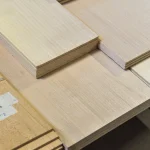
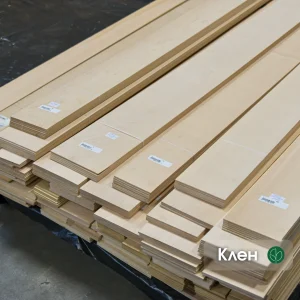
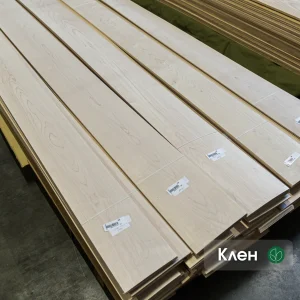
Sawn maple veneer (lamella) is a natural finishing material presented as thin boards, typically 2 to 10 mm thick, obtained through the precision sawing of dried timber. Compared to sliced or rotary-cut veneer, a lamella retains the physical and mechanical properties of solid wood.

Sawn maple veneer 4.5 mm, 0.5–3 m

  • Wood species: Maple
  • Thickness: 4.5 mm
  • Type: Sawn
1 029  / m²

Sawn maple veneer 2.5 mm, 0.5–3 m

  • Wood species: Maple
  • Thickness: 2.5 mm
  • Type: Sawn
720  / m²

Sawn maple veneer: characteristics, grades, applications, and advantages

Sawn maple veneer (lamella) is a natural finishing material presented as thin boards, typically 2 to 10 mm thick, obtained through the precision sawing of dried timber. Maple sawn lamella is in stock at our warehouse. Available to order from 1 pack. Our managers will select material according to your specifications. Delivery across Ukraine, warehouse collection in Kyiv available.

Compared to sliced or rotary-cut veneer, a lamella retains the physical and mechanical properties of solid wood. This is because the fibre structure remains fully intact during production.

The key characteristics and advantages of sawn maple veneer include the following:

  • Wear resistance. Dense and hard timber is highly resistant to mechanical damage and abrasion. Therefore, it is ideal for manufacturing floor coverings and staircases.
  • Light colour palette. The colour range varies from almost white, resembling ivory, to light cream and golden hues. This allows for the creation of items suited for visually “light” interiors.
  • Stability. Properly dried lamellas with a moisture content of 8-10% are minimally prone to warping or cracking. This is critically important for the production of multi-layered structures.
  • Ease of processing. Maple timber is exceptionally receptive to sanding, polishing, lacquering, and waxing.

Durable timber with a uniform texture is selected for contemporary projects. To place an order, contact our manager or submit a request on the website.

Dimensions of sawn maple veneer: in stock and made to order

Sawn maple lamella is available directly from our warehouse. We also accept orders for the bespoke production of timber with custom parameters. The following products are currently featured in our standard stock programme:

  • thickness: 2.5 mm and 4.5 mm;
  • width: from 12 cm;
  • length: 0.5–3 m.

For bespoke sawn veneer, the following dimension ranges are available:

  • thickness: 2–10 mm;
  • width: 12–21 cm;
  • length: 0.5–3 m.

The production lead time generally takes up to 10 working days. The minimum order quantity is 10 m² of lamella from a single wood species.

Sawn maple veneer: timber grades

Maple is primarily valued for its light and uniform texture. Selecting the correct grade allows you to perfectly match the material to a specific task. This ranges from understated minimalism to rustic cosiness.

Characteristic Grade 1 Grade 2 Grade 3
Feature This is a benchmark material chosen for premium-class facing surfaces. The optimal choice in terms of value for money, preserving the natural character of the wood. Material demonstrating the maximum variability of maple timber with all its unique features.
Texture The lamella surface features a clean, uniform light colour without harsh transitions. The texture is homogeneous, and the fibres are predominantly parallel. Slight natural variations in timber colouration and minor colour gradients are present. The fibre pattern can be slightly more expressive and chaotic. Features an expressive texture with contrasting colour transitions. Lamellas of this grade are frequently used to create accents in loft or country styles.
Tolerances Knots, even “live” ones, cracks, sapwood, or prominent medullary rays are strictly not permitted. Occasional small-diameter “live” light intergrown knots that do not compromise the sheet’s strength are allowed. Through-cracks and rot are completely absent. Dark non-intergrown knots, pith flecks, interwoven fibres, and a small number of filled cracks are permitted. Crucially, despite these visual features, the geometry and moisture content remain entirely optimal.
Application Facades of elite furniture, musical instruments, and wall panels in light interiors. Production of parquet boards, interior furniture finishing, and staircase manufacturing. Manufacturing engineered boards and bespoke designer furniture.

Applications of sawn maple veneer

The primary areas where the properties of maple lamella are best showcased are listed below:

  1. Floor coverings. Sawn maple veneer ranging from 3 to 6 mm in thickness is considered the optimal top layer for engineered and parquet flooring. It provides a highly wear-resistant surface that can be sanded repeatedly.
  2. Worktops and surfaces. Maple is comparable to oak in hardness. Therefore, lamella is frequently used for surfacing kitchen worktops, bar counters, and tables. The material withstands significant loads, resists dents, and its light colour does not visually clutter the space.
  3. Staircase cladding. Owing to a high coefficient of friction and excellent abrasion resistance, maple lamella is the optimal solution for covering stair treads. The timber creates a reliable and aesthetic structure that harmonises beautifully with light walls and modern lighting.
  4. Furniture facades and doors. Using sawn veneer instead of standard sliced veneer enables the production of premium furniture facades and interior doors with a pronounced depth of texture. Lamellas 2–4 mm thick grant the item the solid appearance of massive wood while maintaining the base’s resistance to temperature fluctuations.
  5. Decorative wall panels and partitions. Lamella is effectively used to create decorative panels, which also contribute to improved sound absorption within a room. Light maple is often chosen for understated interiors in studies, lounges, bedrooms, offices, and conference rooms. Thin yet robust partitions and screens clad in maple lamella are ideal for zoning spaces in Scandinavian minimalist or Japandi styles. These non-structural elements are actively used in smart flats, offices, restaurant dining areas, and cafes.

This light-coloured timber is used for craft products. Craftsmen offer a variety of decor items (photo frames, boxes, dried-flower vases) and homeware (organisers, trivets) made from maple sawn lamella.

Production technology of maple lamella

Timber quality directly depends on strict adherence to technology at every stage of wood processing. Manufacturing sawn maple veneer is a multi-step process. Combining modern equipment with expert quality control ensures a highly stable material of the requisite standard. The primary stages of timber production are as follows:

  1. Raw material selection. The foundation of a quality lamella is the right timber. Edged boards of the highest or first grade are utilised for sawn veneer production.
  2. Kiln drying. The boards undergo rigorous processing in drying kilns. This stage stabilises joinery moisture levels at around 8–10%. It relieves internal fibre tension, guaranteeing that the finished lamella will remain thoroughly stable.
  3. Blank calibration. At this stage, boards are carefully calibrated and adjusted to fit the cutting cassette parameters. This ensures stable fixation and an even distribution of the load during subsequent sawing.
  4. Sawing into lamellas. The prepared and planed blanks are fed into the machinery, notably Wintersteiger lines. The timber is sawn into thin sheets of a specified thickness. Utilising thin saw blades minimises sawdust and ensures exceptional cutting precision, fully preserving the maple’s natural grain.
  5. Grading. The timber sheets are thoroughly inspected for compliance with specified dimensions and grades. Depending on natural features such as knots, swirls, and colour variations, the lamella is divided into categories. They are then neatly stacked into bundles for transport or storage.

Thanks to this systematic approach, the sawn veneer retains the natural strength of solid wood while acquiring the stability essential for premium finishing. The use of professional-grade equipment guarantees that the timber products comply strictly with international quality standards.

Maple timber: technical and visual characteristics

Maple (Acer) is widely considered the benchmark for light, hardwood timber. This deciduous species combines high toughness and superb strength, making sawn veneer exceptionally durable. Maple is prevalent across the temperate latitudes of the Northern Hemisphere.

For the Ukrainian market, the most valuable timber is harvested in the Carpathians and Podolia. There, the climatic conditions perfectly foster the formation of a dense, uniform fibre structure. Brinell hardness is approximately 3.7–4.0. These figures place maple firmly on a par with oak.

At a standard joinery moisture content of 12%, the density ranges from 620 to 720 kg/m³. This makes it a heavy and exceedingly strong timber. Wear resistance is remarkably high. The solid wood is resistant to abrasion, which is critical for flooring and stair treads.

The timber absorbs impacts well without splitting. After hydrothermal treatment, primarily steaming, maple becomes notably plastic. This flexibility permits the material’s use in producing curved glued components. The colour ranges from almost white to a delicate cream and light yellow.

The heartwood generally does not differ visually from the sapwood. The texture is fine and distinctly uniform. On a radial cut, narrow medullary rays are visible, creating a characteristic lustre. Fibres are predominantly straight, although trees with a swirly structure, known as “bird’s eye”, are occasionally encountered.

Pores are small, scattered, and virtually invisible to the naked eye. This ensures absolute smoothness after sanding. Thanks to its high density, maple can achieve a mirror-like finish. A gradual transition to fine-grit abrasives is strongly recommended.

The fine-pored structure restricts deep pigment penetration. This can occasionally lead to a “blotchy” appearance during staining. Craftsmen advise using wood conditioners or transparent lacquers to enhance the natural colour.

The timber readily accepts most joinery adhesives, particularly PVA groups D3/D4 and polyurethane adhesives. However, it demands precise surface fitting due to the low elasticity of the blanks. Under the influence of UV light, maple tends to yellow slightly. To preserve its pristine white hue, applying lacquers containing UV filters is highly advisable.

Why order maple lamella from WoodWay Expert?

We strive to make high-quality timber materials accessible to furniture manufacturers, joinery workshops, and individual craftsmen. Our company boasts over 30 years of experience working with furniture factories, building contractors, design studios, architectural bureaus, and craft workshops. That is precisely why collaborating with WoodWay Expert evolves into a long-term partnership for many clients.

The key reasons companies choose to work with our team are detailed below.

  1. Stock availability. Lamella of standard thickness, 2.5 mm and 4.5 mm, is constantly maintained in our stock programme. This allows you to obtain the material without any wait. Clients can personally visit the warehouse, select bundles with the desired texture, and finalise the purchase on-site. Dispatch occurs immediately post-payment. We operate Monday to Friday, from 08:00 to 17:00.
  2. Bespoke manufacturing. For projects with non-standard requirements, the bespoke production of sawn veneer is readily available. We accept orders for timber ranging from 2 to 10 mm in thickness. The minimum order quantity is 10 m² of a single wood species. The standard production lead time is up to 10 working days. Please consult a manager for the current cost of lamella per square metre.
  3. Extensive assortment. We offer timber products from over 15 distinct wood species. This ensures you can source lamella to suit furniture of varying styles. If necessary, material can be manufactured from species not currently held in the standard stock programme.
  4. Collection or nationwide delivery. Customers may collect their goods directly from the warehouse or arrange for dispatch via transport companies. This flexible format allows for the prompt receipt of materials anywhere in the country, thereby optimising production logistics.
  5. Remote material selection. Should a personal visit to the warehouse be unfeasible, we can easily organise remote material selection. After processing an enquiry, a manager matches lamella to the project parameters: area, texture, shade, and dimensions. Photographs of the bundles and full technical specifications are then sent to the client. Once the specification is approved, an invoice is generated, and dispatch follows 100% payment.
  6. Convenient payment options. Orders can be paid for directly at the warehouse in cash, and a till receipt is provided. Cashless payments are also fully available for sole traders and limited companies with VAT.
  7. Sales by bundle and wholesale. Sawn veneer is sold exclusively in bundles. The square footage of a bundle depends entirely on the length, width, and quantity of sheets. Cost calculations follow this formula: price per m² × (length × width × number of sheets). The company also eagerly handles large wholesale orders for furniture manufacturers and joinery enterprises.

For partners making regular wholesale purchases, we prepare bespoke commercial proposals. The discount rate is ultimately determined by the purchase volume and the specific type of materials.

Where and how to buy sawn maple veneer in Ukraine

Ordering sawn veneer for furniture production, joinery work, or interior projects can be done via several convenient methods. We offer diverse cooperation formats to ensure clients can quickly source the exact material they require.

  • Visit the warehouse. The simplest way to select material is by visiting our wholesale and retail warehouse in person. Here, you can independently inspect lamella bundles, evaluating the timber’s shade, texture, and surface quality. Managers will assist in matching options to your specific project and promptly calculate the order value. Warehouse address: Kyiv, 7d Zdolbunivska Street (entrance via 17e Dniprovska Embankment).
  • Contact a manager by phone. If visiting in person is impossible, orders can be placed entirely remotely. Simply telephone a manager on +380 (67) 180-38-13 or send a message via Telegram or Viber. Our specialist will forward photographs, videos, and technical specifications of the available timber. This allows you to accurately assess the lamella’s texture, dimensions, and quality.
  • Place an order via the website. Another excellent option is to utilise our online ordering system. On the website, you can select the wood species and required lamella thickness, then submit an enquiry via the basket or request form. Upon receiving the order, a manager will be in touch to confirm the material area, payment method, and dispatch details. If necessary, the client receives supplementary photos and information regarding the specific batch prepared for shipping.

We cater to both individual orders and large wholesale batches. Regardless of the project’s scale, the WoodWay Expert team will gladly help you select the appropriate surfacing material and organise swift dispatch.

FAQ: frequently asked questions about sawn maple veneer

How does sawn maple veneer (lamella) differ from sliced veneer?

Sliced veneer is 0.5–0.6 mm thick and is produced by slicing a layer of wood with a blade. A lamella is a board 2 to 10 mm thick, obtained by precision sawing. The resulting product retains the stability, structural strength, and visual characteristics of solid wood.

What is the optimal moisture content of maple lamella for interior work?

The optimum moisture content is strictly between 8–10%. It is precisely this metric that ensures the stability of veneer sheets during furniture or parquet manufacturing.

Why does maple occasionally turn yellow, and can this be prevented?

This is a natural process of wood oxidation caused by exposure to UV rays. To preserve the initial snow-white or cream shade, it is imperative to use finishing coats containing UV filters.

Can sawn maple veneer be used for staircases?

Yes, it is widely considered one of the finest solutions. In terms of hardness, maple (3.7–4.0 HB on the Brinell scale) is almost equal to oak. Treads clad in these timber sheets comfortably withstand significant loads.

Which adhesive is best for bonding sawn maple veneer?

Because maple is a notably dense species, we highly recommend using PVA adhesives from the D3/D4 groups. Two-component polyurethane adhesives are also an excellent choice.

Is it true that maple is difficult to stain?

Due to its fine-pored structure, maple absorbs pigment rather unevenly, which can yield a "blotchy" effect. If a specific colour is required, it is best to utilise professional dyeing systems, such as a conditioner and wood stain. Alternatively, you might select maple lamella that features factory tinting.

Which grade of sawn lamella should be chosen for furniture facades?

For the front-facing surfaces of furniture, Grade 1 is typically selected. This grade is entirely free from knots and abrupt colour transitions. If the project involves a loft or country aesthetic, Grade 2 or 3 may be used. In these grades, the natural texture is displayed far more vividly.

Where in Ukraine can one purchase high-quality sawn maple veneer?

You can order timber by calling +380 (67) 180-38-13, which is also available via Telegram or Viber. The address of our wholesale and retail warehouse is: Kyiv, 7d Zdolbunivska Street (entrance via 17e Dniprovska Embankment).
View list
Compare