Sawn Elm Veneer

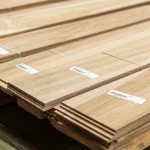
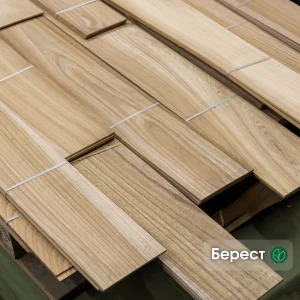
Sawn elm veneer, or lamella, is a natural material produced through the longitudinal sawing of solid wood. The lamella sheets boast considerable thickness, typically ranging from 2 to 10 mm. This preserves the physical and mechanical properties of solid timber while ensuring cost-effectiveness and product stability.

Running low

Sawn elm veneer 2.5 mm, 0.5–3 m

  • Wood species: Elm
  • Thickness: 2.5 mm
  • Type: Sawn
13,99  / m²

Sawn Elm Veneer (Lamella): Dimensions, Applications, Grades, and Purchasing

Sawn elm veneer, or lamella, is a natural material produced through the longitudinal sawing of solid wood. The lamella sheets boast considerable thickness, typically ranging from 2 to 10 mm. This preserves the physical and mechanical properties of solid timber while ensuring cost-effectiveness and product stability. You can buy sawn veneer from 1 pack. The catalogue prices are listed per 1 sq.m. We deliver across Ukraine, with collection available from our warehouse in Kyiv.

Elm Sawn Lamella Specifications

Among the key characteristics of this timber product are the following:

  • Texture. Elm features distinct annual rings and a characteristic moiré pattern. The timber offers a pleasant, warm hue, ranging from light brown to rich chocolate. Sawn veneer sheets perfectly retain the texture of the solid wood.
  • High wear resistance and toughness. Thanks to its interwoven fibres, the material demonstrates excellent resistance to impact loads and mechanical wear.
  • Stability. The sawing technology and kiln drying process guarantee the dimensional stability of the lamella.
  • Eco-friendliness. This is a 100% natural material that fully complies with safety standards for use in residential properties.

Facing with dense, hardwood sheets produces hard-wearing furniture fronts, partition walls, window sills, and worktops.

Dimensions of Sawn Elm Veneer

Elm lamella is sold in bundles. Timber in the most popular dimensions is readily available in our warehouse:

  1. Thickness — 2.5 mm and 4.5 mm.
  2. Width — from 12 cm.
  3. Length — from 0.5 to 3 m.

Standard dimensions may not be suitable for exclusive bespoke projects. We gladly accept orders for the bespoke production of sawn veneer:

  • thickness: 2–10 mm;
  • width: 12–21 cm;
  • length: 0.5–3 m.

The manufacturing timeframe is up to 10 working days. The minimum order quantity is 10 sq m of a single timber species.

Grades of Sawn Elm Veneer

Selecting the correct material grade is crucial when crafting furniture or flooring. The grade determines the lamella’s surface quality and the presence of natural features like knots, sapwood, and medullary rays.

This classification enables craftsmen and designers to select material with the desired visual effect. Options range from flawlessly uniform sheets to rustic surfaces with pronounced wood grain.

Comparative Table of Sawn Veneer Grades

Feature 1st Grade (Select) 2nd Grade (Nature) 3rd Grade (Rustic)
Speciality Premium material for visible facing surfaces. The golden mean, showcasing natural texture diversity. A highly natural appearance with an emphasis on texture.
Colour Uniform, with possible minor natural variations in halftones. Moderate variations. Highly contrasting.
Tolerances Occasional pin knots (up to 2-3 mm in diameter) are permitted. Free from cracks, rot, or mechanical damage. Medium-sized live (intergrown) knots. Large knots (including partially loose ones) and micro-cracks that do not affect structural strength are permitted.
Texture Calm and even. Expressive. Heterogeneous.
Usage Crafting luxury furniture, the top layer of engineered flooring, and wall panels in minimalist interiors. Creating furniture in Scandinavian, eco, or neoclassical styles where timber authenticity is valued. The optimal choice for loft and country styles, as well as for cladding internal surfaces.

When selecting a grade, consider the final finish. For dark tinting, the 2nd grade is often sufficient, whereas the 1st grade looks exceptionally prestigious under clear varnish.

Applications for Elm Lamella

Thanks to its high toughness, resistance to mechanical loads, and unique pattern, elm lamella has become indispensable for creating durable and aesthetic interior elements. The substantial thickness allows for repeated sanding, making these products highly suitable for restoration.

What is manufactured from sawn elm veneer?

  • Flooring. Hardwood lamella is considered the optimal top layer for engineered and parquet flooring. Kiln-dried solid timber ensures excellent surface wear resistance. Such floors react less to humidity fluctuations than solid floorboards.
  • Worktops. Sawn veneer allows for the creation of deformation-resistant worktops for dining and desks. Visually, these pieces are virtually indistinguishable from solid wood but offer far greater operational stability.
  • Staircase cladding. Elm possesses high resistance to mechanical stress. Lamella is widely used to clad the treads of internal staircases. The surface is typically waxed or varnished.
  • Furniture fronts. The texture of elm bestows a special prestige upon furniture. Lamella is used to decorate the fronts of kitchens, wardrobes, chests of drawers, and tallboys.
  • Internal doors. Door leaves finished with sawn veneer sheets can serve faithfully for decades. This hard-wearing finishing material is chosen for office, café, restaurant, and hotel doors.
  • Partitions. The material is used to finish non-load-bearing structures like room dividers and folding screens. Such partitions are brilliant for altering layouts and zoning spaces.
  • Wall panels. In contemporary interiors, lamella is frequently utilised to create decorative acoustic slats (baffles). Furthermore, decorating walls with elm veneered panels adds warmth to a room and improves sound insulation. It is a popular solution for studies, sitting rooms, and commercial spaces.

We offer high-quality lamella that guarantees an absence of internal cracks and flawless adhesion during gluing. When selecting material for stairs or flooring, we recommend a minimum thickness of 4 mm. This ensures a lifespan of decades, alongside the ability to renew the varnish coating multiple times.

Manufacturing Technology for Elm Lamella

Producing high-quality elm lamella is a complex process requiring premium raw materials and strict technological adherence. Let us examine the main stages of creating this timber product:

  1. Raw material selection. The process begins with the careful selection of boards. Premium or first-grade boards are typically used to minimise natural defects in the finished product.
  2. Kiln drying. Selected workpieces undergo a thermal treatment cycle in drying kilns. This achieves a stable joinery moisture content of 8–10% and relieves internal stress.
  3. Workpiece calibration. The next step involves preparing the boards for direct sawing. Each piece is calibrated and jointed to fit the saw cassette dimensions.
  4. Sawing. The prepared solid wood is loaded into a Wintersteiger machine, where boards are cut into sheets of the specified thickness. Modern equipment ensures maximum cutting precision, significantly reducing timber waste.
  5. Quality control and grading. Each sheet is meticulously inspected for compliance with size and grade specifications. The lamella is then bundled, labelled, and stacked on pallets for storage and transport.

Rigorous control at every stage allows us to create a product that meets the exacting demands of craftsmen. By choosing elm lamella, you receive a stable and durable material.

Elm Timber: Technical Parameters

Elm (Ulmus) is a deciduous species widely distributed across the temperate zone of the Northern Hemisphere. In Ukraine, this tree grows across almost the entire territory, predominantly in mixed woodlands.

Elm timber is heavy, dense (640–680 kg/m³), and hard (3–3.7 on the Brinell scale). The fibres are tightly interwoven, making the solid wood remarkably difficult to split. These characteristics ensure the high structural strength of finished products. The material is even used for percussion instruments. When steamed, the species demonstrates excellent bending capabilities.

The heartwood features a rich light brown or chocolate-brown hue. The sapwood is rather wide, light yellow or cream, creating a beautiful natural contrast.

The timber has a coarse, uneven texture with clearly defined annual rings. Pores in the earlywood are arranged in dense rows. Cross-grain (interwoven fibres) is a frequently encountered feature.

Due to the interwoven fibres, elm can be challenging to finish using hand tools. However, the solid wood is easily sawn and jointed on machinery. The timber readily accepts oils, waxes, and wood stains. Thanks to the large pores, tinting profoundly enhances the depth of the texture. It holds glued joints exceptionally well, which is critical when manufacturing multi-layer engineered flooring.

Advantages of Ordering Elm Lamella from WoodWay Expert

Our priority is supplying select timber materials to enterprises, joinery workshops, and artisan craftsmen. Drawing on 30 years of successful collaboration with furniture factories, architectural studios, and designers, we offer premium service and favourable partnership terms.

Here are the key arguments for partnering with our team:

  • Constant availability. Timber products with a thickness of 2.5 mm and 4.5 mm are permanently stocked in our warehouse. You will not have to waste time waiting; you can visit personally, inspect the bundles, and collect the goods immediately after payment. Opening hours: Mon–Fri from 08:00 to 17:00.
  • Bespoke production for your project. We manufacture lamella from 2 to 10 mm thick according to the client’s technical specifications. We accept orders starting from 10 sq m. The lead time is 10 working days. Contact our sales department to calculate the cost per square metre.
  • Extensive catalogue. Our range features over 15 types of sawn veneer. We also accept orders to produce timber goods from species outside our standard stock programme.
  • Collection and courier dispatch. Clients can collect products directly from our warehouse. We also arrange the prompt dispatch of orders across Ukraine using reliable transport companies.
  • Remote material selection. Provide your technical requirements, and we will find sheets that perfectly match your request in terms of hue, pattern, and total area. Our specialist will send photographs and technical specifications of specific bundles before preparing an invoice. Dispatch is carried out upon full prepayment of the order.
  • Convenient payment. When purchasing at the warehouse, you can pay in cash (a till receipt is provided). Cashless transfers are available for corporate entities and sole traders (we work with both sole traders and VAT-registered limited companies).
  • Wholesale and retail sales. Sawn veneer is sold in bundles. The bundle price is calculated using the formula: price per 1 sq m × (length × width × number of sheets in the bundle). We confidently supply wholesale batches of sawn lamella.

We develop special commercial offers for our regular partners and large-scale buyers. Discount sizes depend on the frequency of purchases, batch volume, and the selected product category.

Where and How to Buy Sawn Elm Veneer in Ukraine?

To order this timber cladding material, please use one of the most convenient options for you:

  • Visit our wholesale and retail base. At our commercial site in Kyiv, you can personally inspect the range and select lamella bundles with the exact texture and colour required for your project. We look forward to welcoming you at: 7d Zdolbunivska Street, Kyiv (convenient access from 17e Dniprovska Embankment).
  • Telephone consultation. If you are unable to visit the warehouse in person, contact a manager on +380 (67) 180-38-13. You can send an enquiry via Telegram or Viber, and we will promptly prepare photo and video overviews alongside a full technical specification of available timber.
  • Online purchase. Browse our catalogue, select the required timber species and veneer thickness, then add the item to your basket or use the quick enquiry form. After receiving your application, a specialist will ring you to agree on the total material area and grade, and to generate an invoice.

Our team is fully prepared to handle everything from small private projects to complex, large-scale corporate orders.

FAQ: Frequently Asked Questions about Sawn Elm Veneer

How does sawn elm lamella differ from standard sliced veneer?

Sliced veneer typically has a thickness of 0.5–0.6 mm, whereas lamella (sawn veneer) ranges from 2 to 10 mm. Thanks to the sawing process, sheets of sawn veneer retain the true colour and structure of solid wood.

Is elm lamella suitable for underfloor heating?

Yes, elm lamella with a thickness of 3–4 mm is frequently used as the top layer of engineered flooring. Because it is stabilised in drying kilns to a moisture content of 8–10%, the material withstands temperature fluctuations better than solid wood. However, it remains crucial to observe the proper operating temperature regime for the floor.

How does elm behave when tinted?

Due to its coarse and uneven porosity, elm absorbs pigments brilliantly. Tinting exceptionally highlights the characteristic grain pattern. Craftsmen often utilise hard wax oil to emphasise the striking contrast between the heartwood and sapwood.

Can I order elm lamella in a non-standard thickness, for example, 6 mm?

Yes, WoodWay Expert accepts bespoke orders for manufacturing lamella in thicknesses from 2 to 10 mm. The minimum volume for a special order is 10 sq m, and the lead time is generally up to 10 working days. Contact telephone: +380 (67) 180-38-13.

What characteristics are considered normal for 2nd and 3rd grade sawn elm veneer?

The 2nd grade (Nature) is characterised by live knots and colour variations. In the 3rd grade (Rustic), large knots, medullary rays, and even minor cracks are permitted, which beautifully underscore the wood's natural origins.

Do you dispatch lamella across Ukraine?

Yes, we dispatch orders nationwide (excluding temporarily occupied territories) via reliable couriers (Nova Poshta, SAT). Collection in person from our Kyiv warehouse is also possible.

Is it possible to buy just a few sheets of lamella, or must I purchase a whole bundle?

Sawn veneer is sold strictly by the bundle. The number of square metres in each bundle depends on the quantity and dimensions of the individual sheets. Wholesale deliveries are, of course, available.
View list
Compare