
Order
Place order
Clear the whole list?
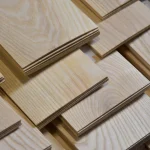
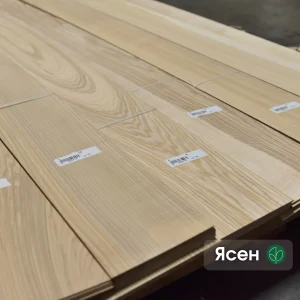
Sawn ash veneer — lamellas of strong, boldly figured timber: ash matches oak for hardness. Kiln-dried, standard thicknesses 2.5 and 4.5 mm. Sold from a single bundle; Kyiv warehouse pick-up, delivery across Ukraine.
Sawn ash veneer, also known as lamella, is a natural finishing material obtained by sawing solid wood. Lamella sheets are thicker compared to sliced or rotary-cut veneer. Thanks to the manufacturing technology, they retain the colour and structure of the timber. Timber products can be ordered from 1 pack. We supply wholesale orders. Collection is available from our warehouse in Kyiv. Delivery across Ukraine via carrier companies.
Ash is considered one of the best species for lamella production due to its physical and mechanical properties. The timber combines load resistance with a distinctive grain. The popularity of sawn ash veneer in interior design and bespoke joinery is driven by several factors:
By choosing ash lamella, you achieve the aesthetic of solid wood at a highly favourable price. Veneered surfaces are hard-wearing and can be readily restored.
We maintain a stock of popular timber product sizes in our warehouse. From our stock programme, you can order packs of lamella:
We understand that standard timber is not suitable for all projects, so we accept requests for bespoke sawn ash veneer. Custom timber products are available for order with the following dimensions:
Bespoke production takes up to 10 working days. The minimum order volume is from 10 m² of material from a single wood species.
When selecting lamella, one of the key criteria is its grade. This defines the quality of the face surface, determined by the presence or absence of natural features and mechanical defects. Understanding grade differences allows you to optimise your project budget without sacrificing aesthetics and reliability.
| Feature | Grade A (1) | Grade B (2) | Grade C (3) |
|---|---|---|---|
| Characteristic | This is a premium material with a highly uniform texture. | Showcases the natural beauty of ash in all its textural diversity, emphasising its natural origin. | A budget option that retains all the technical features of ash but has pronounced visual characteristics. |
| Tolerances | The surface is clean, free of knots, splits, and blue stain. Minimal natural colour variations are permitted. | Sound, intergrown knots of small diameter, slight colour variations, and sapwood (lighter areas of wood) are permitted. The grain is more pronounced and contrasting. | Large knots (including black or partially loose ones), hairline splits, and significant colour variations may be present on the surface. |
| Applications | Manufacturing luxury furniture, fascias, and the top layer of expensive engineered flooring, where visual perfection is essential. | An option for creating Scandinavian or eco-style interiors, where the authentic look of wood is valued. | Production of internal structural elements, rough flooring, or decorative panels with a focus on a rough, rustic texture. |
The grade does not affect the lamella’s strength: grade 3 ash is just as hard as grade 1. The difference lies solely in the visual perception and the final finishing of the material.
Sawn lamella has become an indispensable material in interior design and furniture production. The significant sheet thickness (from 2 mm) allows the timber product to be used where standard sliced veneer would fail. The main applications for sawn ash veneer are:
Using ash lamella in high-traffic areas (stairs, flooring) is a highly cost-effective solution. You acquire a reliable hardwood covering at a lower price than solid wood.
The production of sawn lamella is a complex, multi-stage process requiring modern machinery. Adhering to the technology allows solid ash to be transformed into a thin yet durable cladding material. The main stages of the production cycle are:
Careful quality control ensures that the sawn ash veneer retains its presentable appearance and mechanical endurance for decades. Investing in correctly processed material guarantees the quality of furniture or joinery products.
Ash (Fraxinus) is one of the most valuable temperate hardwoods. Its primary distribution area covers Europe, North America, and parts of Asia. In terms of mechanical properties, ash is often compared to oak, but it significantly outperforms oak in elasticity and impact toughness.
Its Brinell hardness is 4, which is higher than oak (3.7–3.8), making ash highly resistant to dents and mechanical damage. At a standard moisture content of 12%, the average density is 680–750 kg/m³. Thanks to its high density and toughness, the timber has a low abrasion coefficient, essential for flooring and stairs.
After steam treatment, ash becomes pliable for bending. It ranks first among European species for its ability to withstand dynamic loads. The colour palette of the solid wood ranges from light straw and cream to pale brown.
The heartwood is usually light, but “olive ash” with dark streaks can also be found. The grain is pronounced, with clearly visible annual rings, and characteristic “arches” on a tangential cut. The fibres are typically straight.
Due to its high density, ash can be sanded to a mirror finish. The timber readily takes wood stains and oils. With its large pores, ash is well-suited for brushing (artificial ageing) and patination. The wood glues exceptionally well, which is vital for producing lamella and engineered flooring.
Our team’s primary mission is to supply furniture makers, architects, designers, and craftsmen with high-quality timber materials. Over three decades, we have established stable partnerships with large furniture factories, design studios, and local workshops. Here are the key reasons why clients choose us as their supplier:
We develop bespoke commercial terms for regular partners and wholesale buyers. Discount rates are calculated individually based on purchase frequency and volumes.
Our team has the expertise to successfully fulfil both small private orders and large-scale commercial deliveries. Get in touch with us today!
The price is based on visual characteristics. Grade 1 is more expensive as it requires knot-free timber. Grades 2 and 3 are cheaper because they permit natural features (knots, sapwood), despite matching the premium grade in physical properties.
Since sawn veneer is sold in packs, the calculation is: Area = Length x Width x Number of sheets per pack. It is advisable to add a 10–15% allowance for trimming and pattern matching.
Sliced veneer is typically 0.5–0.6 mm thick and is made by slicing a sheet of wood from a flitch. Lamella (sawn veneer) is produced by sawing, achieving a thickness of 2 to 10 mm. This gives the material solid wood properties: strength, longevity, and the ability to be sanded repeatedly.
Yes, however, for covering stability, it is highly recommended to use engineered flooring where the top layer is ash lamella. Thanks to its multi-layered structure, this effectively compensates for internal timber stresses caused by heating.
For stable results, professionals advise using polyurethane (PUR) adhesives or PVA with a D3/D4 water resistance class.
Like any timber, ash is prone to slight colour changes under UV exposure. The solid wood usually becomes slightly warmer or yellowish. To preserve the original shade, use varnishes with UV filters or special oils with white pigment.
For cladding stair treads, we recommend using a lamella thickness of 4 mm to 6 mm. This provides a timber allowance for future sanding and ensures high abrasion resistance.