Sawn American Walnut Veneer: How to Buy, Sizes, Grades, and Applications
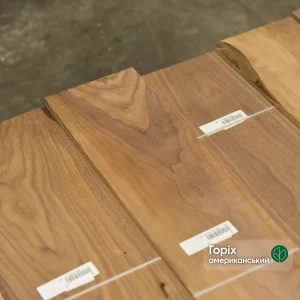
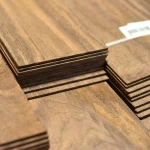
Sawn American walnut veneer (or lamella) is a timber sheet typically between 2 and 10 mm thick. It is produced using precision sawing techniques. Unlike sliced veneer, lamella production retains the timber’s maximum strength, structure, and natural texture. Professionals choose sawn lamella for surfaces subject to heavy mechanical wear. Available from 1 pack; wholesale orders supplied. Collection from our warehouse in Kyiv. Delivery across Ukraine via carrier services.
American walnut lamella remains a highly favoured material amongst designers and furniture makers. This exclusive timber is renowned for its dark colour palette, high density, and straightforward workability.
Utilising sawn American walnut veneer ensures both the durability and decorative appeal typical of solid wood. Furthermore, it helps to optimise raw material costs significantly.
The primary advantages of this cladding material include the following:
- Aesthetics. The timber features chocolate-brown hues and a texture highlighted by near-black veins. The sawing process keeps the growth ring patterns distinct and cohesive.
- Stability. Walnut lamella is significantly less prone to splitting than solid wood. This trait is crucial when manufacturing engineered flooring, staircases, and cabinet fascias.
- Durability. Walnut is a moderately hard timber that resists everyday wear and tear. The sheet’s substantial thickness allows for multiple sanding and restoration cycles.
- Eco-friendliness. This is a 100% natural product that strictly adheres to environmental safety standards. Sawn veneer is widely used for decorating both public and residential interiors.
To order exclusive timber, submit a request on the website or call our sales manager. We will assist in selecting veneer packs matched by grain, colour shade, and surface area.
Sizes of Sawn American Walnut Veneer: In-Stock and Bespoke Products
Standard lamella specifications are consistently available at our Kyiv warehouse. This ensures our clients can procure materials without delay. Alongside ready-made stock, we accept bespoke orders for sawn veneer with custom dimensions.
Specifications of Sawn American Walnut Veneer
| Timber Parameter
|
In Stock
|
Bespoke Orders
|
| Thickness
|
2.5 mm / 4.5 mm
|
2–10 mm
|
| Width
|
From 12 cm
|
12–21 cm
|
| Length
|
0.5–3 m
|
0.5–3 m
|
Manufacturing bespoke lamella typically requires 10 working days. The minimum order quantity is 10 m² for a single timber species.
Grades of Sawn American Walnut Lamella: Selecting the Right Material
The grade indicates the quality of the timber’s face side. It is determined by the presence or absence of natural wood characteristics, such as knots, sapwood, and medullary rays.
| Grade
|
Characteristics and Features
|
| Grade 1
|
The highest level of quality. The face surface boasts an even colour and a uniform texture. Only isolated pin knots (up to 2–3 mm) are permitted, with no sapwood or cracks. Ideal for premium fascias and worktops.
|
| Grade 2
|
Preserves the natural appearance of American walnut. Medium-sized, sound intergrown knots and slight colour variations are acceptable. A small amount of sapwood may be present, adding authenticity to the piece.
|
| Grade 3
|
A material featuring a highly pronounced, rustic texture. Large knots (including some partially loose ones), sapwood, and sharp colour contrasts are allowed. This is the best choice for loft or country-style interiors.
|
Why is it crucial to consider the timber grade when ordering? The grade directly influences the visual perception of the finished article. While Grade 1 sawn lamella is preferred for classical interiors, designers often choose Grades 2 or 3 for statement furniture where natural flaws serve as a decorative focal point.
Where is Sawn American Walnut Veneer Used?
Sawn American walnut veneer is a highly versatile tool for professional joiners and interior designers. Let us explore the primary applications for lamella in modern manufacturing.
- Flooring. American walnut flooring is frequently regarded as the benchmark of elegance. Lamella acts as the top wear layer for engineered wood and parquet boards. These timber sheets guarantee wear resistance and allow for repeated sanding.
- Worktops. Sawn black walnut lamella is the correct choice for surfaces enduring daily use. Cladding a substrate (MDF, chipboard, or plywood) with these timber sheets creates a seamless, monolithic effect.
- Furniture Fascias. Sawn veneer easily withstands everyday operational stress. Consequently, veneered cupboard doors, chests of drawers, and cabinets retain their smart appearance for decades.
- Internal Staircases. Durable walnut solid wood is frequently used to clad interior stair treads. This hard-wearing material is perfectly suited to high-traffic areas. The tread surfaces must always be finished with protective sealants.
- Interior Doors. Door leaves finished with sawn veneer maintain their structural stability, even amidst fluctuating humidity levels. Doors clad in real timber sheets are an excellent option for both homes and public buildings.
- Decorative Wall Panels. American walnut interior panels offer a prestigious wall finish. This dark, highly textured timber integrates beautifully into both contemporary and traditional schemes. Timber wall panels are frequently installed in living rooms, bedrooms, studies, boardrooms, and hotel suites.
- Partitions and Screens. Thick lamellas are utilised to create slatted partitions (acoustic baffles). Moreover, veneer sheets are used to decorate room dividers and folding screens. These non-structural installations allow you to rapidly alter a room’s layout and zone functional areas.
Opting for lamella over solid wood for furniture and interior finishes is not merely a cost-saving measure. Primarily, it is a sound technological decision. An engineered structure featuring a top layer of American walnut lamella will perform reliably for decades.
Production Stages for Sawn American Walnut Veneer
Crafting high-quality American walnut lamella is a complex technological process. It demands modern machinery and rigorous quality control. Let us examine the primary steps of this production process:
- Board Selection. Specialists carefully sort the solid wood, selecting only premium or first-grade boards. Choosing the right raw timber minimises defects and ensures an even texture.
- Kiln Drying. The selected timber is placed into drying kilns to achieve a stable joinery moisture content of 8–10%. Kiln drying relieves internal stress and guarantees material stability.
- Blank Calibration. Following the drying process, boards are calibrated to fit the saw cassette parameters. Proper preparation ensures each blank is securely fastened during slicing.
- Sawing. The prepared and jointed boards are fed into Wintersteiger machines, which slice the wood into sheets of a specified thickness. A thin kerf maximises the yield of usable product and delivers a perfectly smooth surface.
- Sorting and Packaging. The final stage involves inspecting each lamella sheet for correct dimensions, thickness, and grade. The timber is then bundled and meticulously labelled. Finished bundles are palletised for storage or client dispatch.
Thanks to this systematic approach, sawn American walnut lamella retains all the physical properties of solid wood. You receive a material fully prepared for the most demanding bespoke joinery projects.
American Walnut Timber: Key Characteristics
Black American walnut (Juglans nigra) is a prized hardwood naturally found across North America. This encompasses the eastern and central states of the US, alongside southern Canada.
American walnut is classified as a medium-density hardwood boasting excellent toughness metrics. Its Brinell hardness is approximately 4, enabling the timber to endure moderate mechanical strain. At a 12% moisture content, its density ranges from 610 to 660 kg/m³. The solid wood is highly resistant to abrasion, making walnut lamella an optimal wear layer for flooring. It possesses high impact toughness and responds well to steam bending, a crucial trait for crafting curved chair components.
The colour palette spans from light brown to deep chocolate, interspersed with purple, black, and burgundy streaks. A defining feature is the presence of creamy sapwood. The grain is typically straight, though wavy patterns occasionally appear in highly figured sections. The pores are medium-sized and distinctly visible.
The timber sands exceptionally well, allowing you to achieve a smooth finish with minimal effort. Walnut forms strong adhesive bonds, which is critical when gluing lamella to substrates like MDF or plywood. The solid wood readily accepts oils and waxes, and varnishing is straightforward. It holds screws and nails securely; however, pre-drilling is highly recommended to prevent thin lamellas from splitting.
7 Reasons to Buy Sawn American Walnut Veneer from WoodWay Expert
Our company provides furniture manufacturers, joiners, and craftsmen with rapid access to high-quality timber materials. Over 30 years in business, we have forged strong partnerships with furniture factories, building firms, design studios, and bespoke workshops. Below are the core reasons clients choose to collaborate with WoodWay Expert.
- In-Stock Availability. Sawn veneer in standard thicknesses—2.5 mm and 4.5 mm—is strictly held in stock. Clients are welcome to visit our warehouse, hand-pick their preferred bundles, and collect the goods post-payment.
- Bespoke Manufacturing. For unique and non-standard projects, we offer custom lamella production to your exact specifications. We can manufacture timber ranging from 2 to 10 mm in thickness. The minimum order is 10 m² per species, with a standard turnaround of up to 10 working days. Please contact our team for current square metre pricing.
- Extensive Assortment. Our catalogue features timber products sourced from over 15 different species. Beyond our stock programme, we can source rare woods to produce bespoke lamella meeting specific technical requirements.
- Collection and Nationwide Delivery. Customers may collect orders directly from our warehouse or opt for our delivery service. We dispatch via reliable transport companies across Ukraine, strictly adhering to timber packaging protocols.
- Remote Material Selection. If you cannot visit us in person, we gladly assist with remote sawn veneer selection. Simply send us your project requirements—square footage, species, desired texture, and hue. Our team will process your enquiry and forward photographs and specifications of available bundles. Once approved, we issue an invoice, and dispatch follows 100% payment.
- Convenient Payment Methods. You may pay for your order on-site in cash (complete with a till receipt). We also accept BACS transfers for sole traders and limited companies, complete with VAT invoices.
- Bundle and Wholesale Purchasing. We supply sawn veneer in secure bundles. The square metreage per bundle varies depending on the dimensions and sheet count. Bundle pricing follows this formula: Price per m² × (Length × Width × Number of sheets). Our firm also happily accommodates bulk wholesale orders.
For our regular clients dealing in wholesale volumes, we tailor bespoke commercial agreements. Discount rates are structured according to purchasing volume and product category.
Where and How to Order Sawn American Walnut Veneer in Ukraine?
You can place an order for our premium cladding materials via several convenient methods:
- Visit the Warehouse. At our wholesale and retail depot, you can personally inspect and select lamella bundles boasting the ideal texture and shade. Our staff will help you navigate the range, select suitable options, and calculate material costs. Address: 7D Zdolbunivska St., Kyiv (Entrance via 17E Dniprovska Embankment).
- Contact Our Team by Phone. If an on-site visit is impractical, we can seamlessly coordinate remote material selection. Simply ring us on +380 (67) 180-38-13 or drop us a message on Telegram or Viber. Upon receiving your request, our team will dispatch photos, videos, and specs of available stock.
- Order Online. On our website, simply choose the desired timber species and lamella thickness, then proceed through the checkout or submit an enquiry. A representative will contact you shortly to confirm the required area, payment method, and delivery details. We can also provide media of the exact veneer batch prior to dispatch.
We supply independent joinery workshops and large-scale furniture factories alike. Consequently, we are fully equipped to handle orders of varying scales and complexities. Get in touch today—we will help you source the perfect materials for your upcoming project.