
Order
Place order
Clear the whole list?
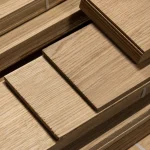
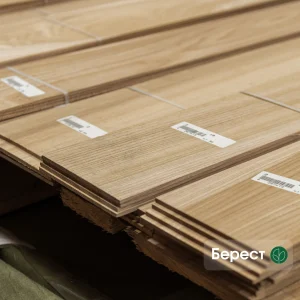
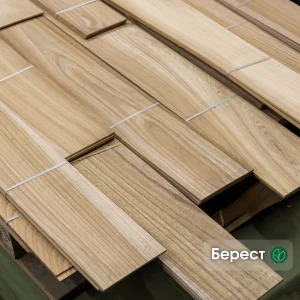
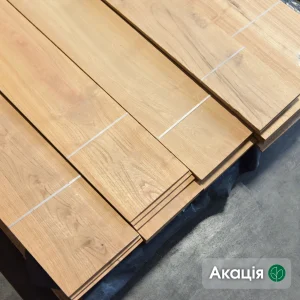
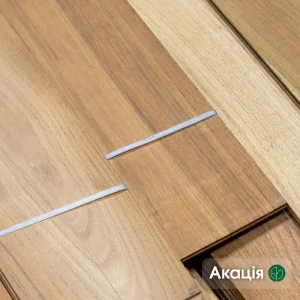
A lamella or sawn veneer is a natural wood facing material. It consists of timber planks with a thickness ranging from 2 to 10 mm, obtained by sawing boards. Unlike peeled or sliced veneer, lamellas are manufactured on horizontal frame saws.
A lamella or sawn veneer is a natural wood facing material. It consists of timber planks with a thickness ranging from 2 to 10 mm, obtained by sawing boards. We supply sawn veneer (sawn timber lamellae) in oak, ash, walnut (American and European), alder, maple, beech, pine, acacia, hornbeam, elm, cherry, pear, mulberry, and apple. Sawn lamellae are available for purchase from a single bundle up to wholesale quantities. Our warehouse stock includes thicknesses of 2.5 mm and 4.5 mm, with custom thicknesses available upon request. Warehouse pick-up is available in Kyiv, alongside delivery across Ukraine via commercial freight carriers.
Unlike peeled or sliced veneer, lamellas are manufactured on horizontal frame saws. This method successfully preserves the integrity of the wood fibres and the natural aesthetic of the timber.
This material beautifully combines the visual and physical benefits of solid wood with the cost-effectiveness and stability of veneered products.
We operate a comprehensive stock programme, meaning timber materials are readily available at our Kyiv warehouse. Furthermore, we gladly accept custom orders for wooden lamellas with bespoke specifications.
| Characteristic | In Stock | Made to Order |
|---|---|---|
| Thickness | 2.5 mm, 4.5 mm | 2-10 mm |
| Width | 12+ cm | 12-21 cm |
| Length | 0.5-3 m | 0.5-3 m |
The manufacturing lead time is 10 working days. The minimum order quantity is 10 square metres of a single timber species.
The widespread use of sawn veneer in furniture and parquet manufacturing is driven by its unique technical characteristics.
The facing material is considered an alternative to solid timber. Timber strips create an aesthetic surface that is straightforward to process.
In the woodworking industry, the grade of a sawn veneer reliably indicates the quality of its face surface. The grade is strictly determined by the presence or absence of natural wood features and mechanical defects.
Choosing the right grade directly influences the final appearance and overall cost of the product. Crucially, the grade does not indicate structural strength, but rather regulates decorative characteristics.
| Characteristic | Grade 1 (A, Select) | Grade 2 (B, Natur) | Grade 3 (C, Rustic) |
|---|---|---|---|
| Colour and texture | Uniform colour and remarkably even texture. | Minor natural colour variations. | Contrasting colour variations and distinct medullary rays. |
| Knots | Knot-free. Only barely visible pin knots up to 2-3 mm are permitted. | A small number of sound, intergrown knots up to 10-15 mm in diameter. | Large knots, including dark and partially intergrown ones. |
| Sapwood | Not permitted. | Up to 5-10% of the surface area. | Permitted entirely without restrictions. |
| Applications | Luxury furniture facades, musical instrument faces, and designer wall panelling. | Parquet flooring, interior door leaves, and cabinet furniture. | Loft, country, eco, and rustic style products. Ideal for antique-style furniture. |
| Price segment | High. | Medium. | Accessible. |
Grade selection is not solely a budget consideration. Grade 1 is perfect for a clean Scandinavian interior as it keeps the space pleasantly uncluttered. Conversely, designers often choose Grade 3 to deliberately emphasise natural textures in country homes.
Thanks to its highly unique combination of thickness and durability, sawn lamella is a wonderfully versatile decorative material. Veneer sheets allow craftsmen to create exceptional products that look and feel identical to solid wood.
Timber products are also highly valued in the bespoke crafting sector. Artisans use lamellas to create exquisite jewellery boxes, key holders, desk organisers, and photo frames.
Sawn veneer is produced from solid timber through the precise longitudinal sawing of boards. This technique yields a stable facing material with predictable parameters and a perfectly natural texture.
Strict control over every stage of lamella production directly impacts quality, yield, and the long-term performance of the final products.
Sawn veneer production is a rigorous multi-stage process where precision machinery meets careful raw material preparation.
Adhering to strict drying, calibration, and sawing regulations results in a premium facing material. This systematic approach guarantees exceptional quality for furniture manufacturing and bespoke interior solutions.
Our primary goal is to provide manufacturers, joiners, and craftsmen with rapid access to high-quality timber materials. We boast over 30 years of invaluable experience collaborating with furniture factories and architectural bureaus.
We always prepare tailored proposals for our regular wholesale clients. Discount rates appropriately vary depending on the order volume and product type.
To securely order our premium facing materials, simply choose from the following convenient methods:
We are fully prepared to tackle timber projects of any complexity and scale.
Our impressive assortment features premium timber from over 15 different species. The most popular 2.5 mm and 4.5 mm thicknesses are kept directly in stock.
Because sawn veneer perfectly preserves the structure and colour of solid wood, we offer a brief overview below. This will undoubtedly help you select the ideal material for your projects.
Acacia (Acacia) is globally renowned as one of the strongest and most durable hardwood species. The solid wood features a striking contrast between its narrow, light-yellow sapwood and its darker heartwood.
The wood grain is wonderfully coarse and highly expressive with distinctly visible pores. Acacia boasts exceptional density (approximately 800 kg/m³) and a Brinell hardness of 7.1.
Elm wood (Ulmus) is highly valued for its toughness and impressive resistance to splitting. The species draws attention with a sharp contrast between its broad sapwood and rich, reddish-brown heartwood.
Elm possesses a solid medium density (around 650 kg/m³) and a Brinell hardness between 3.0 and 3.5. Its primary advantage is its excellent bending capacity following steam treatment.
Hornbeam (Carpinus) is frequently referred to as Europe’s “ironwood” due to its incredible hardness. This robust species lacks a distinct heartwood, resulting in a uniform greyish-white or light-cream colour throughout.
Dry hornbeam density is around 750–800 kg/m³, with an impressive Brinell hardness of 3.7. After final sanding and waxing, hornbeam achieves an impeccably smooth surface.
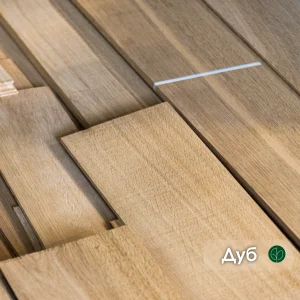
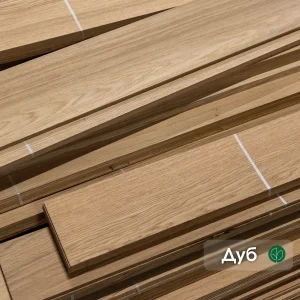
Oak (Quercus) remains the most popular and easily recognisable timber species. Its wonderfully coarse texture and large open pores create a highly expressive, graphic pattern.
Oak has a high density of approximately 700 kg/m³ and a Brinell hardness of 3.7–3.9. Thanks to high tannin levels, the wood boasts exceptional natural resistance to decay.
Maple wood (Acer L.) is distinguished by its high density and excellent acoustic properties. Unusually, its most valuable part is the sapwood, which is almost white with a pearlescent hue.
With a solid density of 670–720 kg/m³ and a Brinell hardness of 3.0–4.0, maple is incredibly tough. It shows superb resistance to abrasion, making it a firm favourite for parquet flooring.
American Black Walnut (Juglans nigra) is a premium species prized for its dark colour and high stability. It features a medium density (610–640 kg/m³) and a Brinell hardness of 3.2–3.4.
Craftsmen highly favour American walnut as it cuts, routes, and sands flawlessly. The timber readily accepts all finishes, especially natural oils that enhance its silky sheen.
Alder (Alnus) is famously known as the “chameleon” of woods due to its ability to mimic expensive species. Alder is a delightfully soft hardwood with a low density of around 420 kg/m³.
It is incredibly straightforward to process, cutting easily and sanding to a brilliant mirror-like finish. Completely free of resin, alder is absolutely perfect for bespoke saunas and intricate carving.
Pine (Pinus) is globally the most popular softwood species available. It is technically a softwood, with an average density of 470–520 kg/m³ and a Brinell hardness of 2.5.
A defining feature of pine is its remarkably high resin content. This resin actively acts as a natural antiseptic against decay, making the timber highly functional.
Cherry wood (Prunus avium) is a highly decorative species noted for its warm, rich colour. Cherry possesses a solid density of roughly 600 kg/m³ and a Brinell hardness of 3.0–3.3.
This beautiful fruitwood is exceptionally tough and displays an excellent capacity for traditional steam bending. When finished with oil or wax, the surface deepens into a truly luxurious shade.
Ash (Fraxinus excelsior) is widely considered oak’s primary competitor in the woodworking industry. Ash is incredibly dense (660–700 kg/m³) with a Brinell hardness of 4.0, slightly exceeding that of oak.
Its main technical advantage is its immense elasticity and structural bending strength. It is highly resistant to wear, making it optimal for heavy-traffic staircases and premium flooring.
Pear (Pyrus) is undeniably among the most valuable fruitwood species available today. The wood is heavy (700–730 kg/m³) and suitably hard, scoring 3.0–3.5 on the Brinell scale.
Its core technical benefit is its highly impressive dimensional stability after proper kiln drying. Pear cuts cleanly in all directions without chipping, making it highly prized for precision carving.
European Walnut (Juglans regia) features a highly expressive texture with large pores and often interlocked grain. It has a robust medium density (650 kg/m³) and a Brinell hardness of 3.4.
European walnut beautifully cuts, glues, and routes exceptionally well. The wood naturally polishes to a mirror-like shine, perfect for high-end furniture applications.
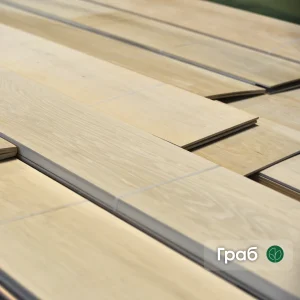
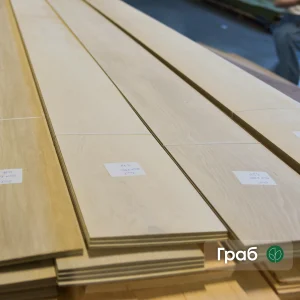
Beech (Fagus) is a major European industrial timber renowned for its strength. The wood is extremely dense (680–720 kg/m³) and remarkably hard, scoring 3.8 on the Brinell scale.
It is famously responsive to steam bending, making it the strict benchmark material for classic bentwood chairs. Beech cuts easily and accepts stains readily to mimic significantly pricier woods.
Mulberry (Morus) is a wonderfully exclusive timber featuring a lemon-yellow heartwood. It is very dense (700–800 kg/m³) and hard (3.5–4.0 Brinell), ensuring exceptional longevity and mechanical strength.
Mulberry cuts cleanly and accepts oils and varnishes beautifully to enhance its natural shine.
Apple wood (Malus) is cherished for its extreme density and capacity for a mirror-like polish. This heavy (700–800 kg/m³) and hard (3.5–4.5 Brinell) timber is notoriously difficult to plane.
However, it is absolutely perfect for fine detail carving, turning, and creating elite artistic pieces.
Birch (Betula) is a widespread hardwood highly renowned for its high impact resistance. It has a very solid medium density (650 kg/m³) and a Brinell hardness between 2.6 and 3.5.
The timber is exceedingly tough and bends well, making it ideal for bentwood furniture and premium plywood.
Red Oak (Quercus rubra) is highly popular in North America, distinct for its reddish-pink heartwood hue. It is dense (700–750 kg/m³) and hard (3.5–3.8 Brinell), actively providing excellent wear resistance.
Because of its open pore structure, red oak absorbs stains exceptionally well for deep, rich coloration.
Linden (Tilia) is a remarkably soft wood considered the absolute gold standard for artistic woodcarving. It boasts a relatively low density (530 kg/m³) and truly remarkable dimensional stability.
Being entirely free of resin, it is the premier choice for pristine internal sauna cladding.
Amur Cork Tree (Phellodendron amurense) is a unique relic species featuring highly decorative timber. Its density is roughly 550-650 kg/m³ with a solid Brinell hardness of 2.8-3.2.
The timber is remarkably straightforward to work with and is predominantly used for crafting elite furniture.
European Spruce (Picea abies) is a crucial forest species with uniquely impressive acoustic properties. This delightfully lightweight wood has a predictably low density (430–470 kg/m³) and moderate hardness.
Its closed pores effectively make it highly resistant to problematic moisture-induced cracking.
Teak (Tectona grandis) is the absolute global gold standard for shipbuilding and premium outdoor furniture. It possesses a robust medium density (640–680 kg/m³) and a Brinell hardness of 3.5.
Its exceptionally high natural oil and rubber content renders it totally impervious to rot, fungi, and termites.
Burl Poplar (Populus nigra) is fiercely prized purely for its incredibly decorative, chaotic burl textures. Technically, poplar is quite soft (400–450 kg/m³) with generally low hardness.
Burl veneer is therefore highly exclusive, mostly used for luxury car interiors and bespoke yacht panelling.